Tag: episode 5

  • Education Insight: The Role of Universities in Addressing Climate Change

    Education Insight: The Role of Universities in Addressing Climate Change

    About This Episode

    Season 5. Episode 5.

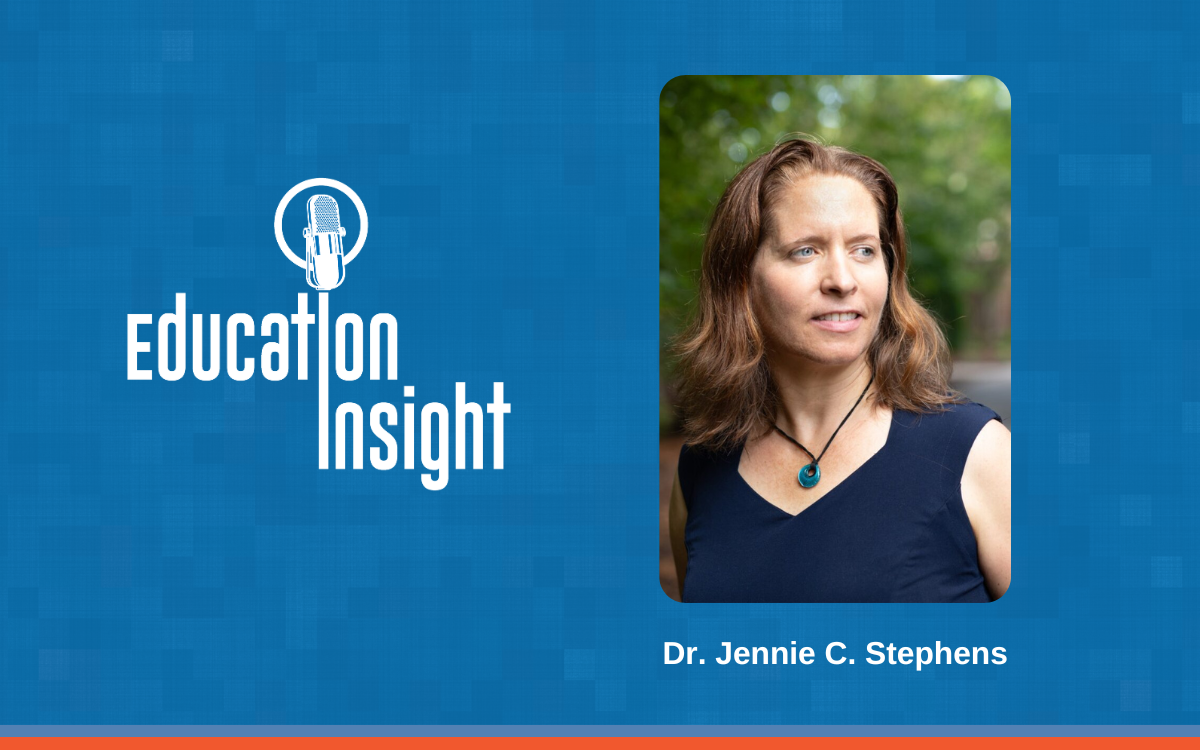
    In this episode of Education Insight, Dr. Jennie Stephens, author of Climate Justice and the University: Shaping a Hopeful Future for All, shares her insights on how higher education institutions are unprepared for the climate challenges ahead. As a researcher focused on climate justice, fossil fuel phaseout, and financial innovations for a more sustainable future, Jennie emphasizes the critical role universities must play in preparing students to address the complex realities of climate change.

    Jennie explains the shortcomings in current climate education and the importance of integrating climate justice into diverse disciplines, from business and engineering to social sciences. She discusses how universities can bridge the divide between majors and foster interdisciplinary collaboration to address climate challenges more effectively.

    With the political landscape shifting and climate threats intensifying, Jennie also offers practical advice for universities and communities committed to impactful climate action, despite setbacks. She highlights successful examples of partnerships between universities and local communities and suggests ways for local colleges to replicate these efforts.

    Tune in to hear a compelling conversation about how universities can lead the charge in climate action, equip students with the skills to combat climate change, and influence policy to create a safer, more sustainable future for all.

    Featured Guest

    Dr. Jennie C. Stephens

    Author of the 2024 book, Climate Justice and the University: Shaping a Hopeful Future for All.

    Jennie C. Stephens is a feminist, climate justice scholar-activist focused on transformation toward a more just, healthy, and stable future for all. She is Professor of Climate Justice at the National University of Ireland Maynooth and on the coordinating team of the Climate Justice Universities Union. She is a fellow at the Global Center for Climate Justice, Professor of Sustainability Science and Policy at Northeastern University in Boston and was a Climate Justice Fellow at Harvard-Radcliffe (2023-2024). Her book Climate Justice and the University: Shaping a Hopeful Future For All (Johns Hopkins University Press, 2024) proposes a paradigm shift to reimagine and restructure higher education to facilitate transformative social change toward ecological health and climate justice.

    Her research, teaching, and community engagement focus on integrating transformative social justice, feminist, anti-racist, decolonial perspectives into climate and energy policy, fossil fuel phaseout, the renewable energy transition, energy democracy, gender in energy and climate, and climate justice in higher education. In her 2020 book Diversifying Power: Why We Need Antiracist, Feminist Leadership on Climate and Energy (Island Press), she argues that effectively addressing climate change requires diversifying leadership, redistributing wealth and power, and moving beyond mainstream male-dominated technocratic solutions to climate change. Throughout her career she has explored institutional and cultural innovation in energy and climate with a focus on societal transformation.

    Jennie Stephens is on the advisory group of Feminists Communities for Climate Justice, is a member of the New England Grist Fixer Network, is part of the Climate Social Science Network, was a 2015-2016 Leopold Leadership fellow, and her book “Smart Grid (R)Evolution: Electric Power Struggles” (Cambridge University Press, 2015) explores social and cultural debates about energy system change (co-authored with Wilson & Peterson). Before joining Maynooth University in Ireland, Professor Stephens was on the faculty at Northeastern University, the University of Vermont (2014-2016) and Clark University (2005-2014). She did post-doctoral research at Harvard’s Kennedy School and she has taught courses at Tufts, Boston University, and MIT. She earned her PhD at the California Institute of Technology in Environmental Science & Engineering and her BA at Harvard University in Environmental Science and Policy.

    Watch the Episode

    Interview Highlights

    3:57 – Adrienne describes dual enrollment and its benefits.

    7:15 – Adrienne speaks to how recent California mandates and initiatives may have influenced the growth of these new programs.

    8:34 – Adrienne explains what research shows about the impact of dual enrollment on a student’s academic achievements or even their future success.

    9:24 – Adrienne shares examples of dual enrollment activities that are taking place in our region and what is happening in the IE. 

    13:11 – Adrienne talks about strategies in place to make sure that equal opportunities are available for all students.

    20:18 – Jorge explains how dual enrollment aligns with his role at Riverside County Unified School District.

    21:28 – Jorge shares his experiences and thoughts on the current dual enrollment programs that are being offered at Riverside Unified School District.

    23:32 – Jorge gives insight into how dual enrollment makes students career ready.

    25:58 – Jorge describes what challenges students typically face in dual enrollment programs and how he addresses those issues. 

    32:43 – Jorge shares what he would like to see be the future of the dual enrollment program in his district and beyond. 

    36:31 – Special Feature: Avijeet Randhawa, 8th-Grader, Auburndale Intermediate School in the Corona Norco Unified School District.

    View our podcast page for more stories like this: https://gia.echofactory.dev/gia-podcasts/

    Education Insight tells the story of education in the Inland Empire through the diverse voices of those in and around the regional education community. The show is produced by Growing Inland Achievement, a collective impact organization in the Inland Empire with a mission to increase economic prosperity in the region by increasing educational attainment. Hosted by 30-year broadcast veteran Lacey Kendall, monthly shows explore topics ranging from education challenges and shortcomings to innovations and groundbreaking ideas that are driving student success.

  • Education Insight: California’s Push for Phone-Free Classrooms

    Education Insight: California’s Push for Phone-Free Classrooms

    About This Episode

    Season 4. Episode 5.

    In this episode of Education Insight, we dive into the implications of Assembly Bill 3216, also known as the Phone-Free Schools Act, which was recently passed by the California state legislature. This new bill would require school districts to implement policies limiting or banning cellphone use during school hours by July 2026. Governor Gavin Newsom, who has been a strong advocate for reducing smartphone distractions in the classroom, is expected to sign the bill, making California the fifth state to impose such a restriction.

    To explore how this legislation might affect schools in the Inland Empire, we sat down with Tobin Brinker, President of the Rialto Education Association, and Michael Montano, Vice President of the Association. Both educators bring decades of experience in elementary, middle, and high school classrooms and share their perspectives on the potential benefits and challenges of limiting cellphone use in schools.

    In this insightful conversation, we discuss how the new bill could reshape student engagement, reduce distractions, and foster a more focused learning environment across California classrooms. Tune in to learn more about the future of education and technology in our schools.

    Featured Guest

    Tobin Brinker

    President, Rialto Education Association and Frisbie Middle School Teacher

    A seasoned history teacher with a decade of experience in local elected office. Brinker brings a unique perspective, blending historical insight with practical political experience, offering a nuanced understanding of America’s founding principles and their lasting impact.

    Michael Montano

    Vice President, Rialto Education Association and Rialto High School Teacher

    Interview Highlights

    3:57 – Adrienne describes dual enrollment and its benefits.

    7:15 – Adrienne speaks to how recent California mandates and initiatives may have influenced the growth of these new programs.

    8:34 – Adrienne explains what research shows about the impact of dual enrollment on a student’s academic achievements or even their future success.

    9:24 – Adrienne shares examples of dual enrollment activities that are taking place in our region and what is happening in the IE. 

    13:11 – Adrienne talks about strategies in place to make sure that equal opportunities are available for all students.

    20:18 – Jorge explains how dual enrollment aligns with his role at Riverside County Unified School District.

    21:28 – Jorge shares his experiences and thoughts on the current dual enrollment programs that are being offered at Riverside Unified School District.

    23:32 – Jorge gives insight into how dual enrollment makes students career ready.

    25:58 – Jorge describes what challenges students typically face in dual enrollment programs and how he addresses those issues. 

    32:43 – Jorge shares what he would like to see be the future of the dual enrollment program in his district and beyond. 

    36:31 – Special Feature: Avijeet Randhawa, 8th-Grader, Auburndale Intermediate School in the Corona Norco Unified School District.

    View our podcast page for more stories like this: https://gia.echofactory.dev/gia-podcasts/

    Education Insight tells the story of education in the Inland Empire through the diverse voices of those in and around the regional education community. The show is produced by Growing Inland Achievement, a collective impact organization in the Inland Empire with a mission to increase economic prosperity in the region by increasing educational attainment. Hosted by 30-year broadcast veteran Lacey Kendall, monthly shows explore topics ranging from education challenges and shortcomings to innovations and groundbreaking ideas that are driving student success.

  • Education Insight: Where Policy Helps and Hurts Local Education

    Education Insight: Where Policy Helps and Hurts Local Education

    About This Episode

    Season 3. Episode 5.

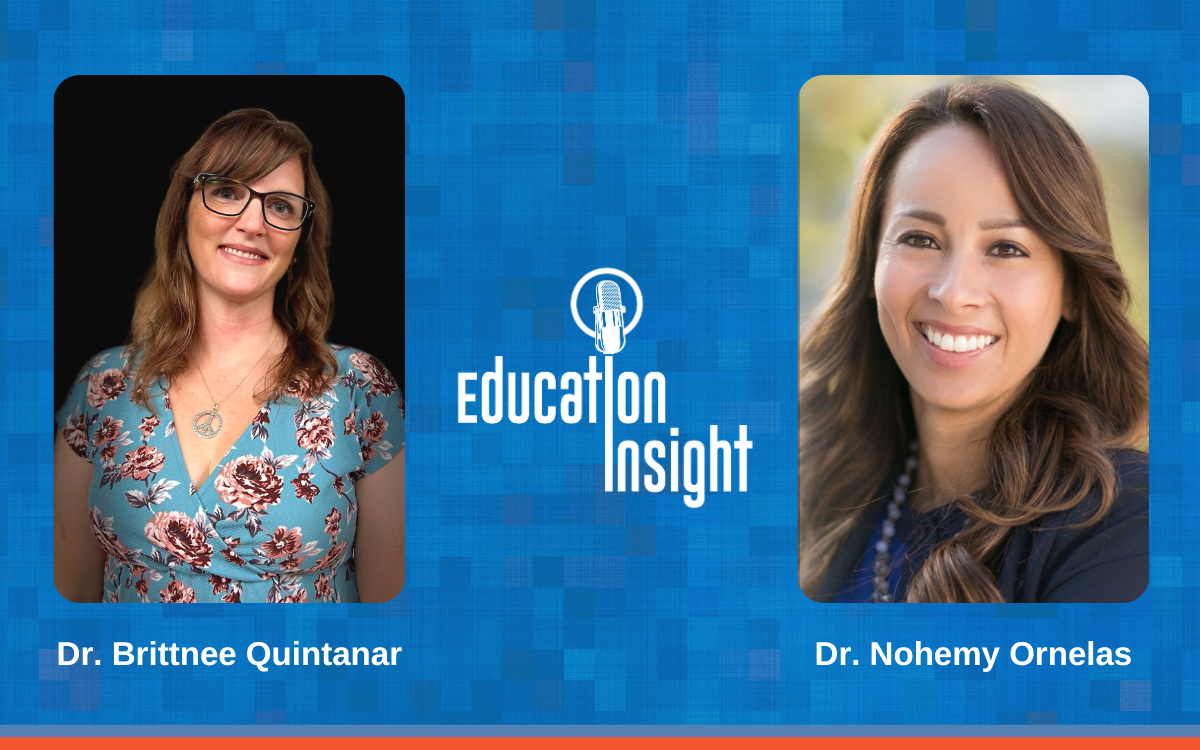
    In the Inland Empire, our students count on teachers and administrators to help them make it to graduation. But in fact, they, our whole community, are counting on legislators to create good education policies. Policy that makes the road to graduation equitable, affordable, and possible. Are the policies that affect our students working for them or against them? This week three top experts lay it out for us. Dr. Nohemy Ornelas, Vice Chancellor of Educational and Student Support Services for the San Bernardino Community College District. Ann Marie Sakrekoff, the Interim CEO of Growing Inland Achievement, and Dr. Brittnee Quintanar, of Norco College conducted a study that put her in front of our top education leaders asking what they think about it. Join us for the next Education Insight. 

    Featured Guests

    Dr. Brittnee Quintanar

    Norco College, Counselor and Instructor.

    Brittnee Amberley Quintanar, Ph.D., has worked in higher education since 2006, primarily with California community colleges located in the Inland Empire of southern California, a region with historically low college-going and completion rates. Previous roles include alumni coordinator, grant program coordinator, and institutional researcher. Presently Dr. Quintanar serves as counselor, guidance instructor, and guided pathways faculty coordinator at Norco College. Her work over the last decade helping primarily neo-traditional students navigate the complexities of our higher education systems, serve as the as the impetus for her policy-focused research and advocacy.

    Dr. Nohemy Ornelas

    Vice Chancellor of Educational and Student Support Services, San Bernardino Community College District.

    Dr. Nohemy Ornelas is the Vice Chancellor of Educational and Student Services at the San Bernardino Community College District, where she oversees industry partnerships, workforce training, and manages programs to support students reach their academic and career goals. Throughout her 25 years serving the public and 18 years in higher education, Dr. Ornelas has promoted equity-minded programs to expand educational opportunities for students and families. Before joining SBCCD, Dr. Ornelas served as Associate Superintendent/Vice President for Student Services at Allan Hancock College, focusing on implementing the college’s Student Equity Plan, SSSP, Outreach Plan, the Noncredit Student Success and Support Plan, and the Student Equity and Achievement Program. She developed the college’s center for Dreamers, expanded the Student Veteran and DSPS programs, and rolled out the Hancock Promise. She has received numerous accolades, including the Future Leaders of America Latino Legacy Award, Cal Poly San Luis Obispo’s Honored Alumni, the Pacific Coast Business Times 40 under 40 award, and Santa Barbara County’s Commission for Women Service Award. A first-generation college student, Dr. Ornelas began her educational career as a community college student, completed her bachelor’s degree at the University of California, Santa Barbara, master’s degree at Cal Poly San Luis Obispo, and earned her doctorate in education at California State University, Fresno.

    Ann Marie Sakrekoff

    Interim President & CEO, Growing Inland Achievement.

    Ann Marie Sakrekoff has been named Interim President & CEO of Growing Inland Achievement (GIA), effective May 15, following the retirement of Dr. Carlos Ayala.

    GIA serves San Bernardino and Riverside Counties as a regional, cross-sector network of education, government, nonprofit and business partners in the Inland Empire; collectively, they work towards a shared vision of educational and economic success.

    Sakrekoff has over 20 years of higher education and nonprofit leadership experience, including her current role as GIA’s Chief Operating Officer.

    Sakrekoff stated, “I am proud and excited to take on the Interim CEO role during such an exciting time for GIA as we continue building on our service to the Inland Empire educational network of students, families, institutions, and community partners. GIA will remain focused on its mission, impact, and growth while we search for our next permanent CEO.”

    Interview Highlights

    5:14 – Brittnee describes her research on public higher education. 

    6:11 – Brittnee reflects on how she helps students on a day-day basis and helps navigate their way through higher education.

    9:23 – Brittnee shares more details on her recent dissertation study.

    13:13 – Brittnee explains the startling discovery behind research regarding the roadblocks to local college and university student success.

    31:30 – Nohemy describes how the student experience has improved as a direct result of good policy.

    33:26 – Nohemy shares an area that really needs work and could benefit from the policy change.

    35:35 – Nohemy describes the process of developing district policy and procedures for educational services.

    39:19 – Nohemy talks about work being done locally and on capitol hill to address current student barriers and issues. 

    42:27 – Ann Marie gives insight into hot topics surrounding local and statewide education policy.

    44:04 – Ann Marie shares some of the good work being done here locally in the Inland Empire.

    46:22 – Ann Marie shares the positive impacts seen due to Assembly Bill 469 being passed.

    View our podcast page for more stories like this: https://gia.echofactory.dev/gia-podcasts/

    Education Insight tells the story of education in the Inland Empire through the diverse voices of those in and around the regional education community. The show is produced by Growing Inland Achievement, a collective impact organization in the Inland Empire with a mission to increase economic prosperity in the region by increasing educational attainment. Hosted by 30-year broadcast veteran Lacey Kendall, monthly shows explore topics ranging from education challenges and shortcomings to innovations and groundbreaking ideas that are driving student success.
  • Education Insight: Equitable Discipline in K-12 Schools

    Education Insight: Equitable Discipline in K-12 Schools

    About This Episode

    Season 2. Episode 5.

    We hear stories on the news of threats to teachers, mass suspensions, and bullying. Some teachers say that laws just don’t protect them in the class like they used to, so we’re digging deep into the handling of discipline at Inland Empire schools. Where is the problem coming from and who is trying to resolve it? Two experts with rather innovative approaches are finding success and helping to change legislation from here to Capitol Hill. Join us as we explore the discipline in the Inland Empire this week on Education Insight.

    Featured Guests

    Marlene Bicondova

    Director of the Positive Youth Development department for San Bernardino City Unified School District.

    Kevin McCarty was elected to the California State Assembly in 2014 to represent the 7th Assembly District, which includes Sacramento, West Sacramento and parts of unincorporated Sacramento County.

    McCarty serves as Chair of the Assembly Budget Subcommittee on Education Finance, which oversees the largest component of California’s multi-billion dollar budget. As Chair, McCarty made historic investments in public education including expanding access to preschool for low and middle income families, providing greater career technical education programs, and increasing student enrollment at our public colleges and universities.

    Other legislative priorities for Assemblymember McCarty include addressing housing affordability, fighting climate change, championing criminal justice reform, curbing gun violence, tackling the opioid crisis and advocating for the middle class.

    McCarty began his public service career as a Sacramento Housing and Redevelopment Commissioner and served on the Sacramento City Council from 2004 to 2014. As a Councilmember, he created innovative youth programs and wrote common-sense gun laws, tackled sub-standard rental housing, and crafted clean air policies. He created Sacramento’s Little Saigon district, the City’s Whistleblower Hotline program, and the Independent Auditor department.

    A lifelong Sacramentan, McCarty went to local public schools, attended American River College, earned a Bachelor’s degree in Political Science from CSU Long Beach and a Master’s degree in Public Policy and Administration from CSU Sacramento.

    McCarty and his wife live in the Elmhurst neighborhood of Sacramento with their twin daughters.

    Like, follow and connect with Assemblymember McCarty on Facebook, Twitter & Instagram: @AsmKevinMcCarty

    Khieem Jackson

    Founder of Black Men for Educational Equity (BMEE).

    Karen Scott is the Executive Director of the Children and Families Commission – First 5 San Bernardino, a funding organization of services for children prenatal through age 5, by investing revenue received from Prop 10, a tobacco tax initiative in California.

    Ms. Scott’s education and background is in Public Administration and Administration of Justice and she has worked in the realm of Human Services for San Bernardino County since 1977.  Karen has served as Executive Director of First 5 San Bernardino for 14 years leading the organization’s efforts to promote, support and enhance the health and early development of children, prenatal through age five through coordinated and comprehensive systems of care that strengthen children, families and communities, ensuring children are safe, healthy and ready to enter and succeed in school.

    Karen is married to James Scott and has 4 adult children and 4 grandchildren.

    Interview Highlights

    2:51 – Khi shares why he feels discipline is a critical focus for educators and lawmakers right now.

    7:17 – Khi explains the new AB 2806 Assembly Bill.

    13:17 – Khi goes into detail about what this assembly bill will do and why it matters.

    19:00 – Khi reflects on why historically marginalized groups such as Black boys and girls, people with disabilities, etc. are treated differently.

    21:44 – Khi explains what Black Men For Educational Equity does for students and families

    26:59 – Khi shares the most important thing people need to understand about children displaying bad behavior in school.

    29:08 – Marlene describes how disciplinary actions in K-12 schools have changed in recent years.

    38:57 – Marlene explains how bullying is affecting San Bernardino schools.

    41:12 – Marlene gives insight into how the bullying issue is getting better because of innovative practices.

    42:44 – Marlene shares how the pandemic has affected children’s behavior.

    44:13 – Marlene discusses the relationship between social media and student conduct.

    46:26 – Special Feature: Graduating Class of 2022.

    View our podcast page for more stories like this: https://gia.echofactory.dev/gia-podcasts/

    Education Insight tells the story of education in the Inland Empire through the diverse voices of those in and around the regional education community. The show is produced by Growing Inland Achievement, a collective impact organization in the Inland Empire with a mission to increase economic prosperity in the region by increasing educational attainment. Hosted by 30-year broadcast veteran Lacey Kendall, monthly shows explore topics ranging from education challenges and shortcomings to innovations and groundbreaking ideas that are driving student success.

  • Education Insight: Diversifying the Teacher Workforce

    Education Insight: Diversifying the Teacher Workforce

    About This Episode

    Season 1. Episode 5.

    In this episode of Education Insight, we look at the success schools with a diverse teacher workforce are experiencing and why. And we learn more about a unique collaboration taking place in the Inland Empire to get more Black and Latinx male teachers in the pipeline. 


    Featured Guests

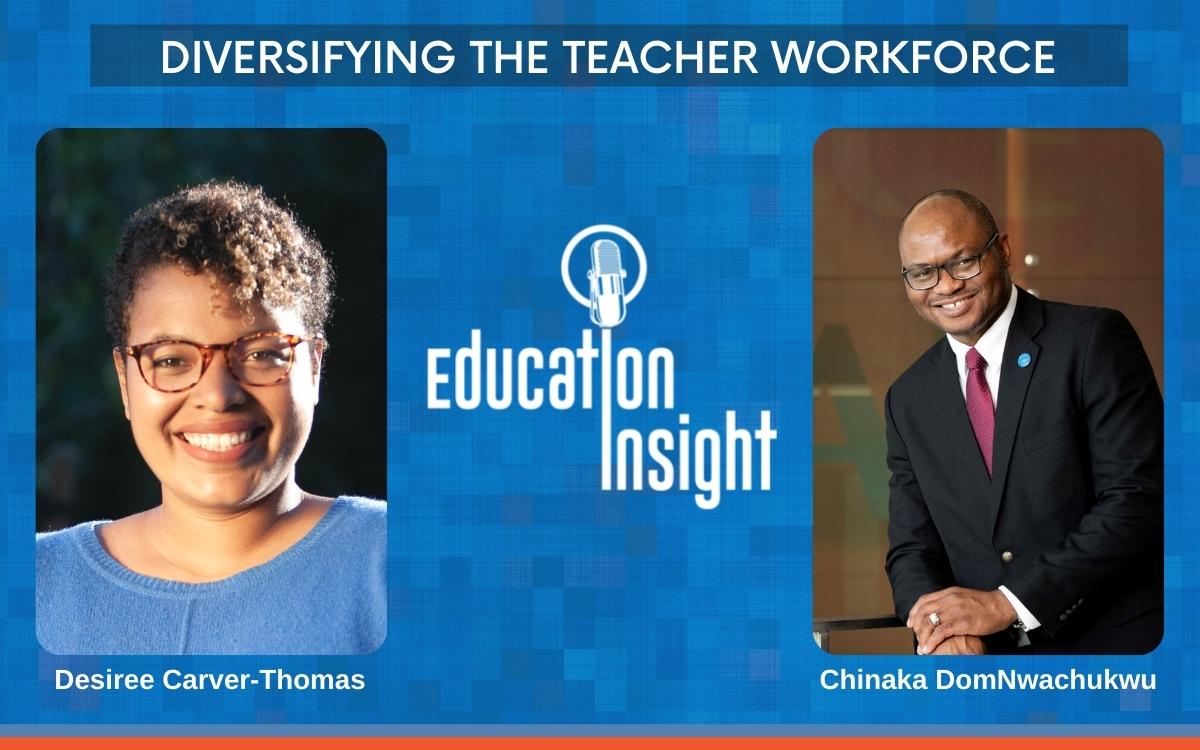
     Desiree Carver-Thomas

    Researcher and Policy Analyst on the Learning Policy Institute’s Educator Quality Team

    Emma Diaz has more than 30 years of experience in the fields of healthcare and education. She is currently the Director for the Inland Adult Education Consortium at San Bernardino Valley College, where she manages the implementation of the California Adult Education Program (CAEP) legislation. As Director she has played a leadership role in creating and expanding educational programs across the region for underserved, often marginalized populations in adult education.

    Emma participates regularly on state level advisory groups, presents at regional, state and national conferences, and is an international lecturer. She strategically positioned the Inland Adult Education Consortium as the professional development center for the Inland Empire, partnering with both state and national organizations. Most recently hosting the 2nd Annual Google Summit for Adult Education.

    In addition to her current role as Consortium Director, she teaches for both credit and noncredit programs at multiple community colleges. She is currently a Board Member of the Association of Continuing and Community Education and is on the Basic Skills and Noncredit Committee for the Academic Senate for California Community Colleges. She earned her Ed.D. in Educational Leadership from the University of Southern California, holds a master’s degree in Healthcare Administration and a bachelor’s in Business Administration from California State University, Northridge.

    Dr. Chinaka DomNwachukwu

    Dean of the College of Education at Cal State San Bernardino. 

    Annette Webb, M.Ed., is the Associate Dean of Academic Affairs at the University of California Riverside, University Extension. In her role, Annette upholds University Extension’s preeminent status in the professional, online, and continuing studies realm by evaluating and successfully responding to the educational needs of non-traditional learners, both domestic and international. She provides leadership in curricular and instructional areas, strategic planning, partnership engagement, student success, academic quality, and financial management.

    Annette is a product of the California Master Plan for Higher Education, beginning her educational journey at Crafton Hills Community College then transferring to California State University, San Bernardino to earn a Bachelor’s degree in Business Administration. She went on to complete a Master’s degree in Education with an emphasis on Higher Education Leadership and Policy from UC Riverside.

    She is a member of Growing Inland Achievement’s Returning Adult Action Network Team and she is the inaugural Co-Chair and Staff Representative for the Chancellor’s Advisory Committee on the Status of Women at UCR. Annette is a proponent for life-long learning and is a higher education professional who represents excellence, accountability, integrity, and respect.

    Interview Highlights

    2:26 – Desiree explains what the racial and ethnic diversity in the teacher workforce looks like today.

    3:23 – Desiree describes the current conditions when it comes to hiring a diverse workforce of teachers and breakdown the national teacher shortage issue.

    4:32 – Desiree shares the positive impacts that a diverse teacher workforce has on students.

    5:25 – Desiree talks about unique barriers that teachers of color run into when they enter the teaching profession.

    6:33 – Desiree shares strategies or practices that she’s heard of that are focused on bringing more teachers of color into the profession.

    8:33 – Desiree discusses how critical it is to retain teachers once they are hired.

    10:17 – Desiree talks about teacher preparation, challenging conditions, and school closures.

    13:26 – Desiree shares her thoughts on what educators in the IE should be doing if they want to see a more diversified teacher workforce.

    16:37 – Chinaka tells us about the college of education at CSUSB and his role in preparing a qualified teacher workforce.

    20:23 – Chinaka describes why it is critical for the Inland Empire to diversify the teacher workforce.

    23:32 – Chinaka shares a unique project he has been working on to help further diversify the teacher workforce.

    27:50 Chinaka talks about collaborators working on Project Impact.

    32:01 – Chinaka speaks on what he would really like to see happen both short-term and long-term as a result of the IE minority male teacher pipeline project.

    34:42 – Chinaka shares the key focus areas of this project and the work that has taken place so far.

    42:09 – Chinaka explains why this project should be replicated elsewhere.

    44:03 – Special Feature: Ann Marie Sakrekoff

    View our podcast page for more stories like this: https://gia.echofactory.dev/gia-podcasts/

    Education Insight tells the story of education in the Inland Empire through the diverse voices of those in and around the regional education community. The show is produced by Growing Inland Achievement, a collective impact organization in the Inland Empire with a mission to increase economic prosperity in the region by increasing educational attainment. Hosted by 30-year broadcast veteran Lacey Kendall, monthly shows explore topics ranging from education challenges and shortcomings to innovations and groundbreaking ideas that are driving student success.