About This Episode
Season 3. Episode 11.
In this episode of Education Insight, we delve into the highlights and key discussions of the recent Toward a Shared Vision Education Summit in Riverside. Over the course of two days, prominent figures in education, economics, and non-profit sectors converged to explore collaborative strategies for enhancing student success, both in school and beyond.
Join us as we feature impactful moments and insights shared by a diverse range of speakers, from influential national thought leaders to resilient students who candidly discuss their journeys to graduation. Gain valuable perspectives on how educators, economists, and policymakers are coming together to chart a path towards greater collective support for student success in the Inland region.
Featured Guests
Diana Z Rodriguez
Chancellor, San Bernardino Community College District
Diana Z. Rodriguez is the 16th chancellor of the San Bernardino Community College District — a system that serves 20,000 students through Crafton Hills College, San Bernardino Valley College, a workforce training facility, and KVCR public radio and television station. As the chief executive officer, Chancellor Rodriguez leads the district’s educational enterprise that generates economic growth for the Inland Empire by adding more than $621 million annually to the regional economy. She is the only Latina chancellor of a community college district in Southern California upon assuming office in August 2021. Like many SBCCD students, Chancellor Rodriguez is the first in her family to achieve a college education. She is a proud graduate of Palo Verde College and a transfer student to California State University, San Bernardino, where she earned a bachelor’s degree in marketing, a master’s degree in business administration, and another master’s degree in education. Chancellor Rodriguez previously served as president of San Bernardino Valley College from July 2016 through July 2021. During her tenure, SBVC faculty and staff spearheaded educational strategies to earn the campus the highest level of accreditation — among the best in California. Chancellor Rodriguez has a long and distinguished career of more than 30 years working in higher education as a faculty member and an administrator, advocating for student success and a strong connection to the community. Before leading San Bernardino Valley College, she served as Vice President of Student Services and Interim Vice President of Academic Services at Las Positas College in the Bay Area of California and Vice President of Student Services at Palo Verde College in Blythe. Her accomplishments have drawn several awards, including the 2018 Woman of the Year Award for the 47th Assembly District of California
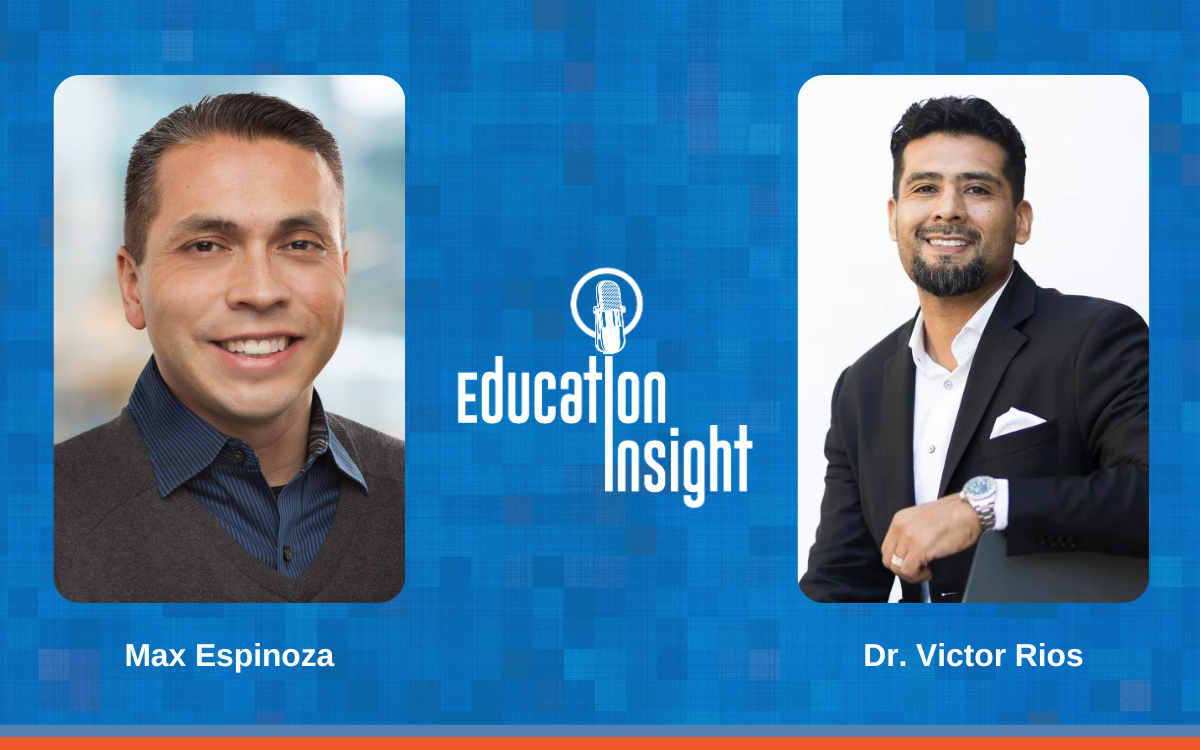
Dr. Victor Rios
MacArthur Foundation Chair and Professor of Sociology, University of California, Santa Barbara
Professor Rios’s work analyzes the role of social control and education in determining the well-being of young people living in urban marginality; tracks the social consequences of the punitive state and punitive social control-across institutional settings; and examines young people’s resilience and responses to social marginalization. He uses insight from his research to promote equitable policies and develop programs to improve the lives of marginalized youths.
Rios’s book Punished: Policing the Lives of Black and Latino Boys (NYU Press, 2011), analyzes how juvenile crime policies and criminalization affect the everyday lives of urban youth. Punished is Winner of, the Oliver Cromwell Cox Book Award, American Sociological Association, Section on Racial and Ethnic Minorities; Honorable Mention for Outstanding Book Award, American Sociological Association, Section on Inequality, Poverty, and Mobility; C. Wright Mills Book Award Finalist, Society for the Study of Social Problems; Distinguished Book Award, American Sociological Association, Section on Latina/o Sociology and Honorable Mention for the Eduardo Bonilla-Silva Book Award, Society for the Study of Social Problems.
In his latest book Human Targets: Schools, Police, and the Criminalization of Latino Youth (University of Chicago Press, 2017) Rios finds the traditional good kid/bad kid, street kid/decent kid dichotomy is much too simplistic, arguing instead that authorities and institutions help create these identities—and that they can play an instrumental role in providing young people with the resources for shifting between roles. He finds that to be a poor Latino youth is to be a human target—victimized and considered an enemy by others, viewed as a threat to law enforcement and schools, and burdened by stigma, disrepute, and punishment. Human Targets was a selection for the LA Times Festival of Books in 2017.
Rios has also published on juvenile justice, masculinity, and race and crime in scholarly journals such as The Annals of the Academy of Political and Social Sciences, The Annual Review of Sociology, Latino Studies, and Critical Criminology. He is also the author of three trade books aimed at public audiences.
Professor Rios was awarded the 2017 Public Understanding of Sociology Award by the American Sociological Association. The award is given to a “person or persons who have made exemplary contributions to advance the public understanding of sociology, sociological research, and scholarship among the general public.” He is currently Chair of the Latina/o Sociology Section, American Sociological Association.
Rios engages in multiple public sociology projects. One of his recent projects is an intervention with high school students that have been pushed-out. A documentary film, funded by Sundance, The Ford Foundation, Corporation for Public Broadcasting, YouthBuild and other foundations, featuring his work is scheduled to premiere in Fall 2018 (thepushouts.com). His Ted Talk “Help for the Kids the Education System Ignores” has garnered over 1.3 million views.
In 2018 Rios was one of two nominees for Vice President of the American Sociological Association.
Max Espinoza
Senior Program Officer for the Bill & Melinda Gates Foundation
Max Espinoza is a senior program officer at the Bill & Melinda Gates Foundation, where he focuses on building the political and public will for economic mobility and education reforms that close equity gaps in states across the United States. Max currently leads the foundation’s policy and advocacy efforts in California, and previously supported statewide foundation funded advocacy initiatives in Georgia and Kentucky.
Prior to joining the Gates Foundation, Max was senior vice president of education programs and policy at Scholarship America, a national non-profit organization based in Minneapolis, MN, where he provided leadership for the organization’s education programs and established its policy, advocacy, and research agenda. Max began his career in California’s state capital, where he served for 14 years in various key roles, including as a senior advisor to legislative leadership and as an executive leader at the California Student Aid Commission. During his time at the California Student Aid Commission, Max successfully revamped the state agency’s support services to students and schools in the multi-billion-dollar Cal Grant program, implementing responsive and technology-enabled student-friendly services. In the California state legislature, Max worked as the principal consultant on higher education for the Assembly Budget Committee and was a policy advisor for multiple Assembly Speakers (Antonio R. Villaraigosa, Karen Bass and John A. Pérez), shaping state policy and fiscal priorities that advanced equity in postsecondary education access and attainment.
A first-generation college graduate from a working-class immigrant family, Max holds a Bachelor of Arts degree from UCLA. At UCLA, Max was a campus and statewide student leader, twice elected by the undergraduate student body as the Academic Affairs Commissioner and serving as the UC Student Regent on the systemwide University of California Board of Regents.
In addition to his service to the UCLA Latino Policy & Politics Institute, Max serves as an advisory council member for the Congressional Hispanic Caucus Institute. His past board service includes serving as secretary of the National Postsecondary Policy Institute Board of Directors, president of the Chicano Latino Youth Leadership Project Board of Directors, and as a member of the UCLA Alumni Association Board of Directors.
Interview Highlights
3:57 – Adrienne describes dual enrollment and its benefits.
7:15 – Adrienne speaks to how recent California mandates and initiatives may have influenced the growth of these new programs.
8:34 – Adrienne explains what research shows about the impact of dual enrollment on a student’s academic achievements or even their future success.
9:24 – Adrienne shares examples of dual enrollment activities that are taking place in our region and what is happening in the IE.
13:11 – Adrienne talks about strategies in place to make sure that equal opportunities are available for all students.
20:18 – Jorge explains how dual enrollment aligns with his role at Riverside County Unified School District.
21:28 – Jorge shares his experiences and thoughts on the current dual enrollment programs that are being offered at Riverside Unified School District.
23:32 – Jorge gives insight into how dual enrollment makes students career ready.
25:58 – Jorge describes what challenges students typically face in dual enrollment programs and how he addresses those issues.
32:43 – Jorge shares what he would like to see be the future of the dual enrollment program in his district and beyond.
36:31 – Special Feature: Avijeet Randhawa, 8th-Grader, Auburndale Intermediate School in the Corona Norco Unified School District.
Education Insight tells the story of education in the Inland Empire through the diverse voices of those in and around the regional education community. The show is produced by Growing Inland Achievement, a collective impact organization in the Inland Empire with a mission to increase economic prosperity in the region by increasing educational attainment. Hosted by 30-year broadcast veteran Lacey Kendall, monthly shows explore topics ranging from education challenges and shortcomings to innovations and groundbreaking ideas that are driving student success.