Category: Reports

  • The Transformative Power of Postsecondary Education in California’s Inland Empire 

    The Transformative Power of Postsecondary Education in California’s Inland Empire 

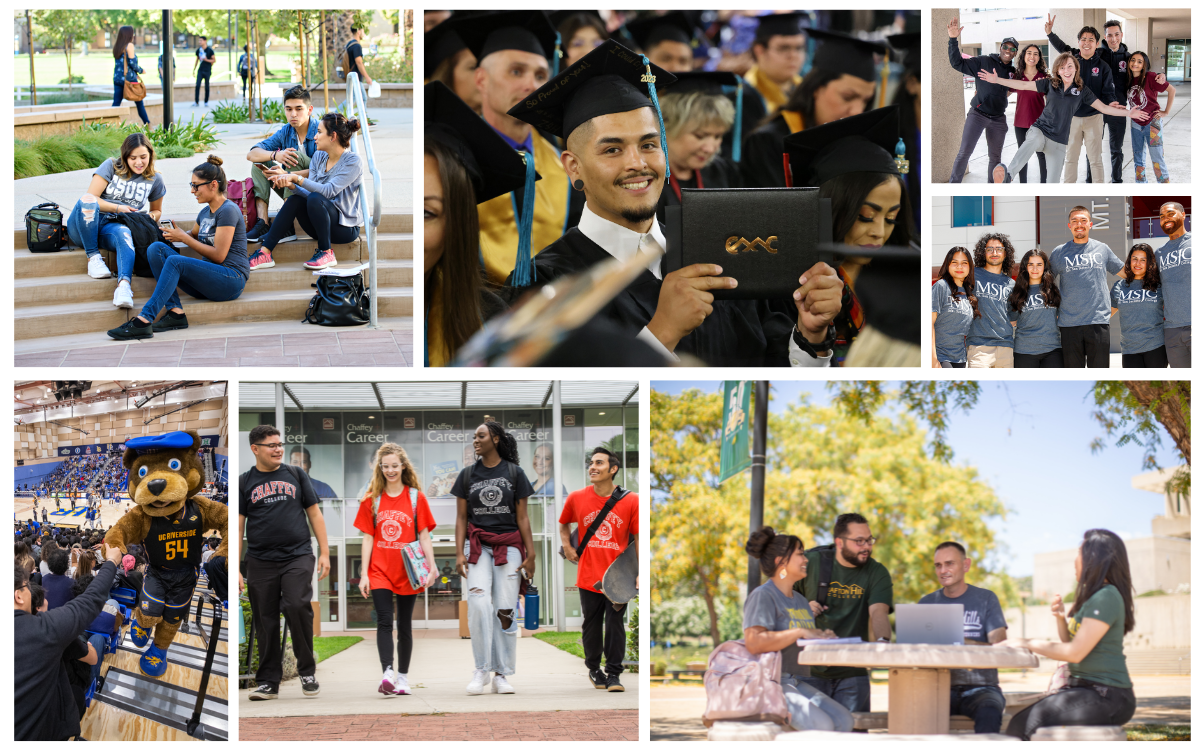
    In California’s Inland Empire, education is more than just a pathway to personal success—it’s a driving force behind regional economic growth and social well-being. Our latest fact sheet, “The Effects of Postsecondary Education in California’s Inland Empire,” uncovers the significant impact that postsecondary education has on our communities, our economy, and the lives of individuals throughout the region. 

    The Economic Ripple Effect of Education 

    For each additional postsecondary graduate in the Inland Empire, the region’s annual Gross Regional Product (GRP) increases by nearly $100,000. This is not just a number; it’s a testament to the transformative power of education. Every graduate not only gains personal economic benefits, such as increased earnings and better job opportunities, but also contributes to the broader economy by expanding the tax base, generating support jobs, investing in capital assets, and boosting local spending. 

    Graduates are more likely to purchase homes, with the average postsecondary graduate in the Inland Empire being able to afford roughly $213,752 more in home value than someone without a degree. This translates to stronger, more stable communities with greater investment in the local economy. The fact sheet highlights that for every postsecondary graduate, there are an additional 4.8 support jobs created throughout the California economy. 

    Regions with higher concentrations of college graduates also tend to have more robust local economies and higher levels of entrepreneurship and innovation. This economic growth, in turn, leads to greater educational opportunities, further enhancing community prosperity. 

    Social and Community Benefits 

    Beyond the numbers, the social impact of education is profound. Postsecondary graduates are more likely to be employed—even during economic downturns—and enjoy better physical and mental health outcomes, with less reliance on social safety nets. They are also more civically engaged, participating in voting, volunteering, and philanthropy at higher rates than non-graduates. These graduates not only improve their own lives but also enhance the social fabric of entire communities. 

    Reducing Economic Inequality 

    Education is a powerful tool for reducing economic inequality in the Inland Empire. The greater earning power and job security results in increased financial stability and the ability to invest in future generations, thereby helping to reduce the cycle of poverty and promote economic mobility. Furthermore, investing in college access and completion for under-represented groups can significantly reduce racial/ethnic disparities in income, health, and other social outcomes. 

    A Call to Action 

    The data clearly shows that investing in education is not just a personal choice; it’s a community imperative. As we strive to meet the ambitious goal set by Governor Newsom—70% of Californians earning a postsecondary degree by 2030—we must work collectively to support our students and ensure that a college education remains accessible to all. 

    Our region has the potential to become a beacon of educational success, but it will require sustained effort from all sectors—educational institutions, government, businesses, and community organizations—to advocate for policies and initiatives that remove barriers to higher education. By working together, we can ensure that the Inland Empire’s future is one of growth, equity, and prosperity. 

    Download the Factsheet

    To explore the full findings and data behind “The Effects of Postsecondary Education in California’s Inland Empire,” download the fact sheet by entering your contact information. This comprehensive resource provides detailed insights into how education drives economic and social progress in our region. 
     

  • Recovery with Equity: A Roadmap for Higher Education After the Pandemic

    Recovery with Equity: A Roadmap for Higher Education After the Pandemic

    Student success in higher education is critical to the health of our state and regional economies. Since the global pandemic struck, Californians and postsecondary institutions alike have been grappling with extraordinary challenges. And long before, it was clear that many California students faced significant structural barriers to earning a college degree. California needs a recovery that courageously addresses inequities in post-secondary education that have created and exacerbated wealth gaps. 

    The Recovery with Equity Taskforce was established by Governor Gavin Newsom’s Senior Policy Advisor for Higher Education, Dr. Lande Ajose, in consultation with the California Governor’s Council for Post-Secondary Education, to recast today’s challenges as an opportunity to help California’s economy recover with a post-secondary ecosystem that is more equitable, resilient, coordinated, and aligned with the economic needs of the state.

    With a focus on equitable student achievement and in partnership with education leaders across the state, the Taskforce produced Recovery with Equity: A Roadmap for Higher Education After the Pandemic. This report includes a set of interconnected recommendations aimed at ensuring that the opportunity for success and economic mobility is equitable and available to all:

    Fostering Inclusive Institutions: Institutional cultures and approaches to teaching and learning that work for all learners, especially those left behind.

    1. Improve Faculty, Staff, and Administrator Diversity
    2. Cultivate Inclusive, Engaging, and Equity-Oriented Learning Environments
    3. Retain Students through Inclusive Supports

    Streamlining Pathways to Degrees: An integrated statewide system for admission and transfer to provide clear, easy-to-navigate pathways to degrees.

    1. Establish an Integrated Technology Platform
    2. Streamline and Unify the College Admission Process
    3. Develop a Common Course Numbering System

    Facilitating Student Transitions: High-touch, high-tech guidance and improved academic preparation for college access and success.

    1. Provide High-Tech, High-Touch Advising
    2. Support College Preparation and Early Credit

    Simplifying Supports for Student Stability: Resources and structures packaged and simplified to help students meet basic, digital, and financial aid needs.

    1. Establish an Integrated Admissions Platform
    2. Subsidize Internet Access for Eligible Students
    3. Improve College Affordability

    Higher education will play a critical role in our state’s economic recovery from the pandemic—and in driving prosperity for California’s future. Our state will thrive when we eliminate income inequality and disparities of credential and degree attainment by race and geography. 

    We encourage you to learn more about these recommendations that our state can pursue to ensure California’s public post-secondary institutions stride toward this vision for a better future, and invite you to join us in considering ways that our network can contribute to the achievement of these goals.

    twitterfacebookinstagramyoutubelinkedin
  • 2021 Top Critical Workforce Occupations in the Region

    2021 Top Critical Workforce Occupations in the Region

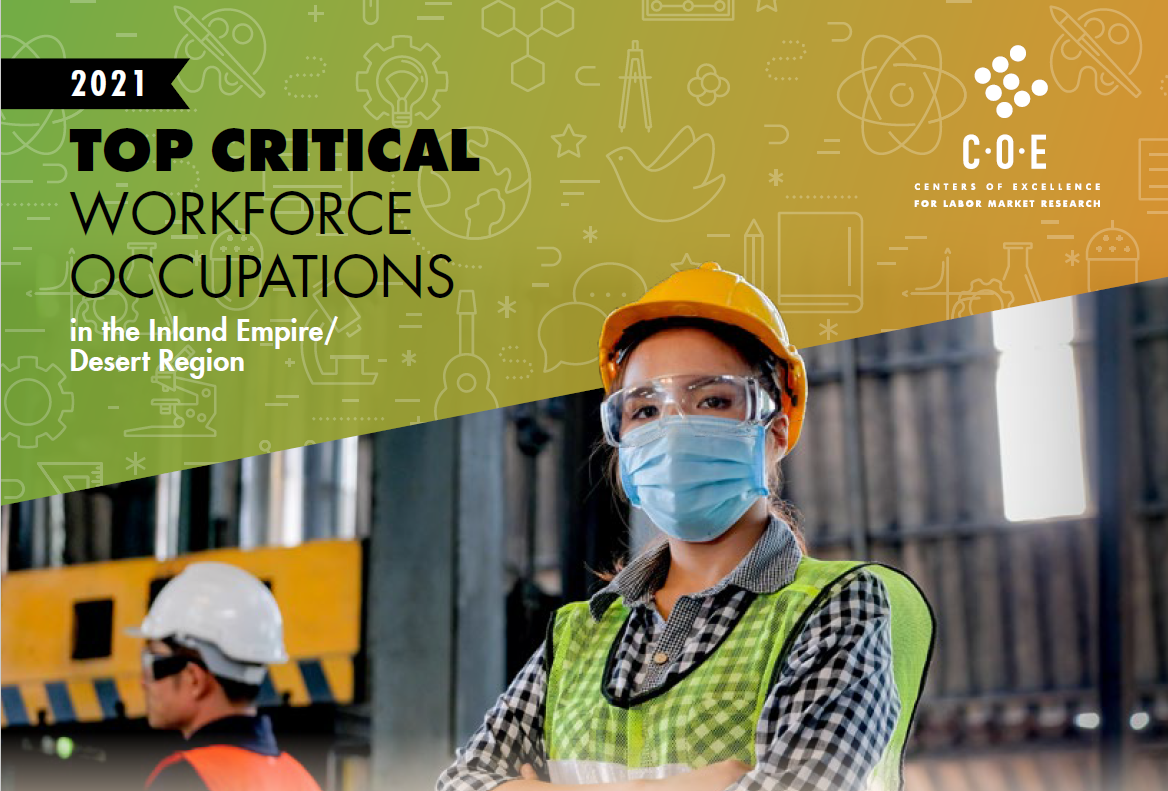
    A recent report from our Partners at the Centers of Excellence for Labor Market Research at Chaffey College focuses on occupations that address the region’s critical health, safety, and economic needs and are expected to remain in-demand despite the ongoing pandemic. These occupations are further categorized by their typical education requirement, projected annual job openings, and if they provide self-sustainable hourly earnings.

    To view other studies and learn more about regional labor market research please visit http://www.coeccc.net.

    twitterfacebookinstagramyoutubelinkedin