
Category: News

  • Education Insight: Reviving Local Journalism in the Inland Empire: A Community Effort

    Education Insight: Reviving Local Journalism in the Inland Empire: A Community Effort

    About This Episode

    Season 4. Episode 5.

    As local newspapers and radio news reports continue to disappear across the U.S., many communities are finding themselves without access to crucial local information. This has led to what experts call “news deserts,” where citizens lack reliable access to local news. Some point to the Inland Empire as one of these growing news deserts.

    In our latest episode of Education Insight, we explore what it means to live in a news desert and why it matters for communities. Without local news, residents can become disconnected from their own communities, unaware of local propositions or the actions of elected officials. But there is hope on the horizon.

    We sat down with Dr. Thomas Corrigan, a professor of communication at Cal State San Bernardino and coordinator of the university’s Local Journalism Partnerships Initiative, to discuss the growing effort to bring back local journalism in the region and why it’s crucial for the future of community engagement. Tune in to hear Dr. Corrigan’s thoughts on the future of local news and the steps being taken to address the growing news desert in the Inland Empire.

    Featured Guest

    Dr. Thomas Corrigan

    Professor of Communication and Media Studies, California State University, San Bernardino

    Dr. Thomas F. Corrigan (or T.C.) is a Professor in the Department of Communication Studies at California State University, San Bernardino (CSUSB). He teaches courses in Digital Media and Society, the Political Economy of Communication, and the Inland Empire News Ecosystem. His scholarship, which is published in academic and popular outlets, focuses on the nature and problems associated with commercial media systems. His recent research and writing examine what he calls the Inland Empire “news mirage” – a dynamic wherein I.E. communities seem to have more substantive, local news sources than they actually do. He also leads a CSUSB team that is working to build a local media coalition to support civic and community journalism in the region.

    Interview Highlights

    3:57 – Adrienne describes dual enrollment and its benefits.

    7:15 – Adrienne speaks to how recent California mandates and initiatives may have influenced the growth of these new programs.

    8:34 – Adrienne explains what research shows about the impact of dual enrollment on a student’s academic achievements or even their future success.

    9:24 – Adrienne shares examples of dual enrollment activities that are taking place in our region and what is happening in the IE. 

    13:11 – Adrienne talks about strategies in place to make sure that equal opportunities are available for all students.

    20:18 – Jorge explains how dual enrollment aligns with his role at Riverside County Unified School District.

    21:28 – Jorge shares his experiences and thoughts on the current dual enrollment programs that are being offered at Riverside Unified School District.

    23:32 – Jorge gives insight into how dual enrollment makes students career ready.

    25:58 – Jorge describes what challenges students typically face in dual enrollment programs and how he addresses those issues. 

    32:43 – Jorge shares what he would like to see be the future of the dual enrollment program in his district and beyond. 

    36:31 – Special Feature: Avijeet Randhawa, 8th-Grader, Auburndale Intermediate School in the Corona Norco Unified School District.

    View our podcast page for more stories like this: https://gia.echofactory.dev/gia-podcasts/

    Education Insight tells the story of education in the Inland Empire through the diverse voices of those in and around the regional education community. The show is produced by Growing Inland Achievement, a collective impact organization in the Inland Empire with a mission to increase economic prosperity in the region by increasing educational attainment. Hosted by 30-year broadcast veteran Lacey Kendall, monthly shows explore topics ranging from education challenges and shortcomings to innovations and groundbreaking ideas that are driving student success.
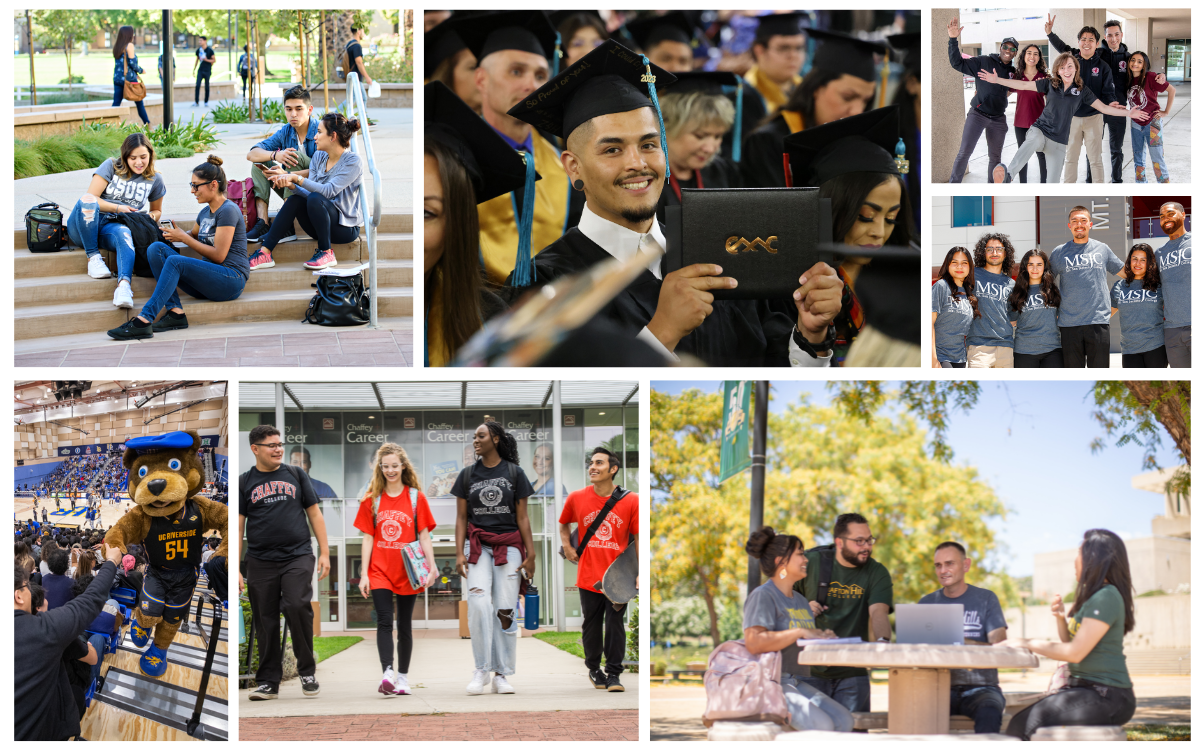

  • The Transformative Power of Postsecondary Education in California’s Inland Empire 

    The Transformative Power of Postsecondary Education in California’s Inland Empire 

    In California’s Inland Empire, education is more than just a pathway to personal success—it’s a driving force behind regional economic growth and social well-being. Our latest fact sheet, “The Effects of Postsecondary Education in California’s Inland Empire,” uncovers the significant impact that postsecondary education has on our communities, our economy, and the lives of individuals throughout the region. 

    The Economic Ripple Effect of Education 

    For each additional postsecondary graduate in the Inland Empire, the region’s annual Gross Regional Product (GRP) increases by nearly $100,000. This is not just a number; it’s a testament to the transformative power of education. Every graduate not only gains personal economic benefits, such as increased earnings and better job opportunities, but also contributes to the broader economy by expanding the tax base, generating support jobs, investing in capital assets, and boosting local spending. 

    Graduates are more likely to purchase homes, with the average postsecondary graduate in the Inland Empire being able to afford roughly $213,752 more in home value than someone without a degree. This translates to stronger, more stable communities with greater investment in the local economy. The fact sheet highlights that for every postsecondary graduate, there are an additional 4.8 support jobs created throughout the California economy. 

    Regions with higher concentrations of college graduates also tend to have more robust local economies and higher levels of entrepreneurship and innovation. This economic growth, in turn, leads to greater educational opportunities, further enhancing community prosperity. 

    Social and Community Benefits 

    Beyond the numbers, the social impact of education is profound. Postsecondary graduates are more likely to be employed—even during economic downturns—and enjoy better physical and mental health outcomes, with less reliance on social safety nets. They are also more civically engaged, participating in voting, volunteering, and philanthropy at higher rates than non-graduates. These graduates not only improve their own lives but also enhance the social fabric of entire communities. 

    Reducing Economic Inequality 

    Education is a powerful tool for reducing economic inequality in the Inland Empire. The greater earning power and job security results in increased financial stability and the ability to invest in future generations, thereby helping to reduce the cycle of poverty and promote economic mobility. Furthermore, investing in college access and completion for under-represented groups can significantly reduce racial/ethnic disparities in income, health, and other social outcomes. 

    A Call to Action 

    The data clearly shows that investing in education is not just a personal choice; it’s a community imperative. As we strive to meet the ambitious goal set by Governor Newsom—70% of Californians earning a postsecondary degree by 2030—we must work collectively to support our students and ensure that a college education remains accessible to all. 

    Our region has the potential to become a beacon of educational success, but it will require sustained effort from all sectors—educational institutions, government, businesses, and community organizations—to advocate for policies and initiatives that remove barriers to higher education. By working together, we can ensure that the Inland Empire’s future is one of growth, equity, and prosperity. 

    Download the Factsheet

    To explore the full findings and data behind “The Effects of Postsecondary Education in California’s Inland Empire,” download the fact sheet by entering your contact information. This comprehensive resource provides detailed insights into how education drives economic and social progress in our region. 


  • GIA Announces 2024 Toward a Shared Vision Award Winners

    GIA Announces 2024 Toward a Shared Vision Award Winners

    Growing Inland Achievement (GIA) has announced the winners for the 2024 Toward a Shared Vision Awards, an annual celebration of individuals and groups who are advancing equitable educational attainment and economic success in the Inland Empire. The awards dinner will be held on October 8, 2024, at the Riverside Convention Center, kicking off a two-day summit dedicated to addressing regional educational issues and opportunities.

    This year’s honorees reflect diverse and collaborative efforts taking place across the region to address key educational challenges. From organizations driving equity-focused initiatives to individuals fostering innovation, the awards shine a spotlight on those making a notable impact in their communities.

    The 2024 award categories and honorees are:

    • Excellence in Regional Transformation: BLU Educational Foundation
    • Equity-Focused Excellence: Rialto Project Impact, Rialto Unified School District
    • Student-Centered Excellence: Riverside County Office of Education
    • Excellence in Regional Collaboration: Inland Empire College Corps Consortium
    • Excellence in Innovation: Randall Lewis

    “The work to improve education involves many dedicated contributors and these honorees have shown exceptional leadership in driving progress,” said Dr. Ashish Vaidya, President and CEO of Growing Inland Achievement. “They represent a key part of the collective effort to improve education and economic mobility in the Inland Empire, and we are honored to highlight their important contributions.”

    This year’s awards dinner will bring together educators, community leaders, and stakeholders from across the region, recognizing the vital role collaboration and innovation play in improving educational outcomes and economic success for all.

    For more information about the awards, event details, or to register for the Toward a Shared Vision Summit, visit https://gia.towardasharedvision.org or contact frances@gia.echofactory.dev.


  • Education Insight: Rethinking the Role of Testing in K-12 Education

    Education Insight: Rethinking the Role of Testing in K-12 Education

    About This Episode

    Season 4. Episode 4.

    In the latest episode of Education Insight, we delve into the challenges and complexities of K-12 testing, a critical topic that continues to shape educational practices and policies. Traditional standardized testing has faced criticism for potential biases and the stress it imposes on students, often detracting from valuable classroom time. Our guest discusses these issues and explores how current testing methods can sometimes lead to unfair outcomes, particularly in under-resourced communities.

    The episode highlights innovative approaches to rethinking K-12 assessments. Instead of relying on one-size-fits-all models, educators are increasingly developing dynamic and equitable testing methods that provide more meaningful data and better support student learning. By aligning assessments with classroom instruction and considering the diverse needs of all students, these new methods aim to make testing not just a tool for measurement, but an integral part of the learning process.

    Our guest also shares stories of how these innovative approaches have made a significant impact in schools, particularly in communities that have been historically underserved. These stories emphasize the importance of challenging traditional testing models and seeking out new ways to create a more equitable and effective education system. Tune in to Education Insight to learn more about how we can transform K-12 testing to better support all students.

    Featured Guest

    Michelle Odemwingie

    Chief Executive Officer, Achievement Network

    Michelle Odemwingie is the chief executive officer at Achievement Network. Michelle joined ANet nearly a decade ago as a coach and has since held roles as chief of school and system services and chief of staff, among others. This includes spearheading ANet’s Breakthrough Results Fund in partnership with five school districts across the country. Through her work at ANet and in her local community, Michelle maintains a deep personal commitment to educational equity and ensuring all students are able to learn and thrive. Prior to joining ANet, she spearheaded the ThinkMath team in California and DC, supporting instructional leaders around math enrichment and intervention programs, as well as supporting secondary math teachers through TNTP and Teach for America. Michelle began her career as an educator teaching math in the District of Columbia and is a graduate of Stanford University. In her free time, Michelle enjoys applying continuous improvement to her cooking, especially pasta dishes.

    Interview Highlights

    3:57 – Adrienne describes dual enrollment and its benefits.

    7:15 – Adrienne speaks to how recent California mandates and initiatives may have influenced the growth of these new programs.

    8:34 – Adrienne explains what research shows about the impact of dual enrollment on a student’s academic achievements or even their future success.

    9:24 – Adrienne shares examples of dual enrollment activities that are taking place in our region and what is happening in the IE. 

    13:11 – Adrienne talks about strategies in place to make sure that equal opportunities are available for all students.

    20:18 – Jorge explains how dual enrollment aligns with his role at Riverside County Unified School District.

    21:28 – Jorge shares his experiences and thoughts on the current dual enrollment programs that are being offered at Riverside Unified School District.

    23:32 – Jorge gives insight into how dual enrollment makes students career ready.

    25:58 – Jorge describes what challenges students typically face in dual enrollment programs and how he addresses those issues. 

    32:43 – Jorge shares what he would like to see be the future of the dual enrollment program in his district and beyond. 

    36:31 – Special Feature: Avijeet Randhawa, 8th-Grader, Auburndale Intermediate School in the Corona Norco Unified School District.

    View our podcast page for more stories like this: https://gia.echofactory.dev/gia-podcasts/

    Education Insight tells the story of education in the Inland Empire through the diverse voices of those in and around the regional education community. The show is produced by Growing Inland Achievement, a collective impact organization in the Inland Empire with a mission to increase economic prosperity in the region by increasing educational attainment. Hosted by 30-year broadcast veteran Lacey Kendall, monthly shows explore topics ranging from education challenges and shortcomings to innovations and groundbreaking ideas that are driving student success.

  • Education Insight: The Great Success of Continuation High Schools

    Education Insight: The Great Success of Continuation High Schools

    About This Episode

    Season 4. Episode 3.

    In this episode of Education Insight, we explore the remarkable success of California’s continuation high schools, focusing on Orangewood High School in Redlands.

    Lacey Kendall interviews Principal Carli Norris, who shares her experiences leading the school and sheds light on continuing schools’ critical role in helping students get back on track. They discuss the key differences between alternative schools, the challenges and rewards of working in continuation education, and the impressive results revealed in a recent decade-long Stanford University study. Tune in to discover why California’s continuation schools are earning high marks and how they are making a lasting impact on students’ lives.

    Featured Guest

    Carli Norris

    Principal, Orangewood Continuation High School

    My leadership style is characterized by my commitment to fostering a positive, inclusive school culture through effective communication and strong community relationships. In leading by example, I emphasize personalized learning and innovative instructional strategies to meet diverse student needs while championing professional development for my staff. With over nine years of impactful leadership, my continued focus as a high school leader is to always do what is best for students. This passion for student success is what led me to an alternative education setting. My career has been marked by the strategic implementation of Multi-Tiered Systems of Support (MTSS), which has significantly enhanced academic performance and behavioral outcomes for my students.  My dedication to creating equitable learning environments ensures that each student has the support and resources necessary to achieve their highest potential.

    Interview Highlights

    3:57 – Adrienne describes dual enrollment and its benefits.

    7:15 – Adrienne speaks to how recent California mandates and initiatives may have influenced the growth of these new programs.

    8:34 – Adrienne explains what research shows about the impact of dual enrollment on a student’s academic achievements or even their future success.

    9:24 – Adrienne shares examples of dual enrollment activities that are taking place in our region and what is happening in the IE. 

    13:11 – Adrienne talks about strategies in place to make sure that equal opportunities are available for all students.

    20:18 – Jorge explains how dual enrollment aligns with his role at Riverside County Unified School District.

    21:28 – Jorge shares his experiences and thoughts on the current dual enrollment programs that are being offered at Riverside Unified School District.

    23:32 – Jorge gives insight into how dual enrollment makes students career ready.

    25:58 – Jorge describes what challenges students typically face in dual enrollment programs and how he addresses those issues. 

    32:43 – Jorge shares what he would like to see be the future of the dual enrollment program in his district and beyond. 

    36:31 – Special Feature: Avijeet Randhawa, 8th-Grader, Auburndale Intermediate School in the Corona Norco Unified School District.

    View our podcast page for more stories like this: https://gia.echofactory.dev/gia-podcasts/

    Education Insight tells the story of education in the Inland Empire through the diverse voices of those in and around the regional education community. The show is produced by Growing Inland Achievement, a collective impact organization in the Inland Empire with a mission to increase economic prosperity in the region by increasing educational attainment. Hosted by 30-year broadcast veteran Lacey Kendall, monthly shows explore topics ranging from education challenges and shortcomings to innovations and groundbreaking ideas that are driving student success.