Growing Inland Achievement (GIA) is proud to join partner institutions and organizations in recognizing and celebrating the contributions and cultures of Hispanic residents during Hispanic Heritage Month. In a recent video, President and CEO of GIA, Dr. Carlos Ayala, shares a special message with the Inland Empire community.
Over 120 community leaders from education, business, government, and nonprofit sectors gathered virtually on September 16-17 for thefifth annual Toward a Shared Vision convening presented by Growing Inland Achievement (GIA).
Event participants worked together in sessions and workshops to discuss collaborative solutions for increasing equitable educational attainment in the Inland Empire and shared positive feedback about the convening. “My world has just opened up thinking about all of the moving parts in education equity and overall cradle-to-career work being accomplished and in the works,” said one attendee. Another participant shared their appreciation for the opportunity to come together and learn more about regional initiatives and available support. “I appreciated learning about all the regional initiatives taking place and how they are supported and fused by the vision and mission of GIA.”
In his opening remarks, GIA’s President & CEO, Dr. Carlos Ayala, emphasized the need to continue working together as a united bi-county region to improve educational outcomes, which in turn will fuel regional economic growth.
Dr. Carlos Ayala makes opening remarks at Toward a Shared Vision, 2021
During the event, participants worked together in sessions and workshops to discuss collaborative solutions for increasing equitable educational attainment in the Inland Empire. “My world has just opened up thinking about all of the moving parts in education equity and overall cradle-to-career work being accomplished and in the works,” said one attendee. Another participant shared their appreciation for the opportunity to learn more about regional initiatives and available support. “I appreciated learning about all the regional initiatives taking place and how they are supported and fused by the vision and mission of GIA.”
Throughout the two-day event, participants heard from keynote speakers including Leona Christy, CEO at Catalyst:Ed [Video], Tessa Carmen De Roy, President at California College Guidance Initiative [Video], and Connie Leyva, California State Senator-20th District with Catalina Cifuentes of the Riverside Office of Education [Video]. In another session, GIA’s Governing Board Members shared guidance and examples of how a collective impact approach is a key to transformation in the Inland Empire.
Additional breakouts focused on introducing new tools and resources, such as a new equity continuum tool and College App platform to support regional institutions with equity, access, and student success. Time was also set aside for speed networking and to hear from several Inland Empire students who shared their hopes and fears for the coming year.
A focal point of the convening was to highlight the work of regional Action Network Teams, also known as ANTs, and the efforts of those teams to improve educational equity and economic opportunity for historically marginalized populations in the Inland Empire. GIA supports five different ANTs who meet monthly throughout the year, with broad representation from all educational segments. The ANTs are categorized into the following focus areas, each with its own tactical plan. You can learn more about the ANTs by clicking the links below.
“Toward a Shared Vision brings us together and reminds us of the important work being done to support student success in our region,” said Ann Marie Sakrekoff, Chief Operations Officer at GIA. “We want to thank all of the presenters, speakers, and everyone in attendance who inspired us to continue to marching arm-in-arm towards achieving equitable, student-ready institutions in the Inland Empire.”
By researching, resourcing, and connecting educational institutions, nonprofits, and businesses in the Inland Empire, GIA has helped facilitate regional alignment to increase college preparedness, certificate and degree attainment, and career readiness. Learn more by visiting our website at https://gia.echofactory.dev.
Recordings of all event sessions will be available soon to watch online through GIA’s website and YouTube Page.
By researching, resourcing, and connecting educational institutions, nonprofits, and businesses in the Inland Empire, GIA has helped facilitate regional alignment to increase college preparedness, certificate and degree attainment, and career readiness. Learn more by visiting their website at https://gia.echofactory.dev.
_____________
GIA is a regional collective impact organization aimed at increasing postsecondary credential attainment, adding more qualified people to the workforce, and contributing to a thriving economy. GIA brings together leaders across K-20 education, civic, and business sectors to work together through a collective impact approach to achieve and scale educational and economic success. Several grants have helped GIA carry out their work, including support from a Governors Innovation Award, the College Futures Foundation, the James Irvine Foundation, and the Bill and Melinda Gates Foundation. Learn more at https://gia.echofactory.dev.
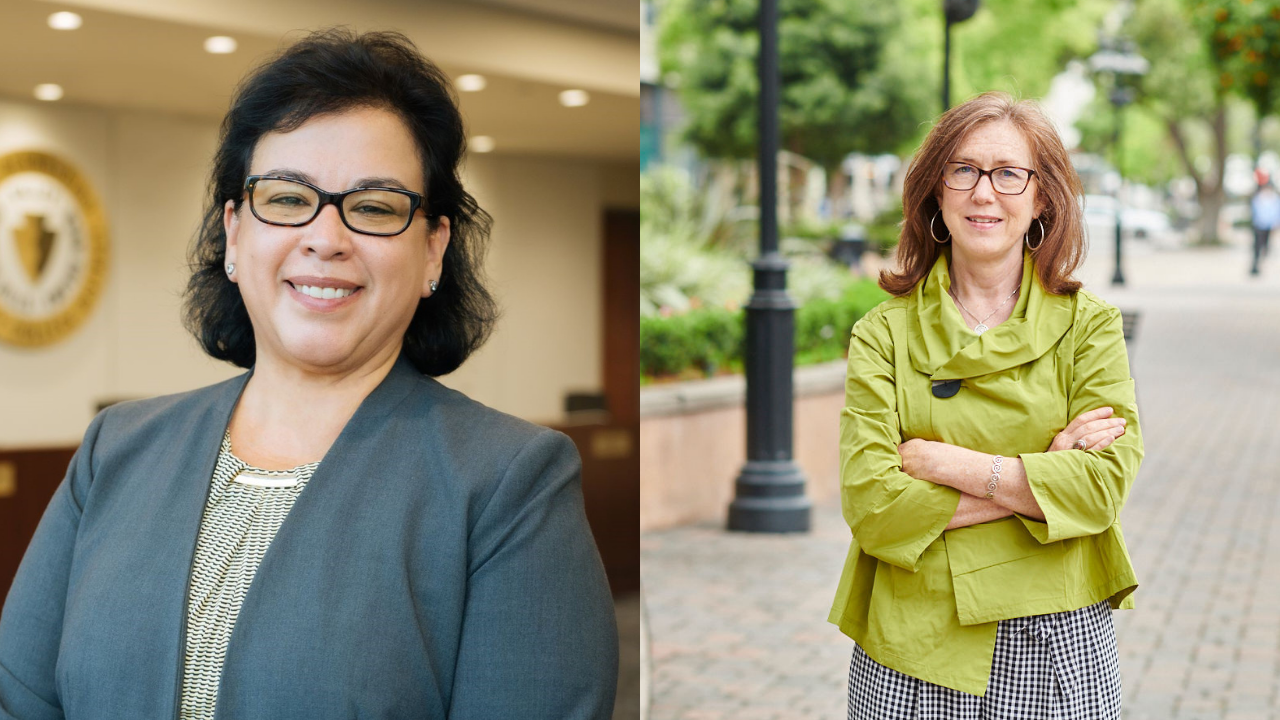
INLAND EMPIRE, CA – September 16, 2021 – Growing Inland Achievement (GIA), during its Toward a Shared Vision regional convening, announced the addition of two Governing Board Members: Diana Z Rodriguez, Chancellor of San Bernardino Community College District, and Michelle Decker, President and CEO of Inland Empire Community Foundation. They will join a Governing Board of nine other regional leaders who provide strategic direction and guidance on achieving GIA’s mission of creating educational and economic equity by researching issues and opportunities, resourcing innovations and solutions, and connecting diverse stakeholders to transform the Inland Empire through education.
“We are extremely grateful to welcome Diana and Michelle to the GIA Board of Directors,” said Dr. Carlos Ayala, President and CEO at GIA. “They each provide our board with a unique background and perspective and we look forward to benefiting from their expertise and guidance.”
Diana Z. Rodriguez is the 16th chancellor of the San Bernardino Community College District — a system that serves 20,000 students through Crafton Hills College, San Bernardino Valley College, a workforce training facility, and KVCR public radio and television station. As the chief executive officer, Chancellor Rodriguez leads the district’s educational enterprise that generates economic growth for the Inland Empire by adding more than $621 million annually to the regional economy. She is the only Latina chancellor of a community college district in Southern California upon assuming office in August 2021.
In collaboration with the SBCCD Board of Trustees, Chancellor Rodriguez has laid out four goals:
Promoting student academic and career success.
Nurturing a learning and working environment based on diversity, equity, inclusion, and anti-racism.
Elevating the community college district’s engagement in the region.
Ensuring the district’s financial health.
Like many SBCCD students, Chancellor Rodriguez is the first in her family to achieve a college education. She is a proud graduate of Palo Verde College and a transfer student to California State University, San Bernardino, where she earned a bachelor’s in marketing, a master’s degree in business administration, and another master’s degree in education. She is a doctoral candidate in Higher Educational Leadership at Northcentral University.
Chancellor Rodriguez previously served as president of San Bernardino Valley College from July 2016 through July 2021. During her tenure, SBVC faculty and staff spearheaded educational strategies to earn the campus the highest level of accreditation — among the best in California.
Chancellor Rodriguez has a long and distinguished career of more than 30 years working in higher education as a faculty member and an administrator, advocating for student success and a strong connection to the community. Before leading San Bernardino Valley College, she served as Vice President of Student Services and Interim Vice President of Academic Services at Las Positas College in the Bay Area of California and Vice President of Student Services at Palo Verde College in Blythe.
Her accomplishments have drawn several awards, including the 2018 Woman of the Year Award for the 47th Assembly District of California.
Michelle Decker is the President and CEO of the Inland Empire Community Foundation serving San Bernardino and Riverside Counties. She held leadership positions in community-based nonprofits for over 27 years, with a focus on community economic development, community development, and sustainability. She has also specialized in building or re-building nonprofit organizations at the local level in both urban and rural communities. All of these efforts have meant developing deep experience in partnerships and collaborations – with other nonprofits, local, state, and federal governments, and private businesses.
Prior to joining the Foundation, Michelle was the CEO of Rural Action, a membership-based community development corporation in Appalachian, Ohio, working to build a more just economy through leadership development, social enterprises, and environmental restoration. She initiated multiple social enterprises including a produce auction serving regional farmers, a Zero Waste Event Production business, and a water quality initiative with multiple higher education and natural resource partners. Michelle expanded Rural Action’s national service program from 6 to 40 members. She partnered with the USFS for 10 years to undertake watershed restoration, native plant restoration, and environmental education. She collaborated with the USDA on food systems and local agricultural efforts, and with the Appalachian Regional Commission and Center for Rural Entrepreneurship, now part of LOCUS and Virginia Community Capital, to bring greater entrepreneurship potential and small businesses to towns in southeast Ohio.
Before working in Appalachian Ohio, Michelle ran Southeast Community Development Corporation in Baltimore City and helped re-build the state’s community development trade association called the Asset Building Community Development Network. She worked at the Faith Fund, a faith-based CDFI, and was the first program officer for Community Economic Development at the Maryland Center for Community Development.
Today her work is focused on expanding the power of philanthropy across the Inland Empire’s 27,000 square miles and extremely diverse geographies and populations. IECF was California’s ACBO for Region 7 during the 2020 Census, recently hired a Director of Policy and Governmental Affairs, and is establishing the backbone function for the Inland Economic Growth and Opportunity strategy. Michelle lives with her husband Zach, also a community development professional, and their two children in Riverside.
The following article is a special feature on 2018-2019 California Math Achievement written by guest blogger, Marcelino Pena.
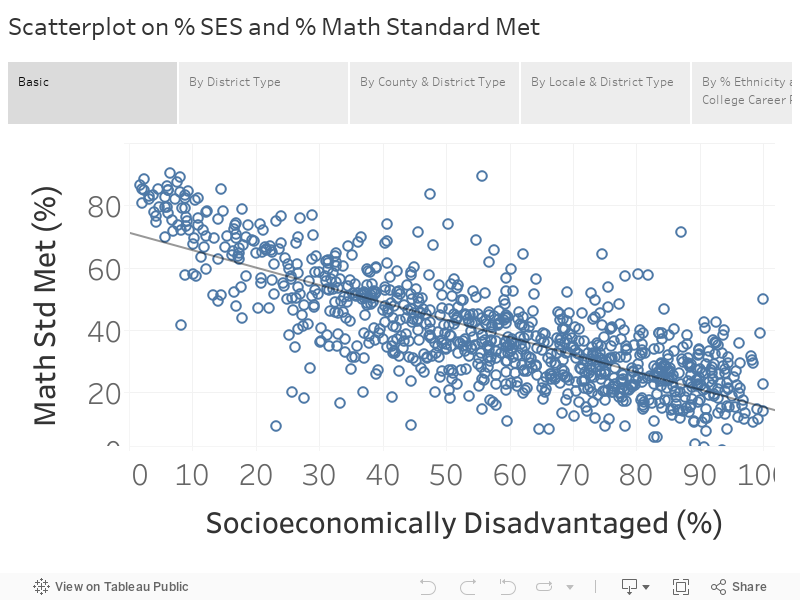
There is a great divide among California public students’ math achievement during the 2018-2019 pre-pandemic year that can literally be seen by a simple scatter plot where the Y-axis has the percent of All Students Achieving Grade Level Math Standard and the X-axishaving the percent ofAll Students classified asSocioeconomically Disadvantaged(either the student was amigrant, foster, homeless at any time during the academic year, or they were eligible for Free or Reduced-Priced Meal (FRPM) Program (also known as the National School Lunch Program) or had direct certification for FRPM at any time during the academic year at the testing school, orthe parent education level is marked as “both parents did not receive a high school diploma” at the time of testing).
But digging deeper into the publicly available datasets of the California Department of Education for 2018-2019 we find more intricate details of success and a fostering of systemic solutions that ultimately will enable the Golden State to not just meet the current devastating challenges of student economics but confront the ongoing setbacks caused by the world-wide Covid-19 pandemic.
California Department Education surveyed Local Education Agencies (School Districts) to self-assess through either their own narrative summary or using a “Self-Reflection Tool” which asks each agency to scale their level of providing professional and aligned common core standards using the following scale:
1= Exploration and Research Phase
2= Beginning Development
3= Initial Implementation
4= Full Implementation
5= Full Implementation and Sustainability
Using the above school district level of implementation and the “California Assessment of Student Performance and Progress (CAASPP) Smarter Balanced Assessments” which provides all the different student demographic math achievement levels per school we can begin to see the relationship between Common Core mathematics and overall student math achievement.
Student math achievement was shown statistically to improve significantly as the unit of implementation level increased for three major demographic controls of Parent Education, Socio-Economic, and Socio-Economic interacting with Race and most math achievements were found in Districts and Schools site commitment to level 5 implementation.
Using the Tableau dashboard available at the end you will be able to select the grades and demographics enabling yourself to see the different math achievement results based on the available dataset of 2018-2019.
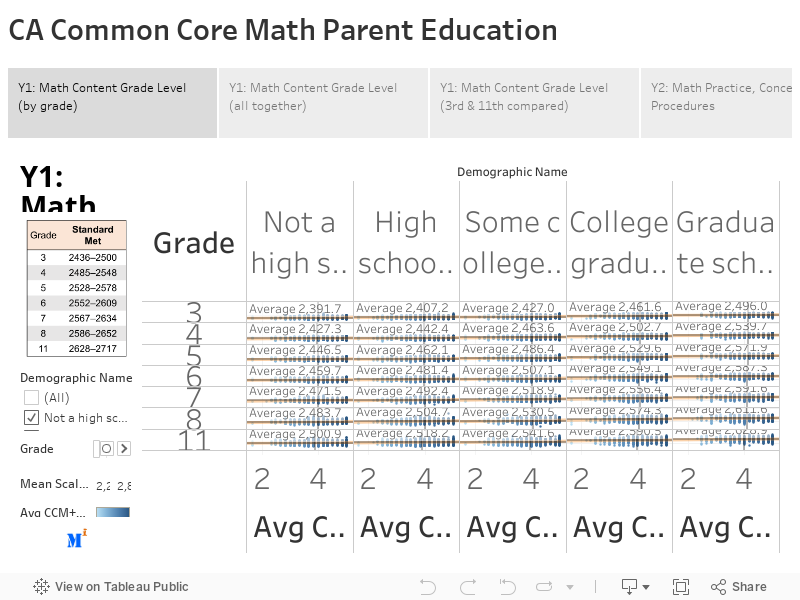
Below is a sample for the Parent Education and 3rd graders across the state where the level of implementation (1 to 5) is the x-axis while the student Math Content Grade Level is the y-axis (note the grey are the expected grade level ranges for 3rd graders).
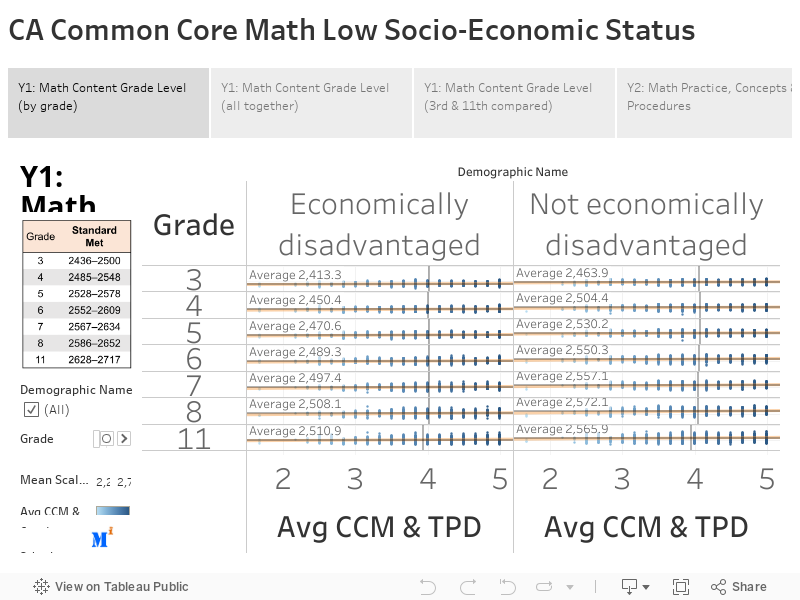
Similarly, below is a sampleof SESdemographicsbut with all Grades shown.Again,as before the Vertical Axis is the Math Content Grade Level Score and the horizontal axis is the aggregate average of all the5categories of Common Core Math and Teacher Professional Development, this time the gradesare shownas colors from 3rdgradeto 11thgrade.
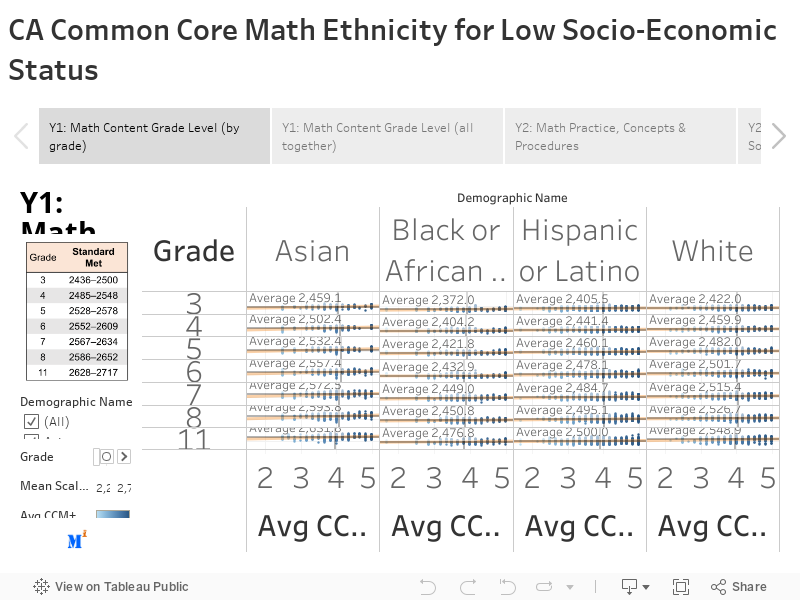
Lastly, this is an example of theinteraction of Low SESandRacewho I have shown in the beginning to be the majority of California and therefore, the key students of our study.These are the students that California must focus its attention on, and we can again see a strong trend in the right direction as the level of implementation increases for each group of students. Here we want the percentage volumes to go from Not Met toMetand Above so this model must be replicated every year to determine how the percentages have changed from Not Met toMetand Above.
Socio-Economic Status (SES) and Common Core Mathematics show how SES exacerbates foundational mathematical acquisition, Schmidt 2021 “The Role of Opportunity to Learn in Ethnic Inequality in Mathematics.”, and the overall framework of Common Core Mathematics can be described as the five interwoven strands of Conceptual Understanding (math concepts), Procedural Fluency (math applications), Strategic Competence(use math appropriately), Adapting Reasoning(create mathematically), and Productive Disposition(value math as an essential tool), Kilpatrick et al., 2001 “Adding It Up, Helping Children Learn Mathematics”. Thus, Common Core Mathematics pulls together the hallmark concepts of “Coherence” and “Opportunity to Learn” that empower every student regardless of SES the keys to the infinite doors they will encounter in their futures.
Finally combining professional teacher development with common core mathematics is like putting Alteryx and Tableau together or peanut butter and jelly namely having the best of both worlds that is the science and art. In Darling-Hammond 2020 “Implications for the educational practice of the science of learning and development” science of learning and development (SOLD) we find the following key importance:
“…children have individual needs and trajectories that require differentiated instruction and supports to enable optimal growth in competence, confidence, and motivation.
From an ecological systems framework, the school serves as an immediate context shaping children’s learning and development through instruction, relationships with teachers and peers, and the school culture.”
What we find ultimately is that critical independent thinking is fostered in communal environments of support that allowed students to be challenged to answer their own questions. Or as the late great scholar Robert Moses stated in his 2002 “Radical Equations, Civil Rights from Mississippi to the Algebra Project”:
“Teachers, of course, are another part of this equation. It should be clear by now that underlying our curriculum and pedagogy is the expectation that teachers will make fundamental changes in the way they teach. They cannot simply be lecturers attempting to pour knowledge into their heads of students who sit passively like inanimate vessels.”
The research document below provides all the details on California math achievement for 2018-2019 and hope to receive many questions from all California stakeholders, including students and parents.
Media inquiries and questions should be directed to Marcelino Peña, Organization Optimization Engineer / Tableau Developer / Math Educator, mp.marcelinopena@gmail.com. For more information visit www.mathpowerimagination.com.
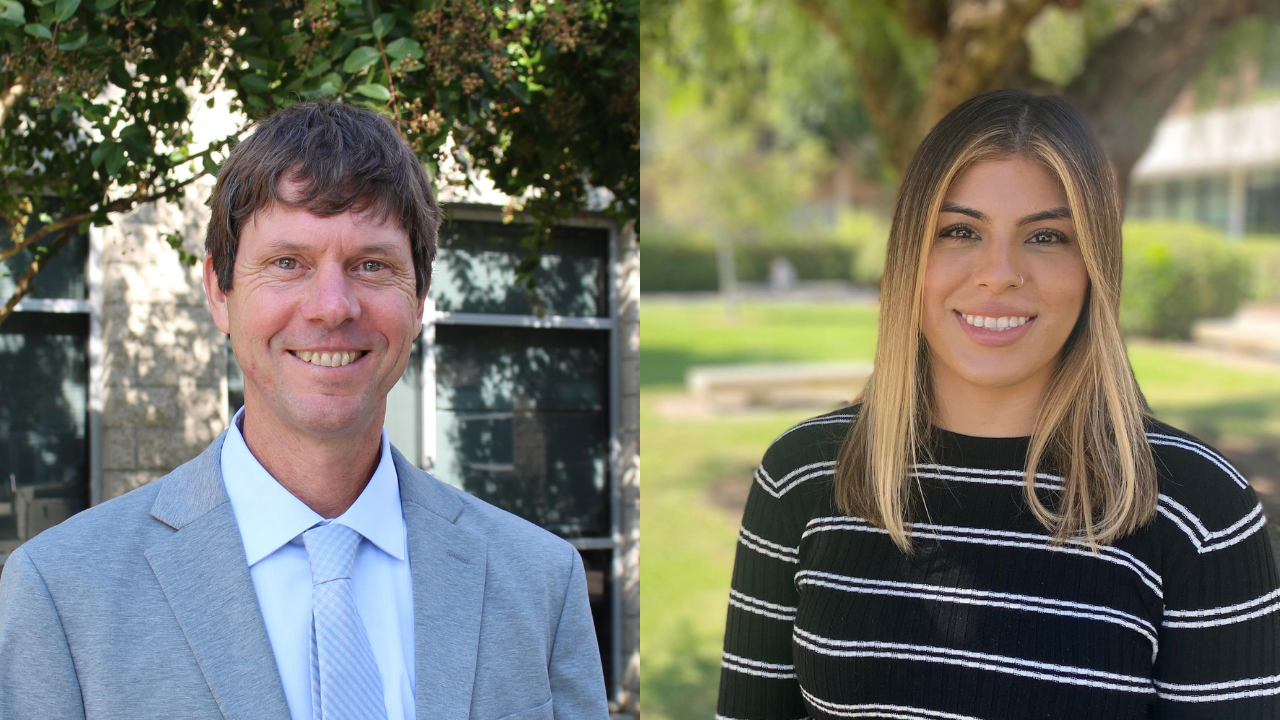
Growing Inland Achievement (GIA) is pleased to announce the addition of two new team members who began working in early September. Michael Wangler joins GIA asDirector of Institutional Supportand Alejandra Gomez asCoordinator of Research and Evaluation.
“We’re very excited about the addition of Alejandra and Michael to the team,” said Ann Marie Sakrekoff, Chief Operating Officer,at Growing Inland Achievement. “Both Michael and Alejandra have rich backgrounds in postsecondary education and share a passion for creating equitable educational opportunities for students.I have no doubt that they will be an asset to the GIA team and greater Inland Empire educational network.”
Michael Wangler brings over 20 years of leadership experience in the California Community College system, both as a faculty member and academic administrator. Since 2017 he has served as an academic dean at Citrus College, where he spearheaded major developmental educational reforms in mathematics that led to significant increases in success and completion rates in transfer-level mathematics, while also narrowing equity gaps among first-generation and low-income students. He also oversawCareer Education at the college, where he developed an integrated pathways model that links adult education, noncredit and credit programs to serve the workforce development needs of the community. He lives with his family in the Inland Empire region of Southern California and looks forward to continuing his student-centered work in higher education in his new role as the Director of Institutional Support with Growing Inland Achievement.
Alejandra Gomez, a Los Angeles native, Alejandra’s passion for educational equity and education data is rooted in personal and professional experiences. She holds her undergraduate degree in International Development Studies from UCLA and a master’s of arts in Urban Education Policy from Brown University. Over the past eight years, she has worked in the K-12 system at the nonprofit level and more recently, in higher education as a Data Analyst at California State University, Long Beach. She is excited to take on the role of Data and Evaluation Coordinator at Growing Inland Achievement and support GIA’s data goals.