Category: News

  • Recovering from Racial Inequities

    Recovering from Racial Inequities

    Watch the Video Recording or Listen to the Audio Podcast Below

    Full Video Recording

    Audio Podcast

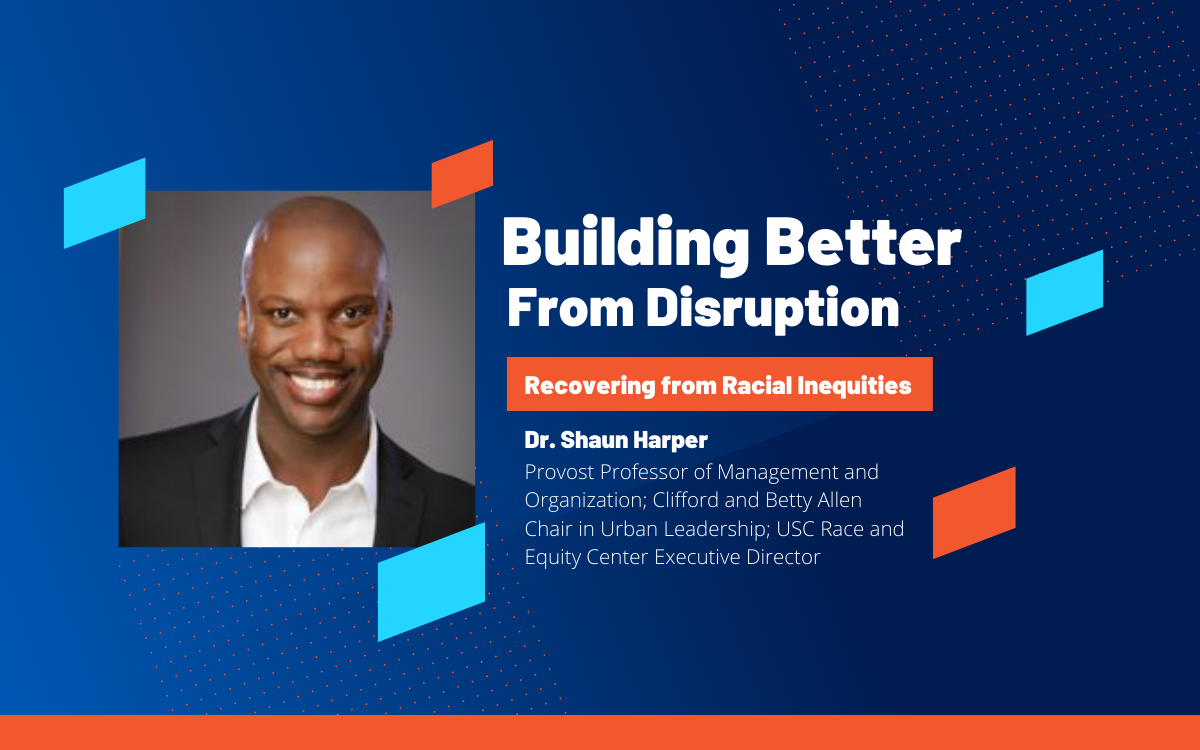
    In this session, Dr. Shaun Harper shares practical tips and tools for achieving equity in education.

    Keynote Speaker: Provost Professor of Management and Organization; Clifford and Betty Allen Chair in Urban Leadership; USC Race and Equity Center Executive Director.

    Session Resources

    00:38:51 Gregory Anderson: Good afternoon from Riverside City College!
    00:39:49 Jacquelyn Miller-Temecula Valley Unified: Hello from Temecula Valley Unified ?
    00:42:11 Carlos Ayala: Welcome RCC.
    00:42:22 Carlos Ayala: Welcome Temecula Valley.
    00:45:07 Carlos Ayala: Pidgeon Hole?
    00:45:53 Ann Marie Sakrekoff: I’ll add it in the chat
    00:46:04 Cynthia Glover Woods: Thank you.
    00:46:53 Dr. Shaun Harper (he/him): https://uscrec.info/precovid
    00:47:18 Dr. Shaun Harper (he/him): https://uscrec.info/precovid
    00:48:38 Ann Marie Sakrekoff: To ask questions of Dr. Harper, please go to https://pigeonhole.at/UT2395
    01:00:05 Fátima (she/her/ella): Will this recording be available for us to share? I have an entire team of staff who needs to hear this from Dr. Harper.
    01:00:34 Yvette Hayes: ^^^
    01:00:56 Carlos Ayala: Yes Fatima. It will be on our website.
    01:01:22 Fátima (she/her/ella): Thank you ??
    01:01:48 Woods, Kristi: The charge is so important, though!!!
    01:03:06 Minerva Flores: And the equity plans submitted are not focused on changing institutional or practitioner practices. And it always has race neutral language
    01:03:24 Yvette Hayes: ^^^ that part
    01:06:50 Carlos Ayala: To ask questions of Dr. Harper, please go to https://pigeonhole.at/UT2395
    01:13:21 Jacquelyn Miller-Temecula Valley Unified: I printed this report this morning!
    01:13:36 Carlos Ayala: Very important document. Great ideas and focus areas.
    01:20:12 Carlos Ayala: The community colleges are currently working on their equity plans.
    01:23:53 Dr. Shaun Harper (he/him): https://race.usc.edu/2021/12/09/deep-engagement-in-los-angeles-and-inglewood-k-12-schools/
    01:32:15 Ann Marie Sakrekoff: To ask questions of Dr. Harper, please go to https://pigeonhole.at/UT2395
    01:40:35 Ann Marie Sakrekoff: MESCal (Math Equity in Southern California) https://www.mescal.info/
    02:03:17 Jackie Melendez: Excellent question, Carlos! IEGO is excited to partner with GIA on this critical regional effort.
    02:03:59 Jacquelyn Miller-Temecula Valley Unified: Mr. Ayala, please keep me informed on the “Teach Me The Truth” campaign. GIA is a valuable resource for me. Thank you.
    02:07:13 Carlos Ayala: https://gia.echofactory.dev/k-16-education-collaborative/
    02:08:02 Jacquelyn Miller-Temecula Valley Unified: I have registered for this meeting.
    02:08:18 Carlos Ayala: Great Jacquelyn. See you there.
    02:08:21 Ann Marie Sakrekoff: Please help us to continue great content by taking our survey: https://corexmscjvtwdqg9rjdq.qualtrics.com/jfe/form/SV_6sagYvoJjJTJVv8
    02:08:35 Carlos Ayala: We want Temecula to be fully engaged in this work.
    02:09:27 Jacquelyn Miller-Temecula Valley Unified: So do I. I am trying…..
    02:10:15 Carlos Ayala: Please connect with me directly. Carlos@gia.echofactory.dev I want to follow up with you directly.
    02:11:19 Dr. Shaun Harper (he/him): https://time.com/race-in-the-workplace/
    02:12:34 Jacquelyn Miller-Temecula Valley Unified: Carlos, will do.
    02:12:49 Jacquelyn Miller-Temecula Valley Unified: YES!!!
    02:14:35 Ann Marie Sakrekoff: Please help us to continue great content by taking our survey: https://corexmscjvtwdqg9rjdq.qualtrics.com/jfe/form/SV_6sagYvoJjJTJVv8
    02:15:32 Dr. Shaun Harper (he/him): https://race.usc.edu/
    02:17:56 Jacquelyn Miller-Temecula Valley Unified: Thank you!!

    Building Better from Disruption is a virtual series designed to build upon lessons learned from districts’ responses to the impact the COVID-19 pandemic has had on schools and school systems.  This series is designed to provide education partners, particularly administrators and teacher leaders working at the school site level, with best practices and resources that support students’ successful return to in-person instruction.  This five-part virtual series will focus on the essential areas of social-emotional learning, accelerated learning, and community partnerships.  During each session, participants will have the opportunity to learn, connect, and interact with expert practitioners and session participants. Support for Building Better from Disruption provided by the William & Flora Hewlett Foundation.

    When considering the concept of gathering authentic student voice and input realize that in the long run it is a net benefit.  Even if it is difficult to hear or guided by incomplete information, it will inform your decisions and point you to areas of need.  Remember, they are often having these conversations whether you hear it or not.
  • Culturally Responsive Teaching: Redefining Student Success with an Equity Lens

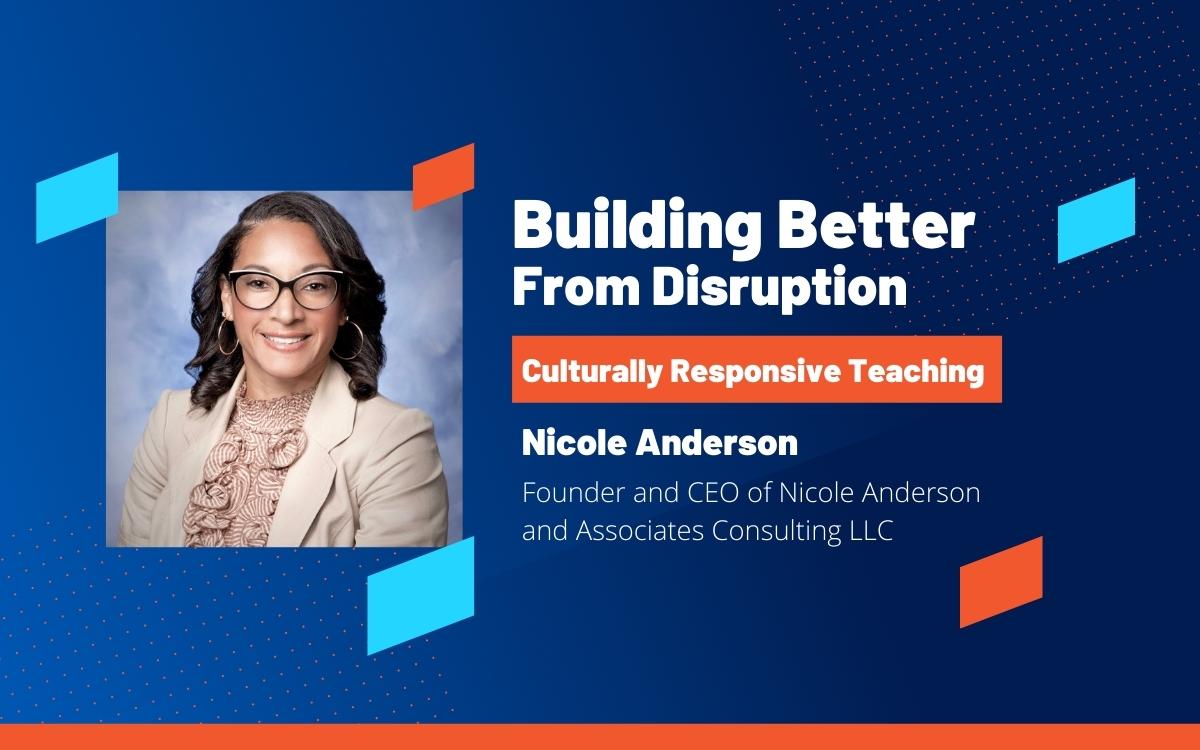
    Culturally Responsive Teaching: Redefining Student Success with an Equity Lens

    Watch the Video Recording or Listen to the Audio Podcast Below

    Session Resources

    About the Session

    In this session, educators engage in educational equity work by taking a deep dive into concepts that support the development of an authentic commitment to redefining student success with an equity lens. Participants learn how to move from theory to practice through utilizing numerous tools for practical application and facilitation of equity work. Content focuses on mindsets and beliefs while creating a parallel between adaptive and technical work in the school system to interrupt inequitable practices and close equity gaps for marginalized student groups. Topics and outcomes include:

    • Develop common language, define equity, diversity, and inclusion to guide facilitation of conversations and the work
    • Develop an understanding of research around the 4 indicators of equity to address instructional practices and academic achievement
    • Develop an understanding of collecting, analyzing, and monitoring qualitative and quantitative data to drive equity work in the classroom
    • Recognize and respond to the barriers to equity and cultural proficiency (i.e. history of public education, implicit bias, stereotypes, and institutional racism)
    • Reflect on the role of educators in perpetuating or ending educational gaps
    • Understand a system’s approach to interrupting patterns of inequities within the school system

    Keynote Speaker
    Dr. Nicole Anderson, Founder and CEO of Nicole Anderson and Associates Consulting LLC

    Building Better from Disruption is a virtual series designed to build upon lessons learned from districts’ responses to the impact the COVID-19 pandemic has had on schools and school systems.  This series is designed to provide education partners, particularly administrators and teacher leaders working at the school site level, with best practices and resources that support students’ successful return to in-person instruction.  This five-part virtual series will focus on the essential areas of social-emotional learning, accelerated learning, and community partnerships.  During each session, participants will have the opportunity to learn, connect, and interact with expert practitioners and session participants. Support for Building Better from Disruption provided by the William & Flora Hewlett Foundation.

    When considering the concept of gathering authentic student voice and input realize that in the long run it is a net benefit.  Even if it is difficult to hear or guided by incomplete information, it will inform your decisions and point you to areas of need.  Remember, they are often having these conversations whether you hear it or not.
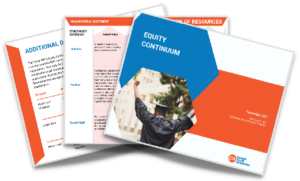
  • New Equity Continuum tool helps organizations address inequities and eliminate racial, gender, and socioeconomic status biases

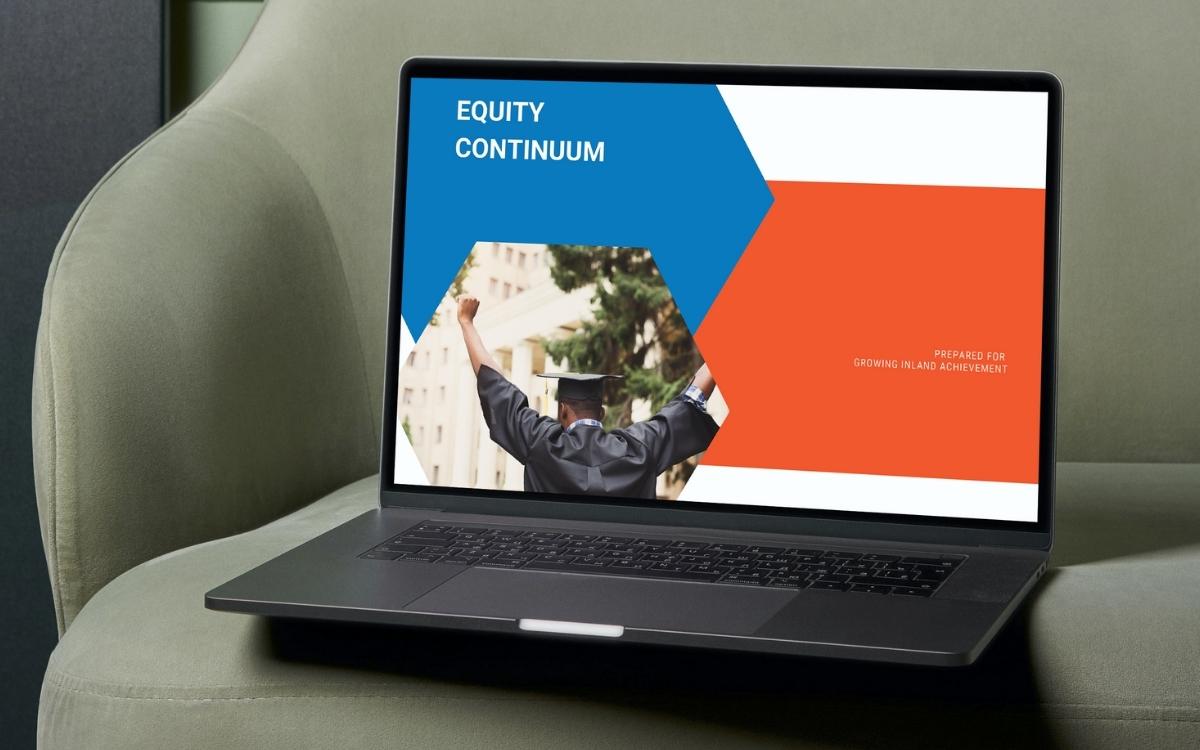
    New Equity Continuum tool helps organizations address inequities and eliminate racial, gender, and socioeconomic status biases

    The tool is designed to support educational institutions in examining their current organizational cultures and structures.

    Growing Inland Achievement’s regional Equity Action Network Team (ANT) recently published a new Equity Continuum tool available for educational institutions and organizations to download now. The Equity Continuum is a formative assessment framework that fosters reflection on the experiences of key parties in the education system – students, faculty, staff, administration, and the overall organization. These experiences are considered on several dimensions including, communication efforts, institutional policy, culture, and physical spaces.

    GIA believes widespread adoption and feedback will help improve the Equity Continuum while providing users the ability to assess, strengthen, and implement equity strategies over time. “This tool will continue to improve as we harness the collective intelligence of the communities that put it to use,” said Dr. Carlos Ayala, President & CEO at GIA. “Imagine after ten iterations—even 100—how many institutional equity dimensions and corresponding equity improvement steps can be discovered, designed, and developed. This is very exciting.”

    Several local organizations have already committed to beta testing the tool. GIA hopes that many more will be early adopters and share insights on what they learn in the process.

    Growing Inland Achievement (GIA) is a regional, collective impact organization that works to achieve educational and economic equity in the Inland Empire. GIA accomplishes this by serving as a collective impact (backbone) organization that supports a cross-sector network of education, government, nonprofit, and business institutions in the Inland Empire, all collectively working towards a shared vision of educational and economic success. GIA researches issues and opportunities, resources innovations and solutions, and connects diverse stakeholders across the two-county region of the Inland Empire. Learn more at inlandempiregia.org.

  • Education Insight: The Value of a College Degree

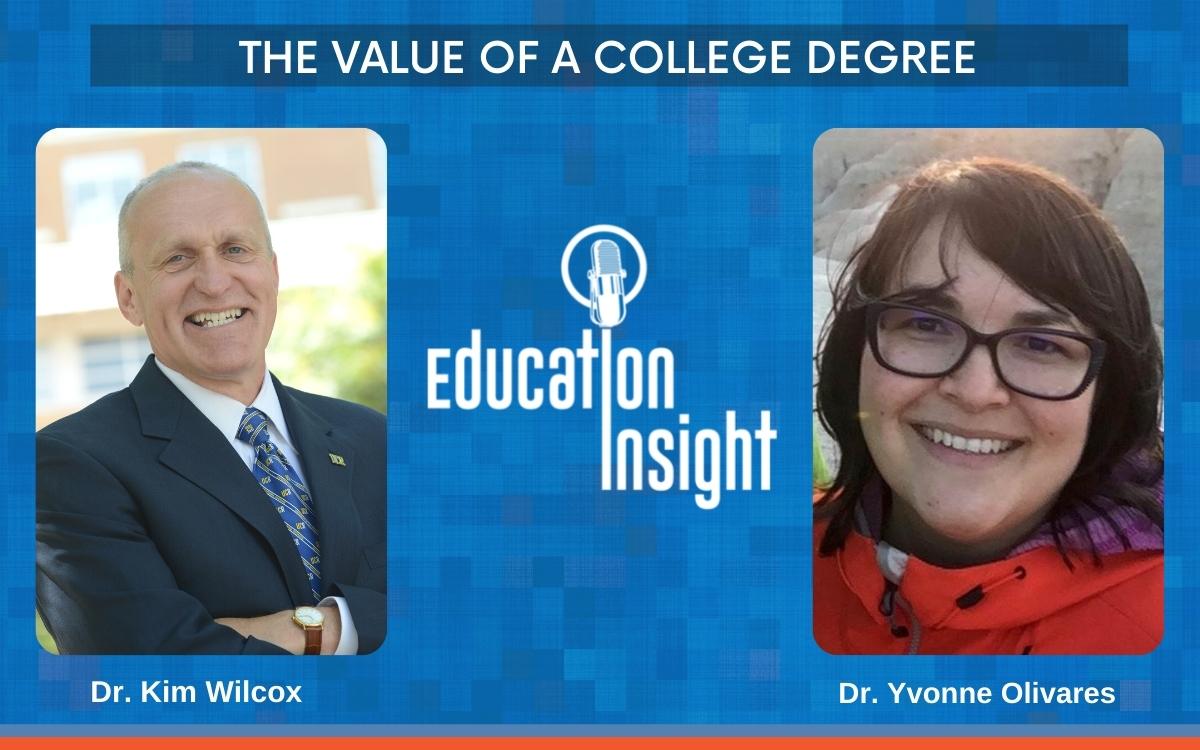
    Education Insight: The Value of a College Degree

    About This Episode

    Season 1. Episode 8.

    So many people are asking what the value of higher education is right now. Is it worth it? What can you expect to make as a result? How much will it cost? How long until it pays off?

    In this episode, we sit down with the Chancellor of the University of California, Riverside, Dr. Kim Wilcox, to hear his thoughts. Plus, we meet Dr. Yvonne Olivares, who recently completed a study of Inland Empire high school students to determine their perceived value of a college education today.


    Featured Guests

    Dr. Kim Wilcox

    Chancellor, University of California Riverside

    Kim A. Wilcox was appointed as UC Riverside’s ninth chancellor in August 2013.

    During his time at Riverside he has spurred a new era of growth, embarking on the expansion of the faculty and development of new facilities for research, teaching, and public service.

    Wilcox is a long-time national advocate for increased access to quality higher education and for the particular role public universities play in the U.S. Under his leadership, UC Riverside became a charter member of the University Innovation Alliance, a collaboration of major public research universities in America seeking to improve student graduation rates and outcomes across all socio-economic and ethnic backgrounds.

    Wilcox began his academic career on the faculty at the University of Missouri. He then spent 14 years on the faculty of the University of Kansas, including 10 as Chair of the Department of Speech-Language-Hearing. Immediately prior to coming to UCR, Wilcox served as provost at Michigan State University from 2005 to 2013.

    He has published extensively in the area of developmental speech acoustics and has directed teaching, research, and service projects funded by the National Science Foundation and the U.S. Department of Education.

    A first-generation college-going student, Wilcox matriculated at Michigan State University, where he earned a Bachelor of Arts in audiology and speech sciences. He also holds master’s and doctoral degrees in speech and hearing sciences from Purdue University.

    Dr. Yvonne Olivares

    Research Scientist & Methodologist, S4DDS

    Applied sociologist & methodologist with 15+ years’ experience in private, public (K-12, CC, 4-year colleges) and nonprofit sectors specializing in (a) designing research that goes beyond the symptoms to identifying root causes and solutions and (b) data storytelling.

    Interview Highlights

    1:40 – Yvonne describes the recent study she helped conduct, who commissioned it, the participants, and what it was all about.

    3:31 – Yvonne explains what types of value the teenagers in the study saw in education.

    7:50 – Yvonne shares what she learned about who or what influences their perceived value of college

    10:19 – Yvonne details commonalities between IE students’ college aspirations and what they imagined their futures to be like.

    15:13 – Yvonne reflects on her understanding of why the students were looking at colleges elsewhere as opposed to the Inland Empire.

    17:47 – Yvonne shares what surprised her the most about what she found over all of the information gathered in this research study

    22:23 – Kim shares his thoughts on whether or not the value of a post-secondary degree has changed over time.

    25:02 – Kim explains how earning a post-secondary degree promotes economic mobility for most people.

    29:26 – Kim gives insight into what can be done to assure that the return on education is equal for students across race and gender lines.

    31:43 – Kim talks about an appropriate time frame for evaluating the ultimate value received from one’s college degree.

    36:48 – Kim shares his opinions about corporate education programs and what impact they have on post-secondary value and attainment.

    38:19 – Kim tells us what he’s most excited to see in regards to the value of a college education this year and going forward in the IE.

    40:22 – Special Feature: A Thank You To Inspiring Teachers

    View our podcast page for more stories like this: https://gia.echofactory.dev/gia-podcasts/

    Education Insight tells the story of education in the Inland Empire through the diverse voices of those in and around the regional education community. The show is produced by Growing Inland Achievement, a collective impact organization in the Inland Empire with a mission to increase economic prosperity in the region by increasing educational attainment. Hosted by 30-year broadcast veteran Lacey Kendall, monthly shows explore topics ranging from education challenges and shortcomings to innovations and groundbreaking ideas that are driving student success.

  • GIA Receives a $300,000 grant from The Kresge Foundation to support and strengthen community college promise programs in the Inland Empire.

    GIA Receives a $300,000 grant from The Kresge Foundation to support and strengthen community college promise programs in the Inland Empire.

    As part of the CoPro2.0 initiative, short for College Promise 2.0, the grant will support research, programming, and scaling equitable, financially sustainable community college promise program activities in the region. Growing Inland Achievement (GIA) is one of 11 organizations in the U.S. selected to receive a share of 2.6 million in funding from The Kresge Foundation.

    “We are grateful to the Kresge Foundation for recognizing that students in our region need support beyond free tuition to make it through college successfully,” said Dr. Carlos Ayala, President & CEO at GIA. “GIA is partnering with the San Bernardino Community College District and Cal-SOAP to pilot a Completion Coaching Program to help our students navigate college and access basic needs support, eliminating barriers to college completion and closing equity gaps.”

    GIA will utilize the funds to improve college persistence and completion through a Completion Coaching Program. Funding will also support colleges to review successes and challenges, seek evidence of program efficacy, and align around best practices, especially those that support non-traditional students and students from historically marginalized communities.

    GIA will work closely with Kresge and College Promise to exchange actionable information to shape more equitable and financially sustainable Promise programs for students in the Inland Empire and other regions across the country.

    The Kresge Foundation was founded in 1924 to promote human progress. Today, Kresge fulfills that mission by building and strengthening pathways to opportunity for low-income people in America’s cities, seeking to dismantle structural and systemic barriers to equality and justice. Using a full array of grant, loan, and other investment tools, Kresge invests more than $160 million annually to foster economic and social change. For more information, visit kresge.org.

    Growing Inland Achievement (GIA) is a regional, collective impact organization that works to achieve educational and economic equity in the Inland Empire. GIA accomplishes this by serving as a collective impact (backbone) organization that supports a cross-sector network of education, government, nonprofit, and business institutions in the Inland Empire, all collectively working towards a shared vision of educational and economic success. GIA researches issues and opportunities, resources innovations and solutions, and connects diverse stakeholders across the two-county region of the Inland Empire. Learn more at inlandempiregia.org.