Category: Articles

  • Happy Native American Heritage Month

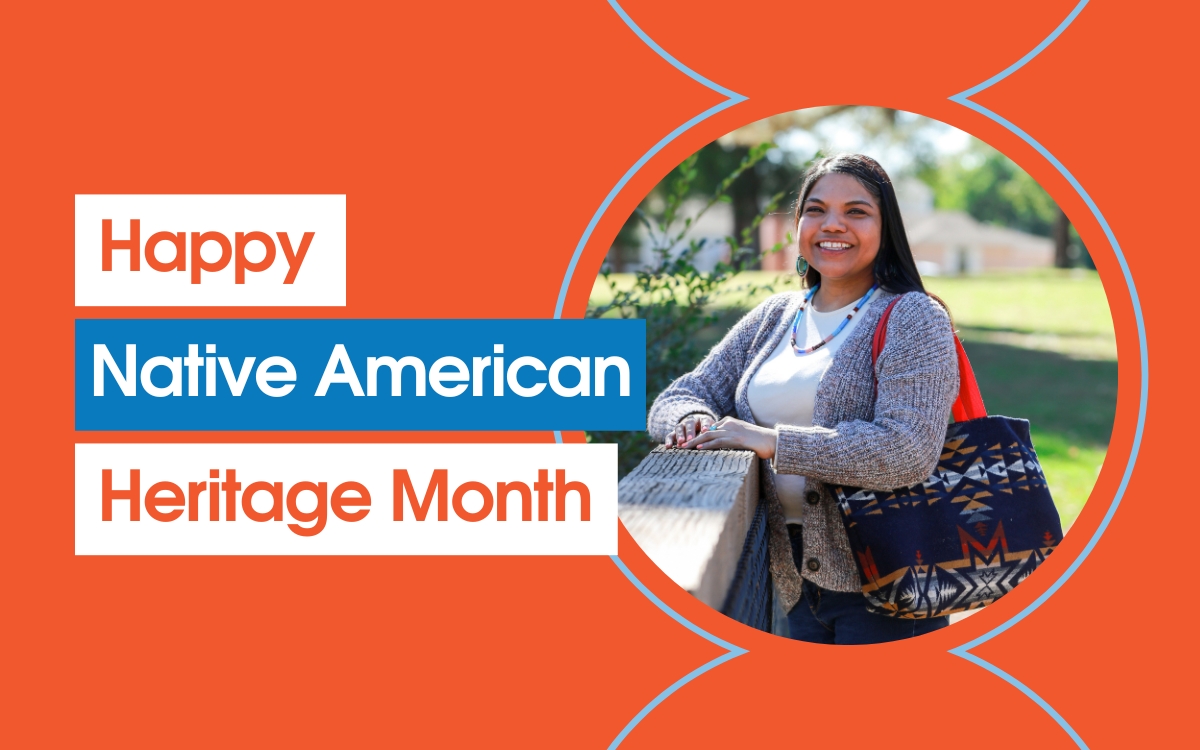
    Happy Native American Heritage Month

    The Inland Empire education community has some fantastic events lined up for Native American Heritage Month to celebrate, educate, and bring the community together. Check out a few that we’ve highlighted below:

    Native American Day Celebration
    San Bernardino Valley College – November 15

    Basket Weaving Workshop
    Cal State University, San Bernardino – November 15

    Native American Heritage Month Luncheon: Discussion on Higher Education Experiences Among Native Students
    Riverside City College – November 15

    Wisdom Wednesday – Dr. Molly Springer
    Cal State University, San Bernardino – November 16

    “What it’s like living as an indigenous woman and a deaf activist” with Sara-Young Bear Brown
    Riverside City College – November 17

    Truth and Healing Commission
    Cal State University, San Bernardino – November 18

    Thanks-Taking Gathering
    Cal State University, San Bernardino – November 18

    The 17th Annual Spirit of the Tribes 5K
    University of California, Riverside – November 19

    “We Are Still Here. The Need for Decolonization” Lecture by Dr. Hannah Kivalahula-Uddin
    Cal State University, San Bernardino – November 22

    San Manuel Community Speaker Series – Elizabeth Brierty, Education Coordinator
    Cal State University, San Bernardino – November 28

    Assemblymember Ramos and Birdsinging Closing Ceremony
    Cal State University, San Bernardino – November 29

    Wisdom Wednesday – Elder Robert Levi
    Cal State University, San Bernardino – November 29


  • Celebrating First-Generation College Students

    Celebrating First-Generation College Students

    Happy National First-Generation Day! Did you know that 59% of students at public postsecondary institutions in the Inland Empire are first-generation college students? It’s true!

    Join us in celebrating them this week by listening to our podcast Education Chat and Education Insight. Hear unique perspectives from first-generation college students that will inspire you and the work that you do.

    First-Gen Episodes:

    1. Education Chat: The Inspiring Journey of a First-Gen Latinx Graduate — In this episode, Mimi Jollie, a first-generation Latinx graduate student, shares the value of pursuing post-secondary education and how the environment you grew up in does not define your future. Mimi’s inspiring story of how she overcame the cycle of poverty is one you don’t want to miss!

    2. Education Chat: Hispanic Heritage Month Special — During this Hispanic Heritage Month special, Britney Villagran discusses everything from her Guatemalan culture and traditions, to insightful anecdotes from her past experiences with family and the pressures that come with being the first in the family to go to college.

    3. Education Chat: The Power of Leading by Example: Jessie’s Story — Jessie Alvarez, a first-generation student at the University of Redlands, discusses the value of pursuing a post-secondary education as an adult and what ultimately made her return back to higher education. As a parent, Jessie has expressed that it is of the utmost importance to lead by example for her daughters. In hopes that when the time comes, they will be more inclined to continue on to higher education.

    4. Education Chat: The Reality of Students in Foster Care: Kevon Lee’s Story — Kevon Lee, author, motivational speaker, and activist, sits down to share the unlikely story of how a child growing up in the foster system was able to turn everything around through hard work and perseverance. Today Kevon shares insight into his experience in the system, how it needs to improve, and inspires listeners to not give up, understand the power of their voice, and “Go Make a Difference.” 

    5. Education Chat: The Struggles and Successes of Student Parents — Adrianna Trobaugh, a first-time mother and first-gen student at Barstow Community College, sits down to tell her story about becoming a mother at a young age and navigating her way into post-secondary education. She shares insight into who parent learners are, why they turn to postsecondary education, and what they ultimately want for themselves and their families.

    6. Education Chat: A Conversation With an Adult Learner — Aurene Carey, a mother and current student at Barstow Community College, dives into the world of adult student learners and shares why she went back to school, what she experienced along the way, and the importance of fighting for her education despite the challenges she’s faced. 

    7. Education Chat: Graduation Special — In this graduation special, we hear from first-gen students Saul Romero and Katarina Vidana, as they discuss their own unique experiences of navigating college life, share their struggles, achievements, future goals, and tips on how they stayed motivated to cross the finish line.

    8. Education Insight: College Affordability and Access — In this episode of Education Insight, we learn about college affordability and access and gain a better understanding of student grants, loans and the billions that are available for students from all backgrounds to use for college. Our guest Catalina Cifuentes, a first-generation college graduate, has a passion for this work and shares what’s being done to make college affordable and accessible for residents of our region.

    9. Education Insight: The Value of a College Degree — In this episode, we hear from Dr. Kim Wilcox, the Chancellor of the University of California Riverside, and first-generation college student to discuss the value of a college degree. Is it worth it? What can you expect to make as a result? How much will it cost? How long until it pays off?

    10. Education Insight: How Community-Based Organizations are Supporting Student Success — Dr. Felix Melendez, Executive Director at Promise Scholars and a first-generation college student is finding success in helping kids do better in school and begin working for a successful education, career, and life.

    Education Chat tells the stories of students in the Inland Empire by cultivating meaningful discussions about lived experiences, successes, and opportunities for growth. Join GIA Interns Alysha Paulino and Alyssa Silva as they engage in candid conversations with students throughout the region.

    Education Insight tells the story of education in the Inland Empire through the diverse voices of those in and around the regional education community. Hosted by 30-year broadcast veteran Lacey Kendall, monthly shows explore topics ranging from education challenges and shortcomings to innovations and groundbreaking ideas that are driving student success.

    Education Chat and Education Insight are both produced by Growing Inland Achievement, a collective impact organization in the Inland Empire with a mission to increase economic prosperity in the region by increasing educational attainment.

  • Inland Empire Education and Community Leaders Gather to Discuss Student Success in the Region

    Inland Empire Education and Community Leaders Gather to Discuss Student Success in the Region

    TASV 2022

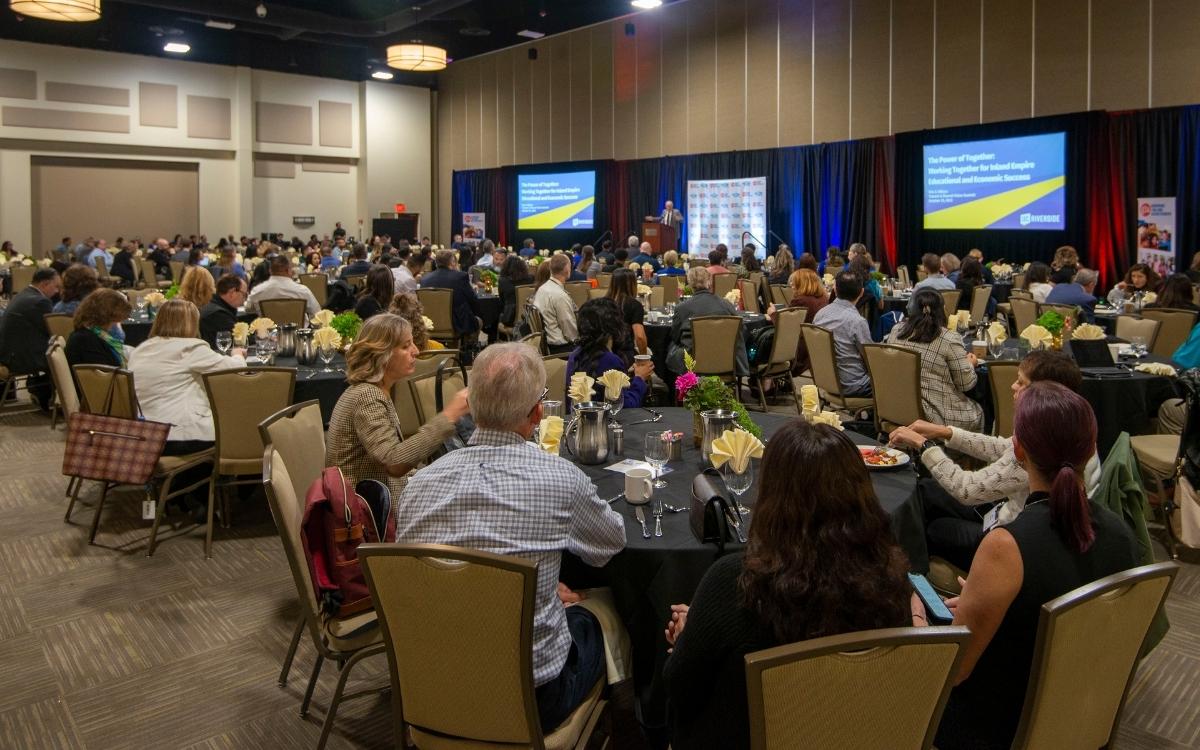
    Over 230 education and community leaders gathered on October 25-26 for the sixth annual Toward a Shared Vision summit. The two-county regional event, hosted by Growing Inland Achievement (GIA), was held at the Riverside Convention Center. Attendees included leaders from K-12, postsecondary education, business, government, and nonprofit sectors who share a vision for increasing equitable educational attainment, preparing qualified workforce, and fueling a thriving Inland Empire economy. 

    The event’s theme The Power of Working Together highlighted the importance of collaboration in driving student success. 

    In his opening remarks, GIA’s President & CEO, Dr. Carlos Ayala, thanked attendees for their ongoing work to improve educational outcomes in the two-county region, and for their support of the Toward Shared Vision event, which further supports student success through GIA’s student scholarship fund. 

    “It’s essential to bring Inland Empire leaders together often to identify and address systemic issues that prevent students from having a successful educational journey,” said Ayala. “We all play a role in student success, and we can’t minimize the impact that even one person can have on the lives of our students.”

    GIA President and CEO, Dr. Carlos Ayala, addresses the crowd at Toward a Shared Vision.

    Throughout the two-day event, participants heard from keynote speakers including Kim A. Wilcox, Chancellor at the University of California, Riverside, Wolde-Ab Isaac, Chancellor of Riverside Community College District, Brianna Moran, a 2022 Redlands Adult School graduate and current student at Crafton Hills College, Andrew Koch, CEO at the Gardner Institute, Emily Appel, COO and Co-Founder at Made by Change, David Hardy Jr., CEO and Co-Founder at Made by Change, and Laura Hamilton, Professor and Chair of Sociology at the University of California, Merced, and Lab Co-Founder at HERE. 

    An emotional highlight from the event featured the story of Crafton Hills College student Brianna Moran. In her speech, Moran shared how a postcard from Redlands Adult School helped change the course of her life and pushed her to return to school after ten years. Moran earned her high school diploma at Redlands Adult School and is now a college student, as well as an honors program member at Crafton Hills College. Her story highlights the major impact that student outreach can have in the community.

    Brianna Moran shares the story of her educational journey at Toward a Shared Vision.

    Along with several keynote speeches, attendees also had the opportunity to experience 60-minute workshops to discuss current issues faced by students. These workshops helped fuel collaborative solutions for increasing equitable educational attainment in the Inland Empire. Workshop topics included information on increasing FASFA/CA Dream Act completion rates, increasing educational access and success for undocumented students, helping undocumented students pay for college, examining transfer complexities, implementing an innovative counseling model, educational outreach, postsecondary enrollment and persistence post-COVID, empowering students to postsecondary transition, supporting mental health for students, and student engagement. 

    “This is my second GIA-sponsored conference, and these conferences have become my favorite because of their intentionality and practicality,” said Mariana Macamay, Transfer Center Coordinator at Crafton Hills College. “GIA’s conferences bring our combined efforts from K-12 to higher education institutions and purposely allow us to have embedded planning sessions and conversations with key stakeholders and funding sources. That’s what makes this conference my favorite; we are all working together to make the Inland Empire stronger.” 

    Additional breakout sessions focused on introducing new tools and resources, such as project management software, to support regional institutions to continuously improve their planning and implementation practices. Time was also set aside for attendees to network with other Inland Empire leaders and share important takeaways from the event.

    “Collaboration is critical to our success for multiple reasons. First, we develop relationships that support a culture of cross-collaboration throughout our institutions. Second, the aspirations that we define together affect our actions, and through changed actions we often deliver more than we had planned. And, finally, the outcomes derived when we actively move together deliver a gestalt impact for our communities that is greater than our individual achievements,” said Kim A. Wilcox, Chancellor at the University of California, Riverside. “The time at the conference was important because it helps us clarify our shared vision. I am excited about the work we will do to deliver greater educational and economic success throughout the region.”  

    Kim A. Wilcox, Chancellor at the University of California, Riverside, addresses the crowd at Toward a Shared Vision.

    By researching, resourcing, and connecting educational institutions, nonprofits, and businesses in the Inland Empire, GIA has helped facilitate regional alignment to increase college preparedness, certificate and degree attainment, and career readiness. Learn more by visiting our website at https://gia.echofactory.dev. 

    Photos and additional resources from the two-day event are available through GIA’s website. 

    _____________ 

    GIA is a regional collective impact organization aimed at increasing postsecondary credential attainment, adding more qualified people to the workforce, and contributing to a thriving economy. GIA brings together leaders across K-20 education, civic, and business sectors to work together through a collective impact approach to achieve and scale educational and economic success. Several grants have helped GIA carry out their work, including support from a Governors Innovation Award, the College Futures Foundation, the James Irvine Foundation, and the Bill and Melinda Gates Foundation. Learn more at https://gia.echofactory.dev. 
  • The State of Latino Education in the Inland Empire

    The State of Latino Education in the Inland Empire

    Did you know that 33 out of 100 Latino adults (25+) in the Inland Empire have not attained a high school degree. That is just one of several key findings GIA President & CEO, Dr. Carlos Ayala, shares in his presentation on The State of Latino Education in the Inland Empire.

  • Recovery with Equity: A Roadmap for Higher Education After the Pandemic

    Recovery with Equity: A Roadmap for Higher Education After the Pandemic

    Student success in higher education is critical to the health of our state and regional economies. Since the global pandemic struck, Californians and postsecondary institutions alike have been grappling with extraordinary challenges. And long before, it was clear that many California students faced significant structural barriers to earning a college degree. California needs a recovery that courageously addresses inequities in post-secondary education that have created and exacerbated wealth gaps. 

    The Recovery with Equity Taskforce was established by Governor Gavin Newsom’s Senior Policy Advisor for Higher Education, Dr. Lande Ajose, in consultation with the California Governor’s Council for Post-Secondary Education, to recast today’s challenges as an opportunity to help California’s economy recover with a post-secondary ecosystem that is more equitable, resilient, coordinated, and aligned with the economic needs of the state.

    With a focus on equitable student achievement and in partnership with education leaders across the state, the Taskforce produced Recovery with Equity: A Roadmap for Higher Education After the Pandemic. This report includes a set of interconnected recommendations aimed at ensuring that the opportunity for success and economic mobility is equitable and available to all:

    Fostering Inclusive Institutions: Institutional cultures and approaches to teaching and learning that work for all learners, especially those left behind.

    1. Improve Faculty, Staff, and Administrator Diversity
    2. Cultivate Inclusive, Engaging, and Equity-Oriented Learning Environments
    3. Retain Students through Inclusive Supports

    Streamlining Pathways to Degrees: An integrated statewide system for admission and transfer to provide clear, easy-to-navigate pathways to degrees.

    1. Establish an Integrated Technology Platform
    2. Streamline and Unify the College Admission Process
    3. Develop a Common Course Numbering System

    Facilitating Student Transitions: High-touch, high-tech guidance and improved academic preparation for college access and success.

    1. Provide High-Tech, High-Touch Advising
    2. Support College Preparation and Early Credit

    Simplifying Supports for Student Stability: Resources and structures packaged and simplified to help students meet basic, digital, and financial aid needs.

    1. Establish an Integrated Admissions Platform
    2. Subsidize Internet Access for Eligible Students
    3. Improve College Affordability

    Higher education will play a critical role in our state’s economic recovery from the pandemic—and in driving prosperity for California’s future. Our state will thrive when we eliminate income inequality and disparities of credential and degree attainment by race and geography. 

    We encourage you to learn more about these recommendations that our state can pursue to ensure California’s public post-secondary institutions stride toward this vision for a better future, and invite you to join us in considering ways that our network can contribute to the achievement of these goals.

    twitterfacebookinstagramyoutubelinkedin