Category: Articles

  • Addressing FAFSA/CADAA Delays: Support Initiatives and Resources for Our Community

    Addressing FAFSA/CADAA Delays: Support Initiatives and Resources for Our Community

    Dear Partners, Colleagues and Community Members, 

    In recent weeks, the landscape of federal student aid has presented significant challenges, due to the delay in the FAFSA/CADAA rollout. This situation has understandably raised concerns among students, families, and educational institutions. The delay in distributing FAFSA/CADAA information to colleges until March, as noted by Education Undersecretary James Kvaal, marks a significant shift from traditional timelines, potentially affecting decision-making processes for countless students. 

    Amidst these developments, intermittent access issues following the “soft launch” of the simplified FAFSA/CADAA have further complicated the process. At GIA, we are acutely aware of the stress and uncertainty these delays have caused. It is in these moments that our commitment to supporting our community becomes even more critical. We are working alongside our partners and the California Student Aid Commission (CSAC) to provide resources, guidance, and direct assistance to the region. 

    To support students, parents, and educators, we want to let you know about several initiatives: 

    • The launch of the Inland Empire Cash for College website in December 2023 serves as a helpful resource for navigating the financial aid process amidst these changes.
      https://iecashforcollege.org
    • Our schedule of over 100 financial aid workshops from January to March 2024 is designed to provide hands-on support for completing FAFSA/CADAA forms accurately and efficiently.
    • Weekly free office hours in collaboration with GIA’s Action Network Teams and CSAC offer a platform for personalized assistance, ensuring questions and concerns are addressed promptly. Upcoming office hours are open to educators, students, and parents.

    Please register below:

    Listen below to hear our Director of Network Engagement, Ida Hermosillo, share about the work being done in the Inland Empire:

    Thank you for your partnership, resilience, and unwavering support of our students and their futures. Together, we will navigate these challenges through our collective dedication to education and student success.

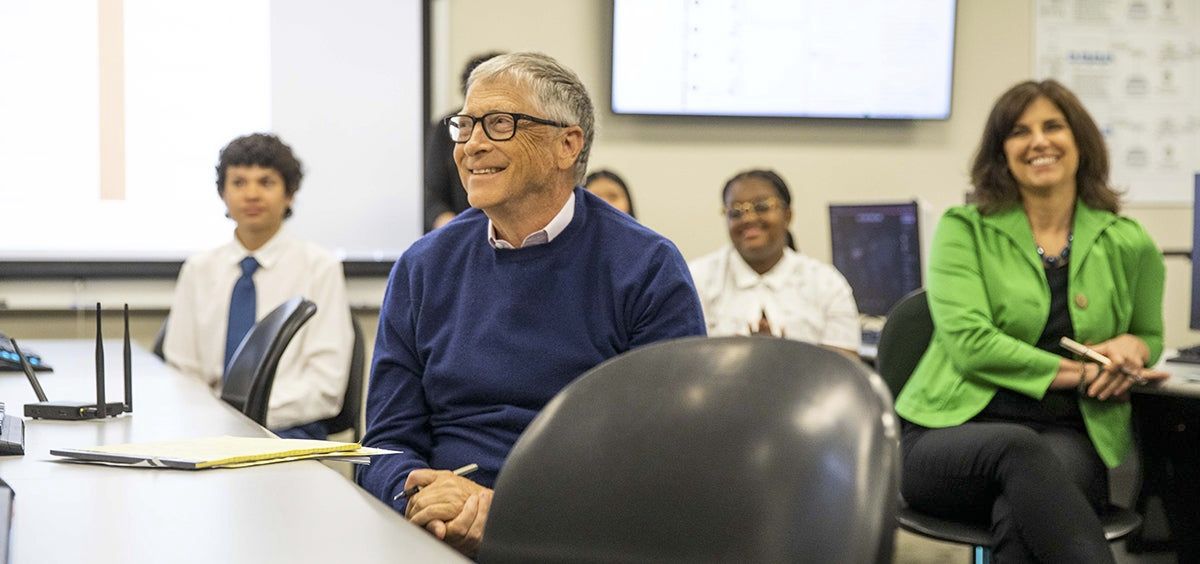
  • Bill Gates writes about his experience visiting Chaffey College in Rancho Cucamonga

    Bill Gates writes about his experience visiting Chaffey College in Rancho Cucamonga

    In a recent blog post titled “A map from classroom to career,” Bill Gates reflects on a recent visit to Chaffey College to learn more about creating effective pathways for students to achieve their academic and career goals. This is one of the many promising programs across the country that is putting students on a path to continue their education after high school before they’ve even graduated.

    By providing dual enrollment, advising, and wraparound support, students receive college credits and the guidance they need to smoothly transition into college and continue their education. Many students receive job offers before they even graduate. Read more about Gates’ visit.

    The Bill and Melinda Gates Foundation has been a close partner of the Inland Empire Educational Network for several years and is consistently impressed by the work across the region. As one of six Transformation Intermediaries in the nation to be selected by the Gates Foundation, Growing Inland Achievement is working closely with all Inland Empire postsecondary institutions to bring support from the Foundation to drive equitable student success. Postsecondary leadership should contact Dr. Thomas Dickson, GIA Director of Institutional Support, at thomas@gia.echofactory.dev, for more information on how your institution can receive support.

  • Projected Shortfalls in Postsecondary Enrollment Capacity in the Inland Empire by 2030

    Projected Shortfalls in Postsecondary Enrollment Capacity in the Inland Empire by 2030

    By 2030, the shortfall in enrollment capacity at Inland Empire postsecondary institutions could potentially result in thousands of qualified students being denied a seat, with a disproportionate impact on low-income and students of color. Meeting the postsecondary needs of the residents of the Inland Empire (IE) is of urgent importance. Click to read more.

  • Growing Inland Achievement President and CEO, Dr. Carlos Ayala, to Retire

    Growing Inland Achievement President and CEO, Dr. Carlos Ayala, to Retire

    Dr. Carlos Ayala speaks at GIA’s annual Toward a Shared Vision Summit. Photo by Growing Inland Achievement 

    Ayala is credited with working with the GIA board and network partners to establish Growing Inland Achievement (GIA), as a 501(c)(3), IRS tax-exempt organization; more than doubling the size of the organization; and bringing more than 20M to the region for education.

    Inland Empire, CA – President and CEO of Growing Inland Achievement (GIA), Dr. Carlos Ayala, will retire in June 2023. GIA serves both San Bernardino and Riverside Counties as a regional, cross-sector network of education, government, nonprofit and business partners in the Inland Empire; collectively, they work towards a shared vision of educational and economic success.

    “It has been an honor to serve the students of the Inland Empire, says Dr. Ayala. “I have learned a great deal about the affordances and constraints our students, families, institutions and community-based organizations face when it comes to student success.”

    Dr. Ayala, age 62, has more than 25 years of service in public education.  During his tenure as CEO, Ayala is credited with working with the GIA board and network partners to establish GIA as a 501(c) (3), tax-exempt organization, more than doubling the size of the organization and raising millions of dollars for Inland Empire education.

    Under his guidance and working with the network members, GIA was accepted as one of only six organizations in the U.S. chosen by the Bill and Melinda Gates Foundation to participate in its Intermediaries for Scale program, also known as Higher Endeavor, bringing $10 million of support to the region for postsecondary transformation reforms.

    “I want to thank the GIA Board of Directors and employees for their commitment to the people and students of the Inland Empire,” Ayala said. “I also wish to thank the vast array of people who are committed to changing the economy of the Inland Empire through education. Their work is notable and I remain convinced that the path forward is at your doorstep—engage collectively.”

    The Board of Directors for GIA will oversee the process of choosing Dr. Ayala’s successor.

    “As its first CEO, Carlos established the organization, including a set of processes to help us move forward,” said Dr. Kim Wilcox, GIA Board Chair and Chancellor of UC Riverside.  “I’m personally grateful for his efforts.”

    “Dr. Ayala brought a deep knowledge of the education landscape, strong leadership, and a passion for positively impacting student lives to our organization,” said Ann Marie Sakrekoff, COO of Growing Inland Achievement. “He is leaving GIA in a great position to succeed in our next chapter. Under Dr. Ayala’s leadership, GIA has become nationally recognized.”

    GIA’s shared vision is that by 2035, San Bernardino and Riverside Counties will be widely recognized for their educated workforce, thriving communities and vibrant economy that creates prosperity for all.

    Watch a video announcement from Dr. Ayala

    About Growing Inland Achievement

    Growing Inland Achievement, which serves both San Bernardino and Riverside Counties, is a regional cross-sector network of education, government, nonprofit, and business partners in the Inland Empire, collectively working towards a shared vision of educational and economic success.

    GIA staff support this work by researching issues and opportunities, developing financial resources for the region, and connecting diverse stakeholders across the two-county region of the Inland Empire.

    GIA’s shared vision is that by 2035, San Bernardino and Riverside Counties will be widely recognized for their educated workforce, thriving communities, and vibrant economy that creates prosperity for all. 

  • Enrollment at Inland Empire Community Colleges Still Recovering Post-COVID

    Enrollment at Inland Empire Community Colleges Still Recovering Post-COVID

    In the years leading up to the pandemic following the Great Recession of 2007, Inland Empire colleges had been experiencing steady growth culminating in the region’s largest enrollment ever in Fall 2019 with over 144,000 students.1 This was in contrast to the overall rates of community college enrollment in California which had peaked in the years immediately following the recession and then remained relatively flat.  

    Both the State overall and the Inland Empire are now hoping to regain their earlier enrollment momentum. In the two years following the pandemic (between Fall 2019 to Fall 2021), mirroring overall statewide declines, enrollment across the 12 regional community colleges initially fell by roughly 19%, followed by a partial recovery in year-over-year enrollment this past fall (2022). With this upswing, the total losses in community college enrollment for the IE post pandemic now stands at 12.5%. Despite wishes for an even stronger rebound after campuses began re-opening post-COVID, educators are encouraged by these trends and are cautiously hopeful regarding the prospects for the longer-term landscape of postsecondary enrollment.  

    All IE community colleges have struggled with declining enrollment over the past several years, and while many showed a promising uptick in enrollment in Fall 2022 for the first time since the pandemic, most have suffered substantial overall declines compared to pre-COVID enrollment. It should be noted that only two colleges experienced no decline, both of which have relatively smaller enrollment and are geographically more isolated.

    Patterns of regional enrollment losses across student groups have also varied, with the largest percentage decline observed among American Indian/Alaska Native students, followed by Pacific Islander, White, African American/Black, Hispanic, Filipino, and Asian students.

    While the decline in enrollment in the past few years was slightly larger among male students overall (14% compared to 12%), these patterns were reversed within a few racial/ethnic groups, — American Indian/Alaskan Native, Pacific Islander, and white students–where we see greater enrollment losses for female students than males.  

    In addition to variation across different institutions and racial/ethnic groups, enrollment declines were uneven across student age groups as well, with the biggest losses observed among students in their 20s, where enrollment declined by nearly one of every four students. It should be noted that the observed drop among students ages 19 and less would have also been greater were it not for large increases in dual enrollment observed over this same three-year time: overall enrollment of IE students aged 19 or less excluding dual enrollment (so-called Special Admits) fell by 10% from Fall 2019 to Fall 2022 (Special Admit enrollment rose from 6,926 in Fall 2019 to 10,502 in Fall 2022). 

    Apart from dual enrollment, the only other student enrollment type exhibiting an increase, albeit very small, since 2019 was Returning Students, those who enroll at a college following an absence of one or more primary terms. By far the largest decline across the region was among Continuing Students, those who were both enrolled in the current session and were also enrolled in the previous one (unfortunately, while this likely reflects a drop in persistence, the fact that these numbers also include students who are not continuing due to completion of a degree, certificate, or transfer, complicates the conclusions that can be drawn from this information alone).2  

    In addition to impacts on student outcomes, declining enrollments also pose a threat to long term institutional operations and capacities (such as faculty/staff, student services, etc.) due to enrollment-based funding formulas (which have been suspended until 2025).

    In contrast to the community college system, undergraduate enrollment in the CSU system declined much less—enrollment between Fall 2019 and Fall 2022 was down 7% at our local CSU San Bernardino campus and actually increased by 6% systemwide;3 the UC system overall and our local Riverside campus both saw increases in undergraduate enrollment during that time frame of 2% and 4%, respectively.4 However, the enrollment changes in the community college system potentially pose additional challenges for the future higher education pipeline, since a large proportion of the student body at our local universities, particularly CSU San Bernardino, are comprised of regional community college transfer students, and this relative proportion has been increasing in the years since the pandemic—whereas only a third (33%) of CSUSB’s undergraduate enrollment were comprised of community college students in Fall 2019, by Fall 2022 that number had increased to 42%.5 

    While college graduates typically have higher wages and lower rates of unemployment than other workers, a recent survey conducted by the RP Group found that nearly a third of former California community college students cited jobs as a reason for not re-enrolling, perhaps in response to pandemic-related labor shortages and employer incentives; additional factors included family responsibilities and difficulties keeping up with coursework. Most did indicate an intent to return to college once they had saved enough money. GIA research on post-pandemic barriers to enrollment also suggests that many potential or former IE community college students are deeply concerned about financial stability and the costs associated with attending college and would benefit greatly from related financial aid, academic paths, and wrap-around information and support services in order to (re)connect them with postsecondary plans. These overall financial challenges are worth noting given that the California Community College system is one of the most affordable in the country and many students pay little-if any-tuition.  Steps must be taken to understand and address the broader scope of students’ perceived value of college compared to their immediate needs.

    Whether these enrollment trends will continue, stabilize, or reverse will become clearer as we observe the unfolding economic circumstances shaping student decisions as well as continue to monitor regional postsecondary enrollment trends. It is heartening that most of the students in the RFP study indicated interest in returning and expressed a willingness to be contacted by their local colleges. As we move forward with outreach to these and other students, it is important for both our local and state educational leaders to be cognizant of these many factors affecting the Inland Empire students and families. The academic, social-emotional, and economic effects of the pandemic will not be resolved overnight and navigating a path to pre-pandemic enrollment will require ongoing flexibility and adaptation to a new educational environment. No matter what, navigating a path to pre-pandemic enrollment will pose a tremendous challenge to higher education leaders regionally and beyond. 

    1 All community college enrollment data are Student Enrollment Status Summary Reports from the California Community Colleges Chancellor’s Office (https://datamart.cccco.edu/Students/Enrollment_Status.aspx).

    2 The California Community College Student Enrollment Status Definitions can be found here: https://webdata.cccco.edu/ded/sb/sb15.pdf. 

    3 https://tableau.calstate.edu/views/SelfEnrollmentDashboard/EnrollmentSummary?iframeSizedToWindow=true&%3Aembed=y&%3AshowAppBanner=false&%3Adisplay_count=no&%3AshowVizHome=no
    4 https://www.universityofcalifornia.edu/about-us/information-center/fall-enrollment-glance

    5 https://tableau.calstate.edu/views/SelfEnrollmentDashboard/EnrollmentSummary?iframeSizedToWindow=true&%3Aembed=y&%3AshowAppBanner=false&%3Adisplay_count=no&%3AshowVizHome=no