Category: Articles

  • Growing Inland Achievement Joins National StriveTogether Network to Advance Regional Outcomes

    Growing Inland Achievement Joins National StriveTogether Network to Advance Regional Outcomes

    Growing Inland Achievement (GIA), on behalf of the Inland Empire’s cross-sector education and community partners, has joined the StriveTogether Cradle to Career Network, becoming part of a national network of place-based partners that work together to create a future where youth can thrive. This milestone reflects both the Inland Empire’s urgent need for coordinated cradle-to-career solutions and its growing capacity to deliver measurable, collective progress.

    As a member, GIA joins a national learning community dedicated to improving outcomes from early learning through employment. The partnership aligns with GIA’s 2030 Strategic Plan, which focuses on increasing educational attainment and economic mobility through cross-sector collaboration, advocacy, investment, and research.

    “Becoming part of StriveTogether strengthens the work already happening in our region,” said Dr. Ashish Vaidya, President & CEO of GIA. “It connects us to a national framework rooted in evidence, equity, and collaboration; principles that already guide our efforts in the Inland Empire. We’re proud to contribute our local perspective to this broader movement and to deepen our focus on the outcomes that matter most for students and families.”

    StriveTogether network membership comes at a pivotal time. GIA’s 2030 Strategic Plan sets a bold regional target: 70% of working-age adults in the Inland Empire will hold a postsecondary degree or credential of value. Achieving this goal will require shared ownership, aligned strategy, and a sustained focus on outcomes across the cradle-to-career continuum.

    To qualify for membership, GIA met a rigorous set of criteria defined by the StriveTogether Theory of Action™—a nationally recognized framework that supports communities in building the civic infrastructure necessary for systems-level change. Through this process, GIA demonstrated its role as a trusted regional convener that uses data to drive improvement and promote equity.

    “GIA’s cross-sector leadership and focus on measurable outcomes reflect the best of what the Cradle to Career Network stands for,” said Jennifer Blatz, president and CEO of StriveTogether. “We’re excited to learn from the successful local strategies in the Inland Empire and to contribute to this success as they join our national movement.”

    By joining this national movement, the GIA network gains access to tools, coaching, and peer learning opportunities to strengthen local strategies while contributing insights from the Inland Empire to the broader field.

    GIA serves as a regional hub for cradle-to-career success. Its network includes school districts, colleges and universities, community organizations, employers, and local government. Together, they focus on five key milestones across the education-to-employment journey:

    • Early math and literacy
    • Postsecondary readiness
    • College enrollment and transfer
    • Degree and credential completion
    • Employment aligned with livable wages

    These milestones are advanced through GIA’s CAIR strategy—Convene, Advocate, Invest, and Research—which supports coordinated, data-informed efforts across sectors.

    As part of the StriveTogether network, GIA represents Inland Empire institutions and educators working collectively to improve outcomes for students and families. Membership not only expands access to national resources and shared learning; it also reinforces accountability for delivering results that matter to the region’s future.

     ###

    About Growing Inland Achievement

    Growing Inland Achievement (GIA) serves the Inland Empire region of Southern California—home to more than 4.7 million residents and over one million students. GIA connects education, government, nonprofit, and business partners around a shared commitment to improving educational attainment and economic mobility. Through its CAIR strategy—Convene, Advocate, Invest, and Research—GIA supports coordinated, data-informed efforts that strengthen outcomes from cradle to career.

    About StriveTogether

    StriveTogether is a national network of community partnerships that bring together neighbors, including youth and families, nonprofits, businesses, schools and more, to work toward a future where youth can thrive in their communities. Cradle to Career Network members change the way their communities work together by building connections, sharing resources and using data to put more young people on a path to economic mobility. Our work helps young people meet seven key life milestones so that they have the opportunities they need to reach their goals, and, ultimately, thrive. Learn more at StriveTogether.org.
  • 2025 PROPEL AI Symposium Sparks Regional Collaboration on AI in Education

    2025 PROPEL AI Symposium Sparks Regional Collaboration on AI in Education

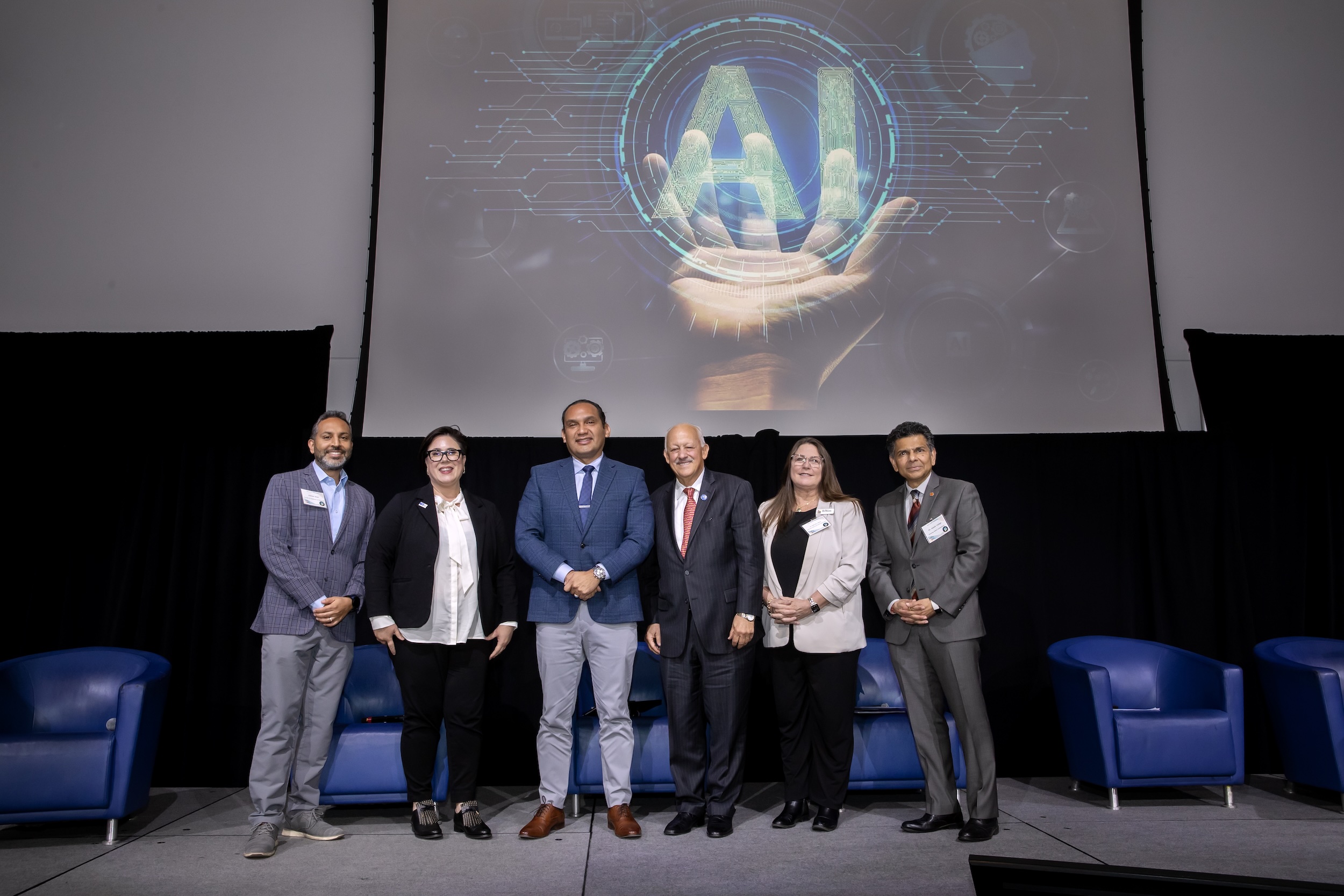
    CEO Panel Participants (Pictured left to right): Waheed Baqai, Kimberly Starrs, Edwin Gomez, Tomás D. Morales, Kelly May-Vollmar, and Ashish Vaidya

    On February 21, 2025, Growing Inland Achievement (GIA) and California State University, San Bernardino (CSUSB) partnered to host the 2025 PROPEL AI Symposium, bringing together educators, industry leaders, and community partners to explore how artificial intelligence is shaping education and workforce development.

    Held at the CSUSB campus, the symposium provided a space for regional leaders to discuss AI’s potential and its implications for students, educators, and employers. GIA and CSUSB worked together to convene experts, foster collaboration, and highlight opportunities for innovation in the Inland Empire.

    Keynote speakers included:

    • Dr. Ajey Jacob, Director of the ASIC Lab at USC’s Information Sciences Institute, who shared insights from his 16 years at Intel and GlobalFoundries on AI hardware innovation.

    • Dr. Karen Vignare, Vice President of Digital Transformation for Student Success at the Association of Public and Land-Grant Universities, who focused on how technology is reshaping higher education.

    • Dr. Sabba Quidwai, CEO of Designing Schools, who discussed strategies for preparing students with the skills needed in an AI-driven workforce.

    GIA CEO Ashish Vaidya led a CEO roundtable with regional leaders from the education, healthcare, and nonprofit sectors, including Riverside County Superintendent of Schools Edwin Gomez, Desert Sands Unified School District Superintendent Kelly May-Vollmar, former Wise Healthcare COO Waheed Baqai, Inland SoCal United Way CEO Kimberly Starrs, and CSUSB President Tomás D. Morales, to discuss AI’s impact across industries.

    Plenary sessions explored:

    • How AI collaborations, including OpenAI partnerships, are shaping the future of higher education, with insights from Arizona State University.

    • Efforts to expand AI knowledge and capacity in K-12 education, highlighted by San Bernardino County Superintendent of Schools (SBCSS) Technology Services.

    The discussions and collaborations at the 2025 PROPEL AI Symposium reflect a shared commitment to preparing students and workers for an AI-driven future. As AI continues to evolve, the insights and partnerships formed through this event will help shape the region’s approach to education and workforce development, ensuring the Inland Empire remains at the forefront of AI adoption and innovation.

    Click to view more photos from the event here.

  • Success at the IE College Expo

    Success at the IE College Expo

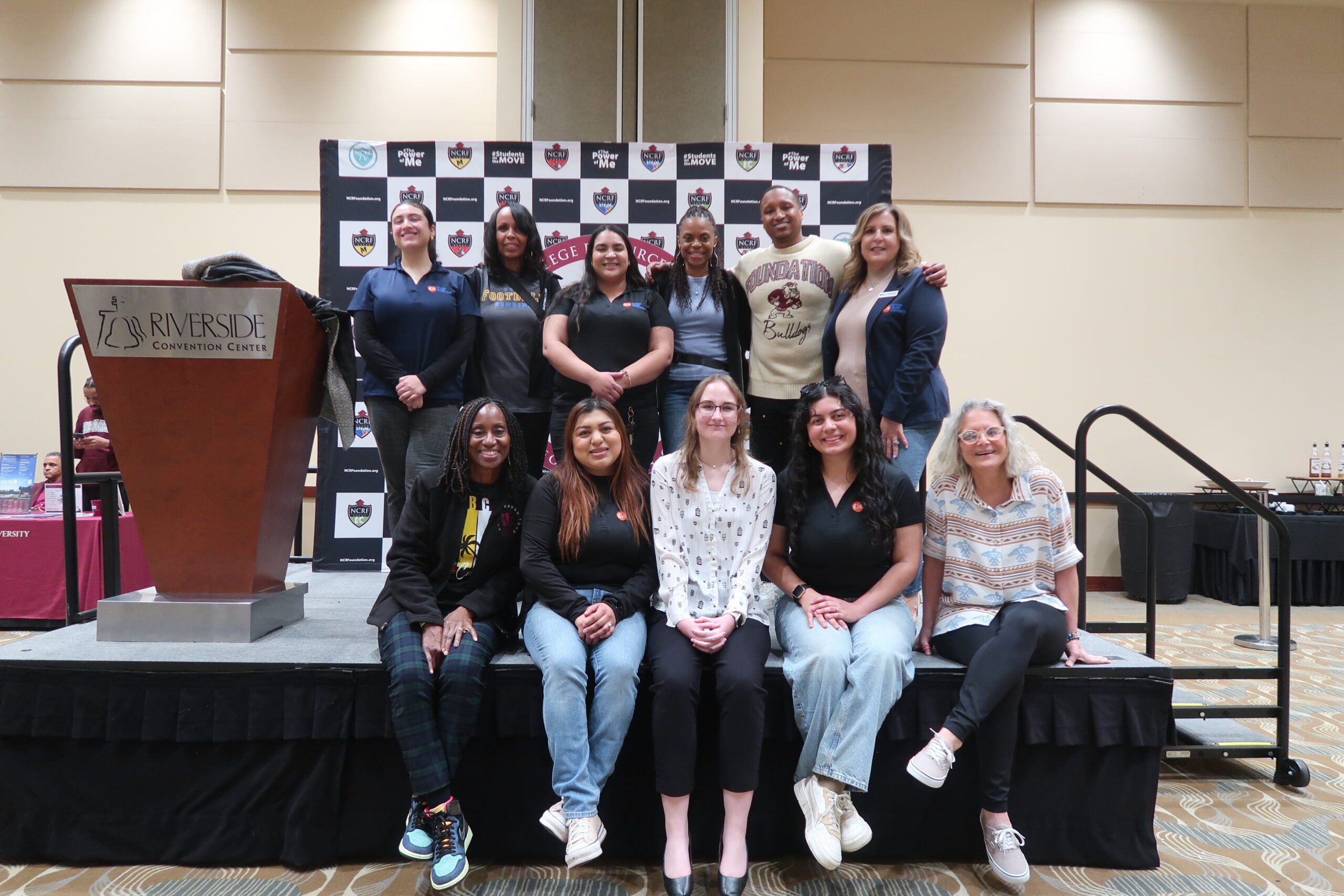
    NCRF & GIA Staff at the IE College Expo

    On Friday, January 31, more than 2,000 students and families gathered at the Riverside Convention Center for the first-ever NCRF Inland Empire College Expo, an event to expand access to higher education. The event was hosted by Growing Inland Achievement (GIA) in partnership with the National College Resources Foundation (NCRF).

    Students had the opportunity to meet with representatives from public and private universities, community colleges, and Historically Black Colleges and Universities (HBCUs). Those who brought transcripts were considered for immediate acceptance, resulting in 187 students receiving on-the-spot college offers and more than $3.3 million in scholarships awarded.

    The strong turnout underscores the region’s continued demand for college access support. GIA remains committed to convening partners, advocating for postsecondary opportunities, and investing in initiatives that create access to higher education.

    Watch the highlight video below to hear students share their experiences and future plans.

  • Annual Education Summit Brings Inland Empire Leaders Together for Collective Action 

    Annual Education Summit Brings Inland Empire Leaders Together for Collective Action 

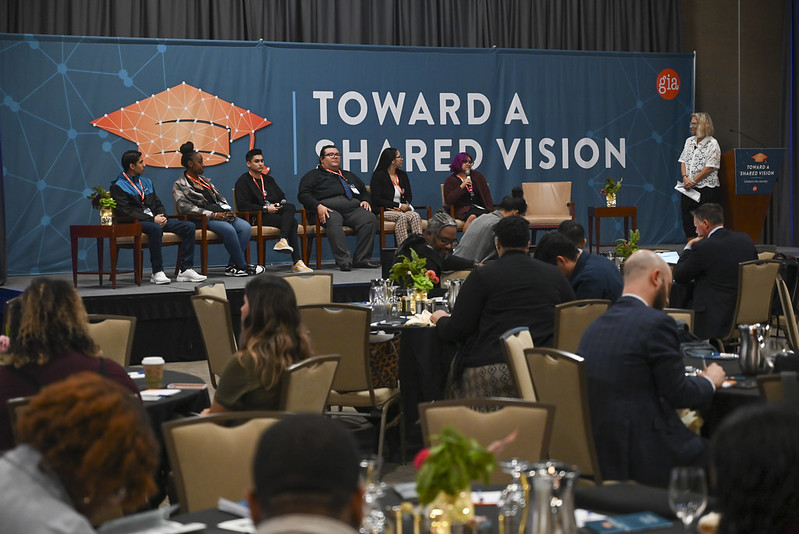
    INLAND EMPIRE, CA – Growing Inland Achievement (GIA), a nonprofit dedicated to improving educational and economic success in the Inland Empire, is gearing up for its 7th annual Toward a Shared Vision Summit. The event will take place at the Riverside Convention Center on October 8-9, 2024, bringing together local leaders to discuss and address regional educational challenges. 

    This year’s summit, themed Collective Action, Shared Success,” will highlight the power of collaboration across education, government, nonprofit, and business sectors to drive lasting change. Approximately 300 leaders from the Inland Empire’s 56 K-12 school districts, 12 community colleges, public and private universities, nonprofit organizations, and local businesses are expected to attend. Together, they will work to address the region’s most critical educational and economic challenges, seeking innovative solutions through collective efforts. 

    The 2024 Toward a Shared Vision Summit is a unique opportunity for passionate leaders and innovators to come together and create real, lasting change,” said Ashish Vaidya, President and CEO of GIA. The partnerships and ideas that will emerge have the potential to drive transformative improvements in education and opportunity throughout the Inland Empire.” 

    Attendees will participate in workshops, discussions, and breakout sessions covering a range of topics, including student enrollment strategies, access to financial resources, support for underrepresented communities, and pathways to higher education success. 

    The summit will kick off on October 8, 2024, with the Toward a Shared Vision Awards at the Riverside Convention Center, launching two days of focus on regional educational challenges and opportunities. 

    Among the featured speakers are Dr. Sonya Christian, Chancellor of California Community Colleges, and Tony Thurmond, California State Superintendent of Public Instruction. They will participate in a special Fireside Chat following the awards ceremony on October 8, sharing their insights on advancing educational success for all students. 

    This year’s award 2024 Toward a Shared Vision honorees represent a range of collaborative and impactful efforts to address key educational challenges in the region. The awards highlight individuals and organizations driving equity-focused initiatives and fostering innovation in their communities. 

    The 2024 award categories and honorees include: 

    • Excellence in Regional Transformation: BLU Educational Foundation 
    • Equity-Focused Excellence: Rialto Project Impact, Rialto Unified School District 
    • Student-Centered Excellence: Riverside County Office of Education 
    • Excellence in Regional Collaboration: Inland Empire College Corps Consortium 
    • Excellence in Innovation: Randall Lewis 

    Regular registration for the October 9 portion of the summit is $175 and tickets for the Toward a Shared Vision Awards and Fireside Chat on October 8 are $50 per person. General registration for October 9 includes access to keynote speeches, breakout sessions, meals, and parking. Those interested in attending the awards and panel discussion on October 8 must purchase a separate entry. 

    Proceeds from the event will support GIA’s student scholarship fund. 

    For more details and to register for the event, visit www.gia.towardasharedvision.org. 

    About Growing Inland Achievement  

    Growing Inland Achievement (GIA) serves the Inland Empire region of Southern California—the 12th largest metropolitan statistical area in the U.S., including over 4.7 million residents and over one million students. GIA supports a regional cross-sector network of education, government, nonprofit, and business partners, collectively working to achieve a shared vision of educational and economic success. GIA’s shared vision is that by 2035, San Bernardino and Riverside Counties will be widely recognized for their educated workforce, thriving communities, and vibrant economy that creates prosperity for all. 

  • Recent Trends and Enduring Disparities in UC/CSU Eligibility Among Inland Empire High School Graduates 

    Recent Trends and Enduring Disparities in UC/CSU Eligibility Among Inland Empire High School Graduates 

    California is grappling with a critical issue in its public education system: a low A-G completion rate among some high school student demographics. The A-G requirements, a sequence of 15 high school courses that students must complete to be eligible for admission to the University of California (UC) and California State University (CSU) systems, serve as a benchmark for academic preparedness for postsecondary education. Data about the Inland Empire have highlighted an even more concerning disparity in this region, with only 48% of high school students meeting the A-G requirements, trailing behind the state average of 52% for California and the average for surrounding counties (60% for Los Angeles County and 57% for Orange County). This discrepancy not only shows the educational challenges within an extremely diverse region but also underscores the broader implications for students’ future opportunities in a limited economic landscape. 

    The A-G course sequence encompasses various subject areas, including History, English, Math, Science, Foreign Language, Visual and Performing Arts, and college-preparatory elective courses. Completion of these classes with a grade of C or better is essential for students aspiring to enter California’s public university systems. The lower completion rate in the Inland Empire suggests that a significant portion of students either do not have access to these courses, face challenges in meeting the required standards, or both. 

    Economic Disparities and Resource Limitations 

    Several factors contribute to the region’s lower A-G completion rate. Socioeconomic disparities, resource limitations in schools, and varying levels of academic support play pivotal roles, all of which contribute to reinforcing an already unequal access to higher education in the region. According to 2023 data, in Riverside and San Bernardino Counties, African American and Hispanic students had lower A-G completion rates at 41% and 44% respectively, compared to their white and Asian counterparts at 53% and 79%. These percentages have plateaued since a year before the pandemic, in contrast to the growth experienced across all demographics from 2014 through 2019. 

    The Inland Empire includes areas with high poverty rates and communities that educational institutions have historically underserved. Schools in these areas often grapple with insufficient funding, and a shortage of qualified teachers, particularly in subjects required for A-G compliance, as well as a shortage in school and college counselors.  Therefore, students from certain schools or even certain school districts may be unable to enroll in the necessary courses or receive the level of instruction and support needed to succeed. 

    A-G Completion and Its Impact on the Regional Economy 

    The impact of this educational shortfall extends beyond individual students’ academic trajectories. The lower A-G completion rate can contribute to hindering Governor Newsom’s goal of reaching a 70% postsecondary attainment by 2030 in the state of California as well as the region’s ability to cultivate a competitive workforce in the increasingly knowledge-based economy. As higher education becomes more crucial for career success, students without the requisite preparation may find their opportunities for economic advancement significantly limited. This scenario not only affects the students and their families but also constrains the economic diversification and development of the Inland Empire itself. 

    What Do Students Need to Complete A-G Courses? 

    Addressing this issue requires a multifaceted approach. Schools need additional resources to ensure all students have access to A-G courses and the support structures necessary to succeed. This includes digging deeper into why students are not meeting the requirements, investing in qualified teaching staff, providing academic counseling and tutoring services, and creating initiatives that raise awareness about the importance of A-G completion among students and parents. Many parents and students are not aware of these requirements and only learn about them when it is too late to remedy the situation. Additionally, partnerships between educational institutions, local governments, and community organizations can foster programs that target the root causes of the low A-G completion rate, such as economic inequality and educational disparities as well as lack of awareness. 

    The A-G completion rate disparity in the Inland Empire, a region that -according to a recent GIA study– assigns great value to higher education, is a complex issue that demands comprehensive solutions. By recognizing the factors contributing to this challenge and implementing targeted interventions, there is potential to improve educational outcomes for students in the region as well as to enhance the overall economic and social well-being of the Inland Empire. Ensuring that all students have the opportunity and support to meet A-G requirements is an essential step towards equity.