In this episode of Education Insight, we welcome Michael Medoro, the Chief Operating Officer of Childhelp U.S.A., to explore the Speak Up Be Safe curriculum, a powerful program created to help children stay safe from predators and bullies. Michael takes us through the story behind the creation of the curriculum and explains why it’s so crucial for kids to learn these important lessons at such a young age.
The curriculum, which is now being used in classrooms across the country and beyond, teaches children how to recognize and respond to various forms of abuse, including the dangers of online bullying. Michael shares the strategies used by facilitators to ensure children feel safe discussing tough topics and how the program fosters a supportive environment where kids learn to stand up for themselves and support each other.
We also dive into the role parents and caregivers play in reinforcing these lessons at home, as well as the ongoing concerns related to bullying and online safety. Michael also shares a powerful story of how Speak Up Be Safe made a real difference in a child’s life.
Tune in for a conversation that sheds light on this impactful program and the work Childhelp is doing to protect children everywhere. For more information on how to acquire the Speak Up Be Safe curriculum, Michael offers insights on where listeners can find resources for their schools and communities.
Featured Guest
Michael Medoro
Chief Operating Officer with Childhelp U.S.A.
Experienced Nonprofit Executive Officer achieving remarkable results in the national and international nonprofit sector. Over $500+M raised. Successful projects globally in youth development, education, and healthcare throughout the United States, Africa, Europe, and Central America. Seasoned professional in high net worth fundraising and revenue development. MBA in Global Management, MA in Digital Education, and actively earning a Doctorate in Education. Strong executive skills in Nonprofit Management, Business Planning, Strategic Planning, Fundraising and Revenue Development, Executive Management Coaching, Event Management, and Team Development. Nationally and internationally recognized Fundraiser and Motivational Speaker.
Watch the Episode
Interview Highlights
3:57 – Adrienne describes dual enrollment and its benefits.
7:15 – Adrienne speaks to how recent California mandates and initiatives may have influenced the growth of these new programs.
8:34 – Adrienne explains what research shows about the impact of dual enrollment on a student’s academic achievements or even their future success.
9:24 – Adrienne shares examples of dual enrollment activities that are taking place in our region and what is happening in the IE.
13:11 – Adrienne talks about strategies in place to make sure that equal opportunities are available for all students.
20:18 – Jorge explains how dual enrollment aligns with his role at Riverside County Unified School District.
21:28 – Jorge shares his experiences and thoughts on the current dual enrollment programs that are being offered at Riverside Unified School District.
23:32 – Jorge gives insight into how dual enrollment makes students career ready.
25:58 – Jorge describes what challenges students typically face in dual enrollment programs and how he addresses those issues.
32:43 – Jorge shares what he would like to see be the future of the dual enrollment program in his district and beyond.
36:31 – Special Feature: Avijeet Randhawa, 8th-Grader, Auburndale Intermediate School in the Corona Norco Unified School District.
Education Insight tells the story of education in the Inland Empire through the diverse voices of those in and around the regional education community. The show is produced by Growing Inland Achievement, a collective impact organization in the Inland Empire with a mission to increase economic prosperity in the region by increasing educational attainment. Hosted by 30-year broadcast veteran Lacey Kendall, monthly shows explore topics ranging from education challenges and shortcomings to innovations and groundbreaking ideas that are driving student success.
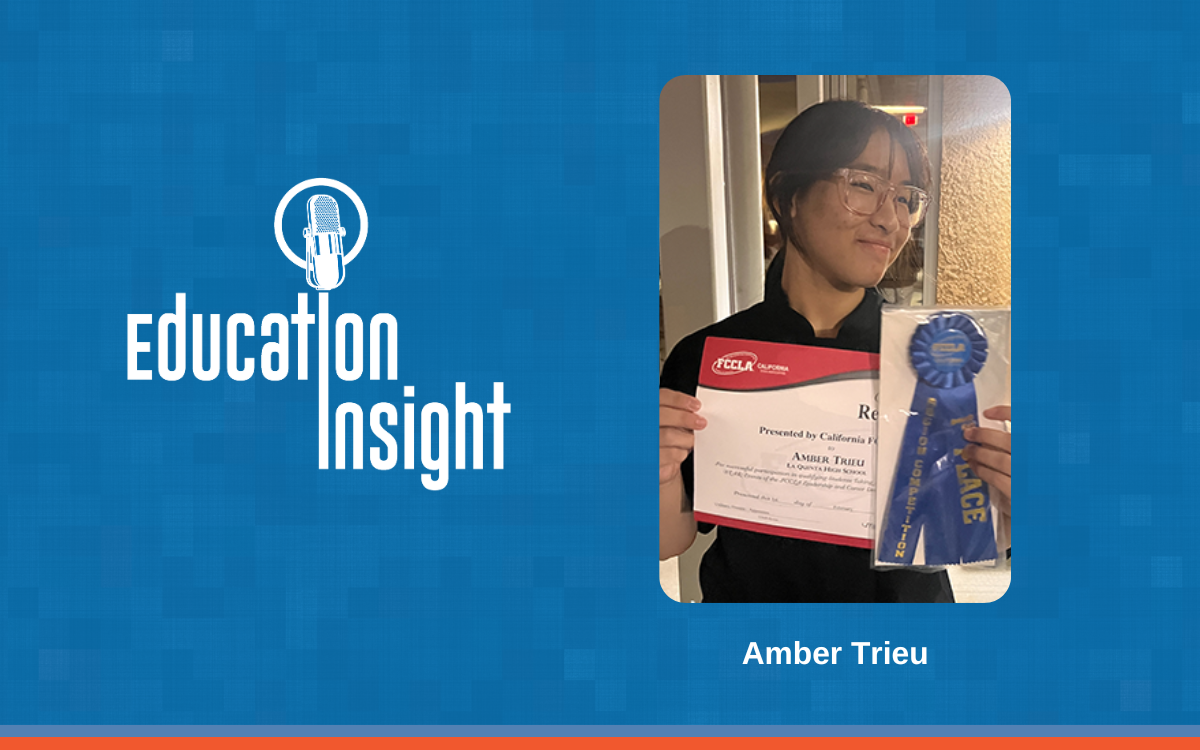
In this episode of Education Insight, we explore the incredible journey of students with disabilities who thrive despite the challenges they face in their educational environments. We discuss the importance of specialized programs that empower these students to succeed academically, socially, and personally. Through the lens of La Quinta High School student Amber Trieu, who has been overcoming her hearing disability to excel as a top student and a budding culinary artist, we gain insight into how these programs provide the support needed to help disabled students reach their full potential.
Amber, who has maintained a 4.3 GPA, is an athlete, and a champion in the Family, Career, and Community Leaders of America competition, is a prime example of how determination and support can lead to success. She joins us to discuss how she has excelled despite her hearing impairment and the crucial role that her school’s programs have played in her academic and personal growth.
We also hear from Anne Pruett, Special Education Teacher for Deaf/Hard of Hearing students at the Riverside County Office of Education, and Dena Slocum, Principal for RCOE programs assisting students with visual impairments, orthopedic impairments, and other special needs. Anne and Dena share their insights on how tailored educational services—such as auditory-oral programs, adaptive physical education, and other specialized resources—help students overcome their challenges and thrive in school.
Tune in to hear more about the ways school programs are paving the way for students with disabilities to excel in education and beyond. Amber’s story, along with the expertise of Anne and Dena, highlights the power of resilience, support, and determination in creating an inclusive educational environment.
Featured Guest
Anne Pruett
Teacher, Amelia Earhart Elementary in Indio
Kevin Cokley, Ph.D., is the University Diversity and Social Transformation Professor and Professor of Psychology at the University of Michigan, where he serves as Associate Chair of Diversity Initiatives for the Department of Psychology. Previously he was Chair of the Department of Educational Psychology at the University of Texas, where he held the Oscar and Anne Mauzy Regents Professorship for Educational Research and Development. He has been a Fellow of the University of Texas System and the University of Texas Academy of Distinguished Teachers, past Director of the Institute for Urban Policy Research & Analysis, and Professor of African and African Diaspora Studies.
His research and teaching can be broadly categorized in the area of African American psychology, with a focus on racial identity and understanding the psychological and environmental factors that impact African American students’ academic achievement. Dr. Cokley studies the psychosocial experiences of African American students and students of color and is currently exploring the impostor phenomenon and its relationship to mental health and academic outcomes.
He is the past Editor-in-Chief of the Journal of Black Psychology, holds the title of Distinguished Psychologist and received the Scholarship Award from the Association of Black Psychologists. He is the past President of the Society for the Psychological Study of Culture, Ethnicity, and Race and was elected to Fellow status in the American Psychological Association for his contributions to ethnic minority psychology and counseling psychology. He is the recipient of the Regents’ Outstanding Teaching Award, the Charles and Shirley Thomas Award for mentoring ethnic minority students, and the 10 Rising Stars of the Academy award by Diverse Issues in Higher Education.
He is the author of the 2014 book “The Myth of Black Anti-Intellectualism” which challenges the notion that African American students are anti-intellectual, the editor of the 2021 book “Making Black Lives Matter: Confronting Anti-Black Racism”, and editor of the 2024 book “The Impostor Phenomenon: Psychological Research, Theory, and Interventions.” He has written several Op-Eds in major media outlets on topics such as defending DEI, critical race theory, the Black Lives Matter movement, Blacks’ rational mistrust of police, racism and White supremacy, the importance of ethnic studies, and racial disparities in school discipline. His research has been recognized in media outlets, including the New York Times, USA Today, and Inside Higher Education.
Dena Slocum
RCOE Principal for programs assisting visually impaired, Deaf/Hard of hearing, ADAPTIVE PHYS EDUCATION, and Orthopedic Impairment programs
Kevin Cokley, Ph.D., is the University Diversity and Social Transformation Professor and Professor of Psychology at the University of Michigan, where he serves as Associate Chair of Diversity Initiatives for the Department of Psychology. Previously he was Chair of the Department of Educational Psychology at the University of Texas, where he held the Oscar and Anne Mauzy Regents Professorship for Educational Research and Development. He has been a Fellow of the University of Texas System and the University of Texas Academy of Distinguished Teachers, past Director of the Institute for Urban Policy Research & Analysis, and Professor of African and African Diaspora Studies.
His research and teaching can be broadly categorized in the area of African American psychology, with a focus on racial identity and understanding the psychological and environmental factors that impact African American students’ academic achievement. Dr. Cokley studies the psychosocial experiences of African American students and students of color and is currently exploring the impostor phenomenon and its relationship to mental health and academic outcomes.
He is the past Editor-in-Chief of the Journal of Black Psychology, holds the title of Distinguished Psychologist and received the Scholarship Award from the Association of Black Psychologists. He is the past President of the Society for the Psychological Study of Culture, Ethnicity, and Race and was elected to Fellow status in the American Psychological Association for his contributions to ethnic minority psychology and counseling psychology. He is the recipient of the Regents’ Outstanding Teaching Award, the Charles and Shirley Thomas Award for mentoring ethnic minority students, and the 10 Rising Stars of the Academy award by Diverse Issues in Higher Education.
He is the author of the 2014 book “The Myth of Black Anti-Intellectualism” which challenges the notion that African American students are anti-intellectual, the editor of the 2021 book “Making Black Lives Matter: Confronting Anti-Black Racism”, and editor of the 2024 book “The Impostor Phenomenon: Psychological Research, Theory, and Interventions.” He has written several Op-Eds in major media outlets on topics such as defending DEI, critical race theory, the Black Lives Matter movement, Blacks’ rational mistrust of police, racism and White supremacy, the importance of ethnic studies, and racial disparities in school discipline. His research has been recognized in media outlets, including the New York Times, USA Today, and Inside Higher Education.
Amber Trieu
Student, La Quinta High School
Kevin Cokley, Ph.D., is the University Diversity and Social Transformation Professor and Professor of Psychology at the University of Michigan, where he serves as Associate Chair of Diversity Initiatives for the Department of Psychology. Previously he was Chair of the Department of Educational Psychology at the University of Texas, where he held the Oscar and Anne Mauzy Regents Professorship for Educational Research and Development. He has been a Fellow of the University of Texas System and the University of Texas Academy of Distinguished Teachers, past Director of the Institute for Urban Policy Research & Analysis, and Professor of African and African Diaspora Studies.
His research and teaching can be broadly categorized in the area of African American psychology, with a focus on racial identity and understanding the psychological and environmental factors that impact African American students’ academic achievement. Dr. Cokley studies the psychosocial experiences of African American students and students of color and is currently exploring the impostor phenomenon and its relationship to mental health and academic outcomes.
He is the past Editor-in-Chief of the Journal of Black Psychology, holds the title of Distinguished Psychologist and received the Scholarship Award from the Association of Black Psychologists. He is the past President of the Society for the Psychological Study of Culture, Ethnicity, and Race and was elected to Fellow status in the American Psychological Association for his contributions to ethnic minority psychology and counseling psychology. He is the recipient of the Regents’ Outstanding Teaching Award, the Charles and Shirley Thomas Award for mentoring ethnic minority students, and the 10 Rising Stars of the Academy award by Diverse Issues in Higher Education.
He is the author of the 2014 book “The Myth of Black Anti-Intellectualism” which challenges the notion that African American students are anti-intellectual, the editor of the 2021 book “Making Black Lives Matter: Confronting Anti-Black Racism”, and editor of the 2024 book “The Impostor Phenomenon: Psychological Research, Theory, and Interventions.” He has written several Op-Eds in major media outlets on topics such as defending DEI, critical race theory, the Black Lives Matter movement, Blacks’ rational mistrust of police, racism and White supremacy, the importance of ethnic studies, and racial disparities in school discipline. His research has been recognized in media outlets, including the New York Times, USA Today, and Inside Higher Education.
Watch the Episode
Interview Highlights
3:57 – Adrienne describes dual enrollment and its benefits.
7:15 – Adrienne speaks to how recent California mandates and initiatives may have influenced the growth of these new programs.
8:34 – Adrienne explains what research shows about the impact of dual enrollment on a student’s academic achievements or even their future success.
9:24 – Adrienne shares examples of dual enrollment activities that are taking place in our region and what is happening in the IE.
13:11 – Adrienne talks about strategies in place to make sure that equal opportunities are available for all students.
20:18 – Jorge explains how dual enrollment aligns with his role at Riverside County Unified School District.
21:28 – Jorge shares his experiences and thoughts on the current dual enrollment programs that are being offered at Riverside Unified School District.
23:32 – Jorge gives insight into how dual enrollment makes students career ready.
25:58 – Jorge describes what challenges students typically face in dual enrollment programs and how he addresses those issues.
32:43 – Jorge shares what he would like to see be the future of the dual enrollment program in his district and beyond.
36:31 – Special Feature: Avijeet Randhawa, 8th-Grader, Auburndale Intermediate School in the Corona Norco Unified School District.
Education Insight tells the story of education in the Inland Empire through the diverse voices of those in and around the regional education community. The show is produced by Growing Inland Achievement, a collective impact organization in the Inland Empire with a mission to increase economic prosperity in the region by increasing educational attainment. Hosted by 30-year broadcast veteran Lacey Kendall, monthly shows explore topics ranging from education challenges and shortcomings to innovations and groundbreaking ideas that are driving student success.
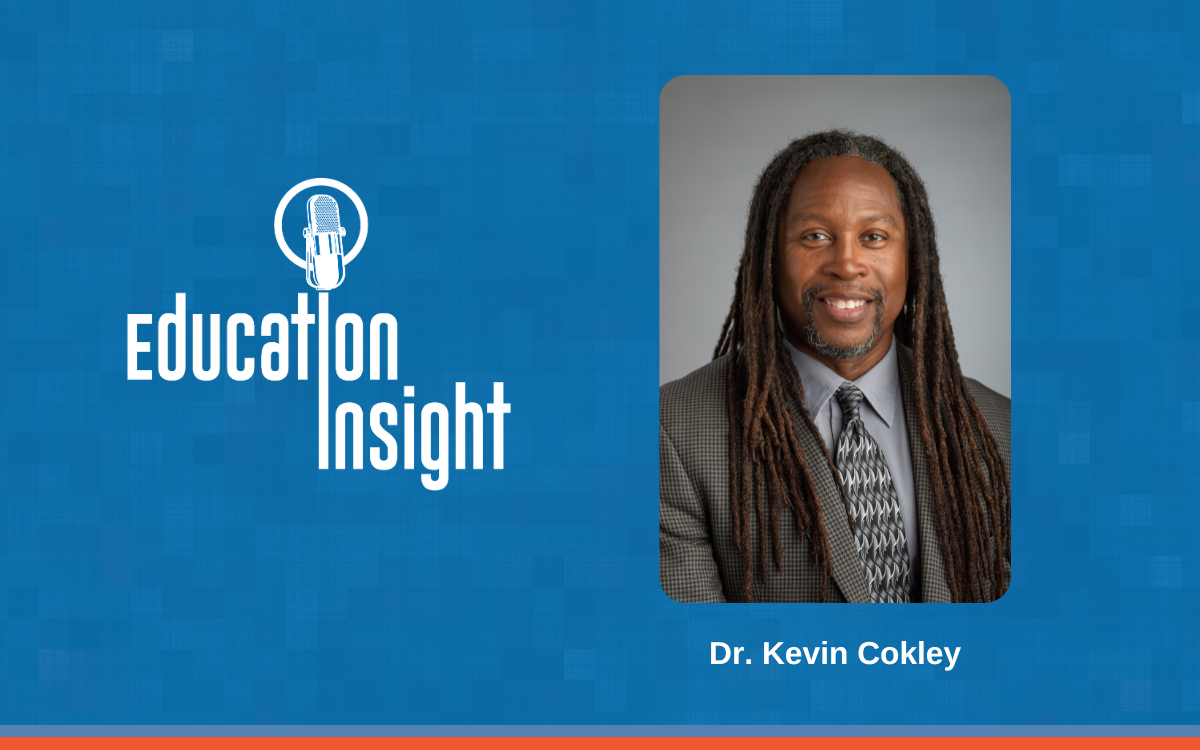
In this episode of Education Insight, Dr. Kevin Cokley, Associate Chair for Diversity Initiatives at the University of Michigan, explores the critical topic of Diversity, Equity, and Inclusion (DEI) in education. Dr. Cokley discusses how DEI is implemented across schools and universities, addressing common misconceptions and the broader impact these initiatives have on campus climate for students, faculty, and staff. He also delves into the effectiveness of DEI programs, sharing real-world examples of how such initiatives have led to measurable improvements in student outcomes.
The conversation takes a thought-provoking turn as Dr. Cokley reflects on the potential immediate and long-term effects of removing DEI programs from educational institutions. He also offers insights into the challenges educators might face if DEI efforts are reduced or eliminated. Finally, Dr. Cokley provides advice on how schools can strike a balance between inclusivity and ensuring that all students feel they belong, regardless of their perspective on DEI. Tune in for a comprehensive discussion on the current state of DEI in education and its implications for the future.
Featured Guest
Dr. Kevin Cokley
University Diversity and Social Transformation Professor, Professor of Psychology, and Associate Chair for Diversity Initiatives, University of Michigan.
Kevin Cokley, Ph.D., is the University Diversity and Social Transformation Professor and Professor of Psychology at the University of Michigan, where he serves as Associate Chair of Diversity Initiatives for the Department of Psychology. Previously he was Chair of the Department of Educational Psychology at the University of Texas, where he held the Oscar and Anne Mauzy Regents Professorship for Educational Research and Development. He has been a Fellow of the University of Texas System and the University of Texas Academy of Distinguished Teachers, past Director of the Institute for Urban Policy Research & Analysis, and Professor of African and African Diaspora Studies.
His research and teaching can be broadly categorized in the area of African American psychology, with a focus on racial identity and understanding the psychological and environmental factors that impact African American students’ academic achievement. Dr. Cokley studies the psychosocial experiences of African American students and students of color and is currently exploring the impostor phenomenon and its relationship to mental health and academic outcomes.
He is the past Editor-in-Chief of the Journal of Black Psychology, holds the title of Distinguished Psychologist and received the Scholarship Award from the Association of Black Psychologists. He is the past President of the Society for the Psychological Study of Culture, Ethnicity, and Race and was elected to Fellow status in the American Psychological Association for his contributions to ethnic minority psychology and counseling psychology. He is the recipient of the Regents’ Outstanding Teaching Award, the Charles and Shirley Thomas Award for mentoring ethnic minority students, and the 10 Rising Stars of the Academy award by Diverse Issues in Higher Education.
He is the author of the 2014 book “The Myth of Black Anti-Intellectualism” which challenges the notion that African American students are anti-intellectual, the editor of the 2021 book “Making Black Lives Matter: Confronting Anti-Black Racism”, and editor of the 2024 book “The Impostor Phenomenon: Psychological Research, Theory, and Interventions.” He has written several Op-Eds in major media outlets on topics such as defending DEI, critical race theory, the Black Lives Matter movement, Blacks’ rational mistrust of police, racism and White supremacy, the importance of ethnic studies, and racial disparities in school discipline. His research has been recognized in media outlets, including the New York Times, USA Today, and Inside Higher Education.
Watch the Episode
Interview Highlights
3:57 – Adrienne describes dual enrollment and its benefits.
7:15 – Adrienne speaks to how recent California mandates and initiatives may have influenced the growth of these new programs.
8:34 – Adrienne explains what research shows about the impact of dual enrollment on a student’s academic achievements or even their future success.
9:24 – Adrienne shares examples of dual enrollment activities that are taking place in our region and what is happening in the IE.
13:11 – Adrienne talks about strategies in place to make sure that equal opportunities are available for all students.
20:18 – Jorge explains how dual enrollment aligns with his role at Riverside County Unified School District.
21:28 – Jorge shares his experiences and thoughts on the current dual enrollment programs that are being offered at Riverside Unified School District.
23:32 – Jorge gives insight into how dual enrollment makes students career ready.
25:58 – Jorge describes what challenges students typically face in dual enrollment programs and how he addresses those issues.
32:43 – Jorge shares what he would like to see be the future of the dual enrollment program in his district and beyond.
36:31 – Special Feature: Avijeet Randhawa, 8th-Grader, Auburndale Intermediate School in the Corona Norco Unified School District.
Education Insight tells the story of education in the Inland Empire through the diverse voices of those in and around the regional education community. The show is produced by Growing Inland Achievement, a collective impact organization in the Inland Empire with a mission to increase economic prosperity in the region by increasing educational attainment. Hosted by 30-year broadcast veteran Lacey Kendall, monthly shows explore topics ranging from education challenges and shortcomings to innovations and groundbreaking ideas that are driving student success.
20 Local Postsecondary Institutions Partner in Higher Endeavor Initiative Backed by Gates Foundation
Inland Empire, CA—Growing Inland Achievement (GIA) announced a significant milestone in its efforts to increase educational and economic success in the Inland Empire: Twenty postsecondary institutions serving the Inland Empire have signed on to participate in a multi-year “Higher Endeavor” initiative aimed at improving student success across San Bernardino and Riverside Counties.
Funded by a $9.6 million grant from the Gates Foundation and bolstered by support from ECMC Foundation, the initiative represents more than $10 million in investment toward postsecondary transformation at scale. GIA is one of six organizations selected nationally to serve in an intermediary capacity, supporting institutions through technical assistance, research, and systems-change strategies.
With MOUs now signed by 20 local institutions, including public, private, and community colleges, GIA has secured full regional participation in the Higher Endeavor initiative. While other intermediaries in the national effort support institutions across multiple geographies, GIA’s focus is uniquely place-based. Serving the Inland Empire—home to more than 4.7 million residents and the 12th largest metro area in the nation—this milestone reflects an extraordinary level of regional alignment and commitment to improving postsecondary outcomes at scale.
“This moment underscores the significance of regional collaboration in the Inland Empire,” said Dr. Ashish Vaidya, President and CEO of Growing Inland Achievement. “Our colleges and universities are stepping forward together, not just to improve outcomes on their campuses, but to align efforts and share solutions that move the region forward. This is what cross-sector leadership looks like.”
Participating Institutions:
Barstow College
California State Polytechnic University, Pomona
California State University, Fullerton
California State University, San Bernardino
California State University, San Marcos
College of the Desert
Copper Mountain College
Crafton Hills College
Loma Linda University
Moreno Valley College
Mt. San Jacinto College
Norco College
Palo Verde College
Riverside City College
San Bernardino Valley College
University of California, Riverside
University of La Verne
University of Redlands
Victor Valley College
Woodbury University
While a few campuses are located outside the Inland Empire’s geographic boundaries, each serves a substantial number of Inland Empire students and plays a critical role in the region’s educational ecosystem. Their inclusion reflects a shared commitment to increasing opportunity and access for Inland Empire learners.
Supporting Institutions Through Tailored, Regional Solutions
Through Higher Endeavor, GIA provides a core set of support to each institution, including:
Regional Summits and Workshops focused on shared learning and collaboration
Ongoing Professional Development and Coaching tailored to institutional needs
Peer Learning Cohorts known as Action Network Teams (ANTs), enabling cross-campus knowledge sharing
Customized Technical Assistance, including resource development and data analysis
The initiative also supports the expanded use of data for decision-making. It helps institutions design strategies to address barriers to student success..
Tied to a Broader Vision for the Region
Higher Endeavor directly supports GIA’s new 2030 Strategic Plan, which aims to increase the percentage of working-age adults in the Inland Empire with a postsecondary degree or credential of value from 32% to 70%. This goal aligns with California’s statewide Blueprint for Higher Education and reflects the region’s shared interest in advancing equitable economic mobility.
“Educational attainment is both a moral and economic imperative,” said Diana Z. Rodriguez, Chancellor of San Bernardino Community College District and GIA Board Chair. “This work not only strengthens our campuses, but also our workforce, our communities, and the region’s future.”
GIA serves as a coordinating hub for cross-sector collaboration, data-informed strategy, and public-private investment. The Higher Endeavor initiative’s success to date highlights the region’s growing capacity to implement large-scale investments focused on equity-centered educational transformation.
For more information on Growing Inland Achievement and the Higher Endeavor initiative, visit www.inlandempiregia.org.
About Growing Inland Achievement Growing Inland Achievement (GIA) serves the Inland Empire region of Southern California—home to more than 4.7 million residents and over one million students. GIA connects education, government, nonprofit, and business partners around a shared commitment to improving educational attainment and economic mobility. Through its CAIR strategy—Convene, Advocate, Invest, and Research—GIA supports coordinated, data-informed efforts that strengthen outcomes from cradle to career.
Media Contact: Jake Poore Director of Communication Growing Inland Achievement jake@gia.echofactory.dev
GIA’s New Strategic Plan Charts Course to 70% Postsecondary Attainment in the Inland Empire
Growing Inland Achievement (GIA) has officially launched its 2025–2030 Strategic Plan, a regionally developed blueprint aimed at transforming education and workforce outcomes across San Bernardino and Riverside Counties. Anchored in a shared goal to increase the Inland Empire’s postsecondary attainment rate to 70%, the plan reflects the collective voices of hundreds of regional leaders, educators, and community members who participated in a year-long planning process.
The plan is grounded in a formal Board resolution endorsing a regional goal of 70% postsecondary attainment among working-age adults, which is aligned with the State of California’s higher education and workforce objectives. It outlines a clear path toward this goal by targeting improvements across five critical cradle-to-career milestones: (1) early literacy and middle school math proficiency, (2) high school readiness through A-G completion and dual enrollment, (3) postsecondary enrollment and transfer, (4) postsecondary completion, and (5) successful transition to employment with a livable wage. GIA will support regional partners in advancing these outcomes through its CAIR strategy—Convene, Advocate, Invest, and Research—and by implementing a collective impact framework that drives coordinated, data-informed action across sectors.
“This is more than a plan. It’s a regional commitment to our students, families, and future workforce,” said Dr. Ashish Vaidya, President and CEO of Growing Inland Achievement. “We are calling on every sector—education, business, philanthropy, and government—to join in advancing this vision. When more Inland Empire residents earn credentials of value, we strengthen families, drive economic growth, and position the region as a national model for equitable opportunity.”
Strategic Vision Grounded in Regional Voices
The 2025–2030 Strategic Plan was built through deep listening and broad engagement. GIA facilitated dozens of focus groups, one-on-one interviews, and stakeholder surveys over the past year to ensure the plan reflected regional priorities. The final product aligns with key state initiatives including the California Blueprint for Higher Education, the Vision 2030 roadmap for community colleges, and regional P-16 efforts.
Regional stakeholders coalesced around a shared understanding: long-term progress toward goal attainment depends on improving student outcomes at every stage of the educational journey. The plan elevates five interconnected cradle-to-career milestones and ties them to goals, annual benchmarks, and shared metrics—creating a structure for accountability, learning, and continuous improvement.
A Plan That Belongs to the Region
“This plan reflects the aspirations of our entire region, not just one organization,” said Dr. Diana Z. Rodriguez, GIA Board Chair and Chancellor of the San Bernardino Community College District. “The 70% attainment goal is bold but achievable—if we work together. Every school, college, nonprofit, and employer has a role to play.”
GIA’s role moving forward will be to support partners in turning strategy into action. Through the CAIR strategy, GIA will strengthen regional coordination, advocate for policies that remove systemic barriers, invest in initiatives with potential for broad impact, and deliver timely research to inform decisions and track progress.
“Whether you’re a school counselor, business leader, or elected official, this plan offers a roadmap for how we can work together to expand opportunity,” added Paul Granillo, GIA Board Member and President & CEO of Inland Empire Economic Partnership. “It’s an invitation to contribute to the future of our region.”
GIA welcomes opportunities to present a strategic plan overview at community meetings, business roundtables, or public forums. To schedule a presentation, contact Viri Saldana-Borden at viri@gia.echofactory.dev.
Community members are also encouraged to:
Sign up for GIA’s email updates to stay connected on progress, events, and opportunities
Save the date for GIA’s 2025 Toward a Shared Vision Summit, GIA’s annual regional convening on October 28-29, 2025, at the Riverside Convention Center.
About Growing Inland Achievement Growing Inland Achievement (GIA) serves the Inland Empire region of Southern California—home to more than 4.7 million residents and over one million students. GIA connects education, government, nonprofit, and business partners around a shared commitment to improving educational attainment and economic mobility. Through its CAIR strategy—Convene, Advocate, Invest, and Research—GIA supports coordinated, data-informed efforts that strengthen outcomes from cradle to career.
Media Contact: Jake Poore Director of Communication Growing Inland Achievement jake@gia.echofactory.dev