Author: Growing Inland Achievement

  • Education Insight: Celebrating Local Educational Success

    Education Insight: Celebrating Local Educational Success

    About This Episode

    Season 3. Episode 4.

    Last month, a number of people in the Inland Empire were honored for extraordinary achievements in Inland Empire education. This week, we’d like you to meet a few of them. How does it feel to be recognized as the teacher or administrator of the year? What does an 8th-grade Fontana kid have to do to win the regional spelling bee and end up headed for the national competition? Plus, a look at the biggest STEM competition in the Inland Empire-where over a thousand science-loving kids converged to give it all they know for the Inland Empire Science Olympiad—all that and more on the next episode of Education Insight.

    Featured Guests

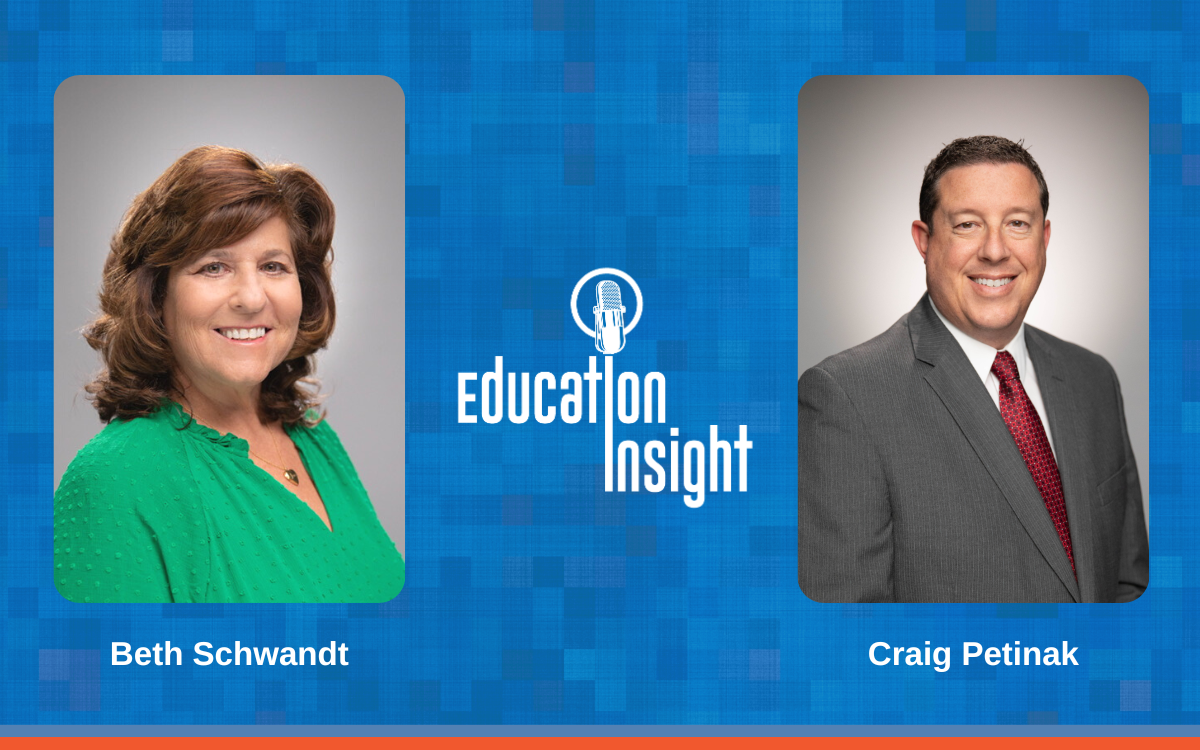
    Craig Petinak

    Director, Public Relations & Communications Services, Riverside County Superintendent of Schools.

    Craig Petinak is the Director of Public Relations and Communications Services at the Riverside County Office of Education where he leads an award-winning team of creative designers, communicators, and video producers. He serves as the “unofficial chief storyteller” for the transformational impact of education on the lives of individuals, the community, and society as a whole.

    Craig’s human-centered work blends the creative and strategic with the tactical and timely. From crisis communications and authoring press releases, to leading video productions and crafting internal newsletters, Craig also supports the school communications professionals within each of the county’s 23 districts to help them elevate their own schools, students, programs, and communications expertise.  

    Beth Schwandt

    Music Teacher, Lake Hills Elementary School in the Alvord Unified School District.

    We’re up, UP WITH PEOPLE, we meet ‘em wherever we go. Up, UP WITH PEOPLE, they’re the best kind of folks we know. If MORE people were FOR people, all people everywhere, We’d have a lot less people to worry about and a lot more people who care!”

    was in the 5th grade, at an Air Force Base in Cheyenne, Wyoming, sitting in the audience of a UP WITH PEOPLE concertand after hearing the harmonies, seeing the choreography, and experiencing the joy and the messageI knew I wanted to be a music teacher and a choir director. 

    My path was not direct, but after years of incorporating one period of the choir while I taught computer literacy or language arts, finally became full-time music teacher at the age of 53, and wouldn’t trade one note of the journey along the way to realizing my dream! 

    My greatest contributions have been recruiting, training, and mentoring new music teachers at every level, and empowering them with curriculum, repertoire, pedagogy, and instruments. My greatest accomplishment has been building programs from the ground up; first, the Villegas Show Choir, next the Hillcrest Show Choir, and finally, the elementary music program. Exposing students to the arts through field trips, plays, concerts, workshops, and performances has instilled a rich passion and a life-long love for music in their hearts. 

    Jupharnoor Singh

    8th-grader, Heritage Intermediate, Etiwanda School District.

    My name is Jupharnoor Singh (Jup). I am 13 years old and in 8th grade from Heritage Intermediate in Etiwanda School District. This is my second year participating in the Spelling Bee. Last year (2022) I was the first person from my school to win the District Spelling Bee and got second place in the virtual San Bernardino County bee competition. This year I won the District Bee again and went on to win the SB county spelling bee which helped me secure a place in the National Competition in Washington DC from 30th May to 1st June.

    I speak 3 languages and got fluent in English in 2nd grade as my native language is Punjabi. In school, I always try to do my best and work hard to be an A + student. From 3rd grade onwards, I have been participating in the Battle of the Books (B.O.B) competition in which I secured good rankings every year.

    I love to play chess and basketball. I earned a black belt in Tae-Kwon-Do when I was 9 years old. After the spelling bee, my goals for this year are to get selected into my high school basketball team, and finally write a short story and hopefully get it published.

    Karin Westerling

    Director, Inland Empire STEM Science Olympiad.

    Karin Westerling is a native-born Riversider. While earning a Ph.D. in biology at UC Irvine, she discovered that teaching was even more fun than bench science. A four-decade career teaching science to students in college, high school, and middle school followed. Now retired, Karin can’t quite quit the teaching bug. She is a water aerobics instructor and serves on the board of the So. Cal Tri-Counties Branch of the International Dyslexia Association and helps out with the Inland Empire Science Olympiad.

    Interview Highlights

    1:45 – Craig shares how it feels to be named the Classified Administrator of the Year.

    3:41 – Craig describes his work as the Director of Public Relations and Communication Services at Riverside County Office of Education.

    9:50 – Craig reflects on his proudest achievement in his position thus far.

    13:43 – Craig explains what he wishes people knew about Riverside County Schools.

    16:03 – Beth describes her role as a music teacher at Lake Hills Elementary School.

    17:43 – Beth shares the ways that music empowers students in that nothing else can.

    19:22 – Beth describes how music influences the academics of a student.

    22:01 – Beth talks about her greatest accomplishment.

    30:28 – Karin gives insight into how the Inland Empire Science Olympiad first got started.

    31:31 – Karin explains how many teams come to participate in this event

    46:45 – Karin shares why events like this cause a shift in kids’ passion for science here in the Inland Empire. 

    41:06 – Special Feature: Jupharnoor Singh, 8th-Grader, Heritage Intermediate, Etiwanda School District.

    View our podcast page for more stories like this: https://gia.echofactory.dev/gia-podcasts/

    Education Insight tells the story of education in the Inland Empire through the diverse voices of those in and around the regional education community. The show is produced by Growing Inland Achievement, a collective impact organization in the Inland Empire with a mission to increase economic prosperity in the region by increasing educational attainment. Hosted by 30-year broadcast veteran Lacey Kendall, monthly shows explore topics ranging from education challenges and shortcomings to innovations and groundbreaking ideas that are driving student success.

  • Two-County Education Collaborative Appoints Ann Marie Sakrekoff as Interim President & CEO

    Two-County Education Collaborative Appoints Ann Marie Sakrekoff as Interim President & CEO

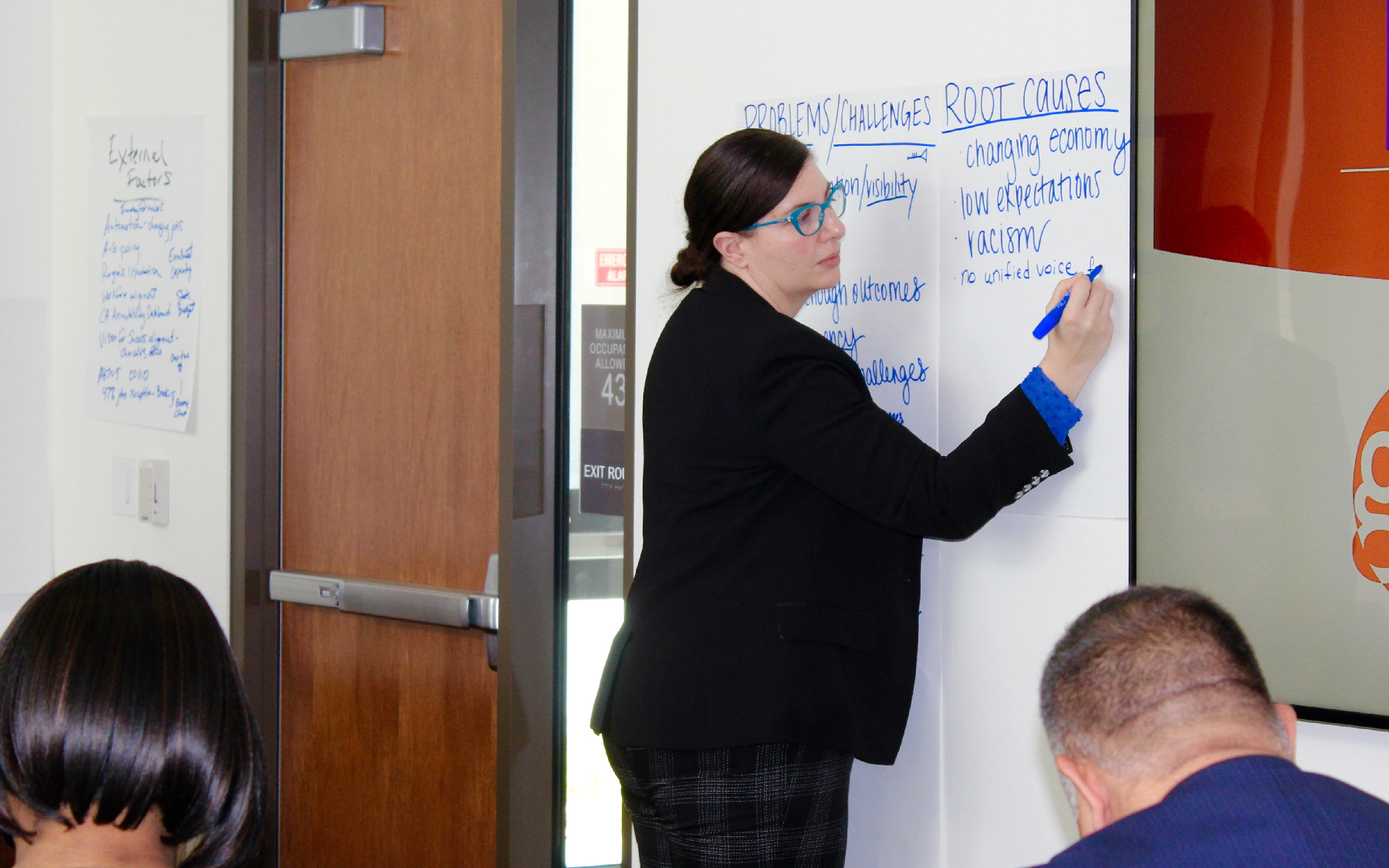
    Photo Caption: Ann Marie Sakrekoff facilitates a leadership workshop on local education challenges and opportunities. Sakrekoff leads the two-county education collaborative to expand our educated workforce, thriving communities, and a vibrant economy that creates prosperity for all.  Photo by GIA staff.

    Sakrekoff will lead the organization while the board searches for a permanent CEO. A national search will start now with a new CEO expected by the Fall of 2023.

    INLAND EMPIRE, CA – Ann Marie Sakrekoff has been named Interim President & CEO of Growing Inland Achievement (GIA), effective May 15, following the retirement of Dr. Carlos Ayala.

    GIA serves San Bernardino and Riverside Counties as a regional, cross-sector network of education, government, nonprofit and business partners in the Inland Empire; collectively, they work towards a shared vision of educational and economic success.

    Sakrekoff has over 20 years of higher education and nonprofit leadership experience, including her current role as GIA’s Chief Operating Officer.

    Sakrekoff stated, “I am proud and excited to take on the Interim CEO role during such an exciting time for GIA as we continue building on our service to the Inland Empire educational network of students, families, institutions, and community partners. GIA will remain focused on its mission, impact, and growth while we search for our next permanent CEO.”

    Diana Rodriguez, GIA Board Member and Chancellor of the San Bernardino Community College District praised Sakrekoff’s experience.

    “Ann Marie’s passion for helping Inland Empire students achieve their college dreams is truly inspiring. With her deep understanding of the challenges facing students in the region, she is committed to ensuring that every student has access to the resources they need to succeed,” said Rodriguez.

    “Whether through innovative programming, advocacy efforts, or community outreach, Ann Marie is dedicated to making a meaningful difference in the lives of our students. Her unwavering commitment to this cause has made her an invaluable asset to Growing Inland Achievement, and we are confident that under her leadership as Interim CEO, the organization will continue to make great strides in improving educational outcomes for students throughout the Inland Empire,” Rodriguez added.

    Sakrekoff was the first employee hired by GIA’s Board of Directors in 2005, helping to lead the organization since its inception.

    “Ann Marie has served as the operations leader for the GIA since its early days. She has been a steady force and an excellent collaborative leader focused on advancing our region’s higher education and workforce goals,” said Sheila Thornton, GIA Board Member and CEO of OneFuture Coachella Valley. “Her dedication to student success is evident throughout her work. We’re grateful to Ann Marie for being willing to serve in this interim position.”

    GIA’s board of directors anticipates launching a search for a permanent President & CEO in the coming months.

    “Ann Marie is an exceptional leader poised to continue GIA’s efforts to increase equitable educational attainment in the Inland Empire,” said Dr. Kim Wilcox, GIA Board Chair and Chancellor of UC Riverside. “The board fully believes in her abilities to lead the organization while we search for a permanent CEO.”

    Growing Inland Achievement, serves San Bernardino and Riverside Counties, in a regional cross-sector network of education, government, nonprofit, and business partners in the Inland Empire, bringing more than $20 million and collectively working towards a shared vision of educational and economic success.

    About Growing Inland Achievement

    Growing Inland Achievement, which serves both San Bernardino and Riverside Counties, is a regional cross-sector network of education, government, nonprofit, and business partners in the Inland Empire, collectively working towards a shared vision of educational and economic success.

    GIA staff support this work by researching issues and opportunities, developing financial resources for the region, and connecting diverse stakeholders across the two-county region of the Inland Empire.

    GIA’s shared vision is that by 2035, San Bernardino and Riverside Counties will be widely recognized for their educated workforce, thriving communities, and vibrant economy that creates prosperity for all. 

  • Projected Shortfalls in Postsecondary Enrollment Capacity in the Inland Empire by 2030

    Projected Shortfalls in Postsecondary Enrollment Capacity in the Inland Empire by 2030

    By 2030, the shortfall in enrollment capacity at Inland Empire postsecondary institutions could potentially result in thousands of qualified students being denied a seat, with a disproportionate impact on low-income and students of color. Meeting the postsecondary needs of the residents of the Inland Empire (IE) is of urgent importance. Click to read more.

  • Growing Inland Achievement President and CEO, Dr. Carlos Ayala, to Retire

    Growing Inland Achievement President and CEO, Dr. Carlos Ayala, to Retire

    Dr. Carlos Ayala speaks at GIA’s annual Toward a Shared Vision Summit. Photo by Growing Inland Achievement 

    Ayala is credited with working with the GIA board and network partners to establish Growing Inland Achievement (GIA), as a 501(c)(3), IRS tax-exempt organization; more than doubling the size of the organization; and bringing more than 20M to the region for education.

    Inland Empire, CA – President and CEO of Growing Inland Achievement (GIA), Dr. Carlos Ayala, will retire in June 2023. GIA serves both San Bernardino and Riverside Counties as a regional, cross-sector network of education, government, nonprofit and business partners in the Inland Empire; collectively, they work towards a shared vision of educational and economic success.

    “It has been an honor to serve the students of the Inland Empire, says Dr. Ayala. “I have learned a great deal about the affordances and constraints our students, families, institutions and community-based organizations face when it comes to student success.”

    Dr. Ayala, age 62, has more than 25 years of service in public education.  During his tenure as CEO, Ayala is credited with working with the GIA board and network partners to establish GIA as a 501(c) (3), tax-exempt organization, more than doubling the size of the organization and raising millions of dollars for Inland Empire education.

    Under his guidance and working with the network members, GIA was accepted as one of only six organizations in the U.S. chosen by the Bill and Melinda Gates Foundation to participate in its Intermediaries for Scale program, also known as Higher Endeavor, bringing $10 million of support to the region for postsecondary transformation reforms.

    “I want to thank the GIA Board of Directors and employees for their commitment to the people and students of the Inland Empire,” Ayala said. “I also wish to thank the vast array of people who are committed to changing the economy of the Inland Empire through education. Their work is notable and I remain convinced that the path forward is at your doorstep—engage collectively.”

    The Board of Directors for GIA will oversee the process of choosing Dr. Ayala’s successor.

    “As its first CEO, Carlos established the organization, including a set of processes to help us move forward,” said Dr. Kim Wilcox, GIA Board Chair and Chancellor of UC Riverside.  “I’m personally grateful for his efforts.”

    “Dr. Ayala brought a deep knowledge of the education landscape, strong leadership, and a passion for positively impacting student lives to our organization,” said Ann Marie Sakrekoff, COO of Growing Inland Achievement. “He is leaving GIA in a great position to succeed in our next chapter. Under Dr. Ayala’s leadership, GIA has become nationally recognized.”

    GIA’s shared vision is that by 2035, San Bernardino and Riverside Counties will be widely recognized for their educated workforce, thriving communities and vibrant economy that creates prosperity for all.

    Watch a video announcement from Dr. Ayala

    About Growing Inland Achievement

    Growing Inland Achievement, which serves both San Bernardino and Riverside Counties, is a regional cross-sector network of education, government, nonprofit, and business partners in the Inland Empire, collectively working towards a shared vision of educational and economic success.

    GIA staff support this work by researching issues and opportunities, developing financial resources for the region, and connecting diverse stakeholders across the two-county region of the Inland Empire.

    GIA’s shared vision is that by 2035, San Bernardino and Riverside Counties will be widely recognized for their educated workforce, thriving communities, and vibrant economy that creates prosperity for all. 

  • Enrollment at Inland Empire Community Colleges Still Recovering Post-COVID

    Enrollment at Inland Empire Community Colleges Still Recovering Post-COVID

    In the years leading up to the pandemic following the Great Recession of 2007, Inland Empire colleges had been experiencing steady growth culminating in the region’s largest enrollment ever in Fall 2019 with over 144,000 students.1 This was in contrast to the overall rates of community college enrollment in California which had peaked in the years immediately following the recession and then remained relatively flat.  

    Both the State overall and the Inland Empire are now hoping to regain their earlier enrollment momentum. In the two years following the pandemic (between Fall 2019 to Fall 2021), mirroring overall statewide declines, enrollment across the 12 regional community colleges initially fell by roughly 19%, followed by a partial recovery in year-over-year enrollment this past fall (2022). With this upswing, the total losses in community college enrollment for the IE post pandemic now stands at 12.5%. Despite wishes for an even stronger rebound after campuses began re-opening post-COVID, educators are encouraged by these trends and are cautiously hopeful regarding the prospects for the longer-term landscape of postsecondary enrollment.  

    All IE community colleges have struggled with declining enrollment over the past several years, and while many showed a promising uptick in enrollment in Fall 2022 for the first time since the pandemic, most have suffered substantial overall declines compared to pre-COVID enrollment. It should be noted that only two colleges experienced no decline, both of which have relatively smaller enrollment and are geographically more isolated.

    Patterns of regional enrollment losses across student groups have also varied, with the largest percentage decline observed among American Indian/Alaska Native students, followed by Pacific Islander, White, African American/Black, Hispanic, Filipino, and Asian students.

    While the decline in enrollment in the past few years was slightly larger among male students overall (14% compared to 12%), these patterns were reversed within a few racial/ethnic groups, — American Indian/Alaskan Native, Pacific Islander, and white students–where we see greater enrollment losses for female students than males.  

    In addition to variation across different institutions and racial/ethnic groups, enrollment declines were uneven across student age groups as well, with the biggest losses observed among students in their 20s, where enrollment declined by nearly one of every four students. It should be noted that the observed drop among students ages 19 and less would have also been greater were it not for large increases in dual enrollment observed over this same three-year time: overall enrollment of IE students aged 19 or less excluding dual enrollment (so-called Special Admits) fell by 10% from Fall 2019 to Fall 2022 (Special Admit enrollment rose from 6,926 in Fall 2019 to 10,502 in Fall 2022). 

    Apart from dual enrollment, the only other student enrollment type exhibiting an increase, albeit very small, since 2019 was Returning Students, those who enroll at a college following an absence of one or more primary terms. By far the largest decline across the region was among Continuing Students, those who were both enrolled in the current session and were also enrolled in the previous one (unfortunately, while this likely reflects a drop in persistence, the fact that these numbers also include students who are not continuing due to completion of a degree, certificate, or transfer, complicates the conclusions that can be drawn from this information alone).2  

    In addition to impacts on student outcomes, declining enrollments also pose a threat to long term institutional operations and capacities (such as faculty/staff, student services, etc.) due to enrollment-based funding formulas (which have been suspended until 2025).

    In contrast to the community college system, undergraduate enrollment in the CSU system declined much less—enrollment between Fall 2019 and Fall 2022 was down 7% at our local CSU San Bernardino campus and actually increased by 6% systemwide;3 the UC system overall and our local Riverside campus both saw increases in undergraduate enrollment during that time frame of 2% and 4%, respectively.4 However, the enrollment changes in the community college system potentially pose additional challenges for the future higher education pipeline, since a large proportion of the student body at our local universities, particularly CSU San Bernardino, are comprised of regional community college transfer students, and this relative proportion has been increasing in the years since the pandemic—whereas only a third (33%) of CSUSB’s undergraduate enrollment were comprised of community college students in Fall 2019, by Fall 2022 that number had increased to 42%.5 

    While college graduates typically have higher wages and lower rates of unemployment than other workers, a recent survey conducted by the RP Group found that nearly a third of former California community college students cited jobs as a reason for not re-enrolling, perhaps in response to pandemic-related labor shortages and employer incentives; additional factors included family responsibilities and difficulties keeping up with coursework. Most did indicate an intent to return to college once they had saved enough money. GIA research on post-pandemic barriers to enrollment also suggests that many potential or former IE community college students are deeply concerned about financial stability and the costs associated with attending college and would benefit greatly from related financial aid, academic paths, and wrap-around information and support services in order to (re)connect them with postsecondary plans. These overall financial challenges are worth noting given that the California Community College system is one of the most affordable in the country and many students pay little-if any-tuition.  Steps must be taken to understand and address the broader scope of students’ perceived value of college compared to their immediate needs.

    Whether these enrollment trends will continue, stabilize, or reverse will become clearer as we observe the unfolding economic circumstances shaping student decisions as well as continue to monitor regional postsecondary enrollment trends. It is heartening that most of the students in the RFP study indicated interest in returning and expressed a willingness to be contacted by their local colleges. As we move forward with outreach to these and other students, it is important for both our local and state educational leaders to be cognizant of these many factors affecting the Inland Empire students and families. The academic, social-emotional, and economic effects of the pandemic will not be resolved overnight and navigating a path to pre-pandemic enrollment will require ongoing flexibility and adaptation to a new educational environment. No matter what, navigating a path to pre-pandemic enrollment will pose a tremendous challenge to higher education leaders regionally and beyond. 

    1 All community college enrollment data are Student Enrollment Status Summary Reports from the California Community Colleges Chancellor’s Office (https://datamart.cccco.edu/Students/Enrollment_Status.aspx).

    2 The California Community College Student Enrollment Status Definitions can be found here: https://webdata.cccco.edu/ded/sb/sb15.pdf. 

    3 https://tableau.calstate.edu/views/SelfEnrollmentDashboard/EnrollmentSummary?iframeSizedToWindow=true&%3Aembed=y&%3AshowAppBanner=false&%3Adisplay_count=no&%3AshowVizHome=no

    4 https://www.universityofcalifornia.edu/about-us/information-center/fall-enrollment-glance

    5 https://tableau.calstate.edu/views/SelfEnrollmentDashboard/EnrollmentSummary?iframeSizedToWindow=true&%3Aembed=y&%3AshowAppBanner=false&%3Adisplay_count=no&%3AshowVizHome=no