Author: Growing Inland Achievement

  • Education Insight: The PTA’s Journey from Tradition to Modern Advocacy

    Education Insight: The PTA’s Journey from Tradition to Modern Advocacy

    About This Episode

    Season 4. Episode 6.

    -In this episode of Education Insight, we take a deep dive into the 125-year legacy of the Parent Teacher Association (PTA) and its evolving role in education. For over a century, the PTA has worked to build strong family engagement in schools, advocate for policies that support student well-being, and ensure equitable access to quality education.

    In the Inland Empire, the PTA is still actively involved in traditional activities like in-person and Zoom meetings, and yes, even cake walks. But today’s PTA is also fighting for critical issues like improved funding for schools and the implementation of mental health programs for students.

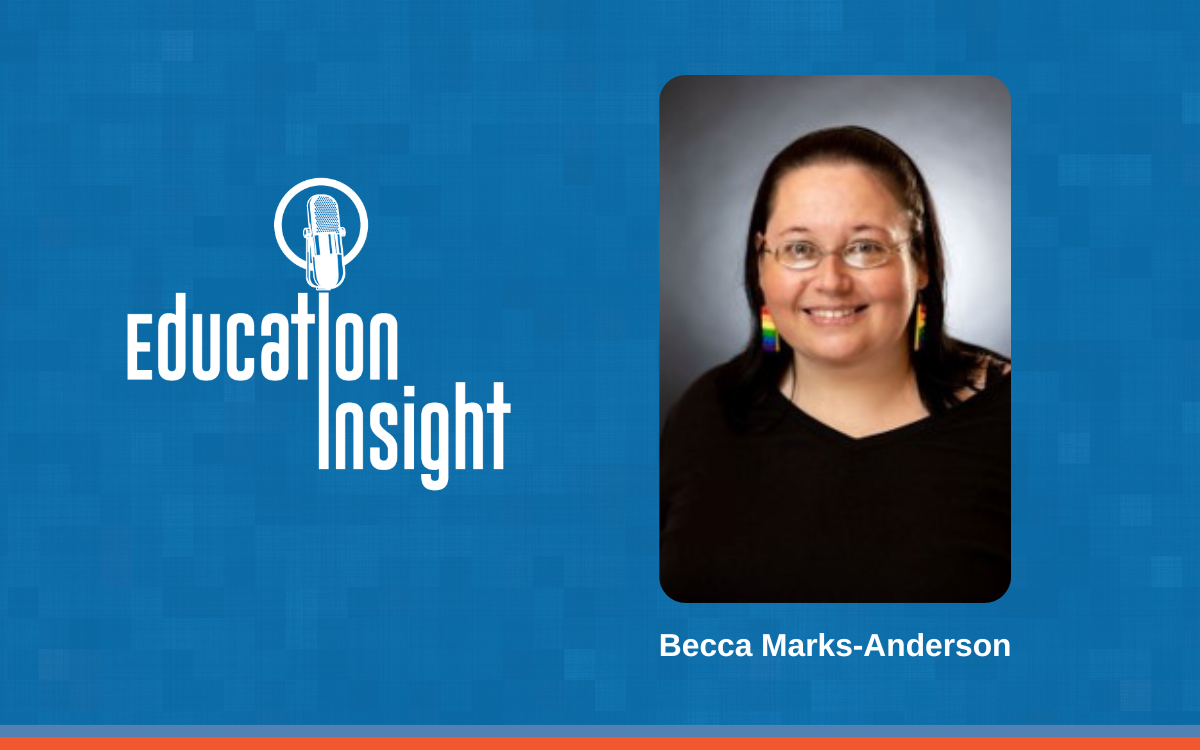
    We are joined by Becca Marks-Anderson, Executive Vice President of the Twenty-Third District PTA, who shares insights into the PTA’s ongoing work in the region and the challenges they’re addressing to support students, teachers, and families.

    Featured Guest

    Becca Marks-Anderson

    Parliamentarian, California State PTA and Executive Vice President, Twenty-Third District PTA

    Becca Marks-Anderson is the current parliamentarian for the California State PTA and the current Executive Vice President for the Twenty-Third District PTA. Her past service includes service as a Leadership Services Commissioner for California State PTA, District President and Vice President of Leadership Services for Twenty-Third District PTA, and Temecula Valley Council of PTAs President and Parliamentarian, among other roles. After serving more than 15 years in the nonprofit compliance space professionally, much of that time has been spent in roles that align and work closely with education. Becca finds that knowing and understanding governance helps us break down barriers for family members by drawing them in from where they are and giving them the tools to cleanly, clearly, transparently, and purposefully serve our students in the ways students need to be successful. 

    Interview Highlights

    3:57 – Adrienne describes dual enrollment and its benefits.

    7:15 – Adrienne speaks to how recent California mandates and initiatives may have influenced the growth of these new programs.

    8:34 – Adrienne explains what research shows about the impact of dual enrollment on a student’s academic achievements or even their future success.

    9:24 – Adrienne shares examples of dual enrollment activities that are taking place in our region and what is happening in the IE. 

    13:11 – Adrienne talks about strategies in place to make sure that equal opportunities are available for all students.

    20:18 – Jorge explains how dual enrollment aligns with his role at Riverside County Unified School District.

    21:28 – Jorge shares his experiences and thoughts on the current dual enrollment programs that are being offered at Riverside Unified School District.

    23:32 – Jorge gives insight into how dual enrollment makes students career ready.

    25:58 – Jorge describes what challenges students typically face in dual enrollment programs and how he addresses those issues. 

    32:43 – Jorge shares what he would like to see be the future of the dual enrollment program in his district and beyond. 

    36:31 – Special Feature: Avijeet Randhawa, 8th-Grader, Auburndale Intermediate School in the Corona Norco Unified School District.

    View our podcast page for more stories like this: https://gia.echofactory.dev/gia-podcasts/

    Education Insight tells the story of education in the Inland Empire through the diverse voices of those in and around the regional education community. The show is produced by Growing Inland Achievement, a collective impact organization in the Inland Empire with a mission to increase economic prosperity in the region by increasing educational attainment. Hosted by 30-year broadcast veteran Lacey Kendall, monthly shows explore topics ranging from education challenges and shortcomings to innovations and groundbreaking ideas that are driving student success.


  • Education Insight: California’s Push for Phone-Free Classrooms

    Education Insight: California’s Push for Phone-Free Classrooms

    About This Episode

    Season 4. Episode 5.

    In this episode of Education Insight, we dive into the implications of Assembly Bill 3216, also known as the Phone-Free Schools Act, which was recently passed by the California state legislature. This new bill would require school districts to implement policies limiting or banning cellphone use during school hours by July 2026. Governor Gavin Newsom, who has been a strong advocate for reducing smartphone distractions in the classroom, is expected to sign the bill, making California the fifth state to impose such a restriction.

    To explore how this legislation might affect schools in the Inland Empire, we sat down with Tobin Brinker, President of the Rialto Education Association, and Michael Montano, Vice President of the Association. Both educators bring decades of experience in elementary, middle, and high school classrooms and share their perspectives on the potential benefits and challenges of limiting cellphone use in schools.

    In this insightful conversation, we discuss how the new bill could reshape student engagement, reduce distractions, and foster a more focused learning environment across California classrooms. Tune in to learn more about the future of education and technology in our schools.

    Featured Guest

    Tobin Brinker

    President, Rialto Education Association and Frisbie Middle School Teacher

    A seasoned history teacher with a decade of experience in local elected office. Brinker brings a unique perspective, blending historical insight with practical political experience, offering a nuanced understanding of America’s founding principles and their lasting impact.

    Michael Montano

    Vice President, Rialto Education Association and Rialto High School Teacher

    Interview Highlights

    3:57 – Adrienne describes dual enrollment and its benefits.

    7:15 – Adrienne speaks to how recent California mandates and initiatives may have influenced the growth of these new programs.

    8:34 – Adrienne explains what research shows about the impact of dual enrollment on a student’s academic achievements or even their future success.

    9:24 – Adrienne shares examples of dual enrollment activities that are taking place in our region and what is happening in the IE. 

    13:11 – Adrienne talks about strategies in place to make sure that equal opportunities are available for all students.

    20:18 – Jorge explains how dual enrollment aligns with his role at Riverside County Unified School District.

    21:28 – Jorge shares his experiences and thoughts on the current dual enrollment programs that are being offered at Riverside Unified School District.

    23:32 – Jorge gives insight into how dual enrollment makes students career ready.

    25:58 – Jorge describes what challenges students typically face in dual enrollment programs and how he addresses those issues. 

    32:43 – Jorge shares what he would like to see be the future of the dual enrollment program in his district and beyond. 

    36:31 – Special Feature: Avijeet Randhawa, 8th-Grader, Auburndale Intermediate School in the Corona Norco Unified School District.

    View our podcast page for more stories like this: https://gia.echofactory.dev/gia-podcasts/

    Education Insight tells the story of education in the Inland Empire through the diverse voices of those in and around the regional education community. The show is produced by Growing Inland Achievement, a collective impact organization in the Inland Empire with a mission to increase economic prosperity in the region by increasing educational attainment. Hosted by 30-year broadcast veteran Lacey Kendall, monthly shows explore topics ranging from education challenges and shortcomings to innovations and groundbreaking ideas that are driving student success.
  • Education Insight: Reviving Local Journalism in the Inland Empire: A Community Effort

    Education Insight: Reviving Local Journalism in the Inland Empire: A Community Effort

    About This Episode

    Season 4. Episode 5.

    As local newspapers and radio news reports continue to disappear across the U.S., many communities are finding themselves without access to crucial local information. This has led to what experts call “news deserts,” where citizens lack reliable access to local news. Some point to the Inland Empire as one of these growing news deserts.

    In our latest episode of Education Insight, we explore what it means to live in a news desert and why it matters for communities. Without local news, residents can become disconnected from their own communities, unaware of local propositions or the actions of elected officials. But there is hope on the horizon.

    We sat down with Dr. Thomas Corrigan, a professor of communication at Cal State San Bernardino and coordinator of the university’s Local Journalism Partnerships Initiative, to discuss the growing effort to bring back local journalism in the region and why it’s crucial for the future of community engagement. Tune in to hear Dr. Corrigan’s thoughts on the future of local news and the steps being taken to address the growing news desert in the Inland Empire.

    Featured Guest

    Dr. Thomas Corrigan

    Professor of Communication and Media Studies, California State University, San Bernardino

    Dr. Thomas F. Corrigan (or T.C.) is a Professor in the Department of Communication Studies at California State University, San Bernardino (CSUSB). He teaches courses in Digital Media and Society, the Political Economy of Communication, and the Inland Empire News Ecosystem. His scholarship, which is published in academic and popular outlets, focuses on the nature and problems associated with commercial media systems. His recent research and writing examine what he calls the Inland Empire “news mirage” – a dynamic wherein I.E. communities seem to have more substantive, local news sources than they actually do. He also leads a CSUSB team that is working to build a local media coalition to support civic and community journalism in the region.

    Interview Highlights

    3:57 – Adrienne describes dual enrollment and its benefits.

    7:15 – Adrienne speaks to how recent California mandates and initiatives may have influenced the growth of these new programs.

    8:34 – Adrienne explains what research shows about the impact of dual enrollment on a student’s academic achievements or even their future success.

    9:24 – Adrienne shares examples of dual enrollment activities that are taking place in our region and what is happening in the IE. 

    13:11 – Adrienne talks about strategies in place to make sure that equal opportunities are available for all students.

    20:18 – Jorge explains how dual enrollment aligns with his role at Riverside County Unified School District.

    21:28 – Jorge shares his experiences and thoughts on the current dual enrollment programs that are being offered at Riverside Unified School District.

    23:32 – Jorge gives insight into how dual enrollment makes students career ready.

    25:58 – Jorge describes what challenges students typically face in dual enrollment programs and how he addresses those issues. 

    32:43 – Jorge shares what he would like to see be the future of the dual enrollment program in his district and beyond. 

    36:31 – Special Feature: Avijeet Randhawa, 8th-Grader, Auburndale Intermediate School in the Corona Norco Unified School District.

    View our podcast page for more stories like this: https://gia.echofactory.dev/gia-podcasts/

    Education Insight tells the story of education in the Inland Empire through the diverse voices of those in and around the regional education community. The show is produced by Growing Inland Achievement, a collective impact organization in the Inland Empire with a mission to increase economic prosperity in the region by increasing educational attainment. Hosted by 30-year broadcast veteran Lacey Kendall, monthly shows explore topics ranging from education challenges and shortcomings to innovations and groundbreaking ideas that are driving student success.

  • The Transformative Power of Postsecondary Education in California’s Inland Empire 

    The Transformative Power of Postsecondary Education in California’s Inland Empire 

    In California’s Inland Empire, education is more than just a pathway to personal success—it’s a driving force behind regional economic growth and social well-being. Our latest fact sheet, “The Effects of Postsecondary Education in California’s Inland Empire,” uncovers the significant impact that postsecondary education has on our communities, our economy, and the lives of individuals throughout the region. 

    The Economic Ripple Effect of Education 

    For each additional postsecondary graduate in the Inland Empire, the region’s annual Gross Regional Product (GRP) increases by nearly $100,000. This is not just a number; it’s a testament to the transformative power of education. Every graduate not only gains personal economic benefits, such as increased earnings and better job opportunities, but also contributes to the broader economy by expanding the tax base, generating support jobs, investing in capital assets, and boosting local spending. 

    Graduates are more likely to purchase homes, with the average postsecondary graduate in the Inland Empire being able to afford roughly $213,752 more in home value than someone without a degree. This translates to stronger, more stable communities with greater investment in the local economy. The fact sheet highlights that for every postsecondary graduate, there are an additional 4.8 support jobs created throughout the California economy. 

    Regions with higher concentrations of college graduates also tend to have more robust local economies and higher levels of entrepreneurship and innovation. This economic growth, in turn, leads to greater educational opportunities, further enhancing community prosperity. 

    Social and Community Benefits 

    Beyond the numbers, the social impact of education is profound. Postsecondary graduates are more likely to be employed—even during economic downturns—and enjoy better physical and mental health outcomes, with less reliance on social safety nets. They are also more civically engaged, participating in voting, volunteering, and philanthropy at higher rates than non-graduates. These graduates not only improve their own lives but also enhance the social fabric of entire communities. 

    Reducing Economic Inequality 

    Education is a powerful tool for reducing economic inequality in the Inland Empire. The greater earning power and job security results in increased financial stability and the ability to invest in future generations, thereby helping to reduce the cycle of poverty and promote economic mobility. Furthermore, investing in college access and completion for under-represented groups can significantly reduce racial/ethnic disparities in income, health, and other social outcomes. 

    A Call to Action 

    The data clearly shows that investing in education is not just a personal choice; it’s a community imperative. As we strive to meet the ambitious goal set by Governor Newsom—70% of Californians earning a postsecondary degree by 2030—we must work collectively to support our students and ensure that a college education remains accessible to all. 

    Our region has the potential to become a beacon of educational success, but it will require sustained effort from all sectors—educational institutions, government, businesses, and community organizations—to advocate for policies and initiatives that remove barriers to higher education. By working together, we can ensure that the Inland Empire’s future is one of growth, equity, and prosperity. 

    Download the Factsheet

    To explore the full findings and data behind “The Effects of Postsecondary Education in California’s Inland Empire,” download the fact sheet by entering your contact information. This comprehensive resource provides detailed insights into how education drives economic and social progress in our region. 


  • GIA Announces 2024 Toward a Shared Vision Award Winners

    GIA Announces 2024 Toward a Shared Vision Award Winners

    Growing Inland Achievement (GIA) has announced the winners for the 2024 Toward a Shared Vision Awards, an annual celebration of individuals and groups who are advancing equitable educational attainment and economic success in the Inland Empire. The awards dinner will be held on October 8, 2024, at the Riverside Convention Center, kicking off a two-day summit dedicated to addressing regional educational issues and opportunities.

    This year’s honorees reflect diverse and collaborative efforts taking place across the region to address key educational challenges. From organizations driving equity-focused initiatives to individuals fostering innovation, the awards shine a spotlight on those making a notable impact in their communities.

    The 2024 award categories and honorees are:

    • Excellence in Regional Transformation: BLU Educational Foundation
    • Equity-Focused Excellence: Rialto Project Impact, Rialto Unified School District
    • Student-Centered Excellence: Riverside County Office of Education
    • Excellence in Regional Collaboration: Inland Empire College Corps Consortium
    • Excellence in Innovation: Randall Lewis

    “The work to improve education involves many dedicated contributors and these honorees have shown exceptional leadership in driving progress,” said Dr. Ashish Vaidya, President and CEO of Growing Inland Achievement. “They represent a key part of the collective effort to improve education and economic mobility in the Inland Empire, and we are honored to highlight their important contributions.”

    This year’s awards dinner will bring together educators, community leaders, and stakeholders from across the region, recognizing the vital role collaboration and innovation play in improving educational outcomes and economic success for all.

    For more information about the awards, event details, or to register for the Toward a Shared Vision Summit, visit https://gia.towardasharedvision.org or contact frances@gia.echofactory.dev.